DONATE
فارسی | ENGLISH
Center for Human Rights in Iran Center for Human Rights in Iran
DONATE
  • Home
  • Press Releases
  • Issues
    • Right to Protest
    • Right to Health
    • Internet Freedom
    • Dual and Foreign Nationals
    • Disability Rights
    • Women’s Rights
    • Children’s Rights
    • Labor Rights
    • Right to Education
    • Art, Culture, Society
    • Prisoners / Arrests
    • Free Expression
    • Religious Freedom
    • Human Rights Defenders
    • Ethnic Discrimination
    • Assembly / Association
    • The U.N. and Iran
    • Executions / Life
    • Torture
    • Unfair Trials
  • Publications
  • Multimedia
    • Videos
    • Fact Sheets
    • Posters
    • GIFs & Graphics
    • Illustrations
    • Editorial Cartoons
    • Interactive
  • About Us
    • Donate to CHRI
    • Press Kit
    • Who We Are
    • What We Do
    • Frequently Asked Questions
    • Sign Up
  • Careers
Go to...
September 8, 2016

Head of Iranian Judiciary’s Human Rights Council Defends Wave of Executions
56573698c46188f8598b45d8

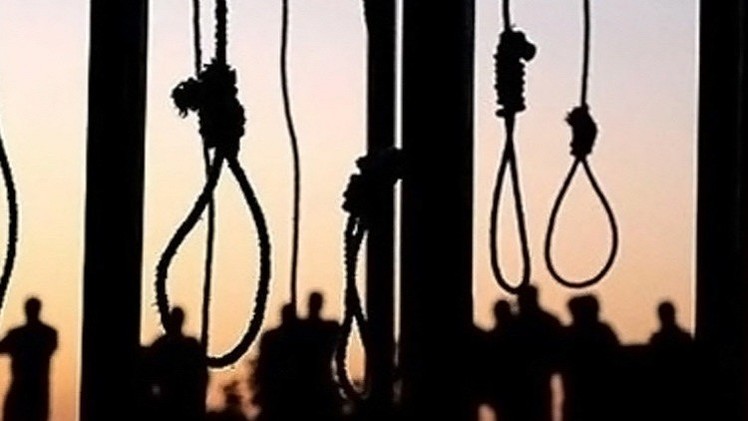
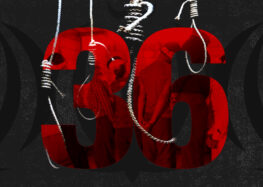
In less than a month, between August 2 and August 27, 2016, at least 37 prisoners were executed in Iran. Shortly afterwards, the head of the Iranian Judiciary’s Human Rights Council, Mohammad Javad Larijani, claimed Iran was doing members of the international community a favor by executing drug traffickers.

Many, though not all, of the victims were convicted of drug-related crimes, which do not meet international standards regarding the possible application of capital punishment only for the “most serious crimes.”

“[The United Nations Special Rapporteur on Human Rights in Iran] Ahmed Shaheed and Western countries should be thanking Iran because narcotics produced in Afghanistan end up in Paris, Berlin and Washington,” said Larijani on September 1. “But instead of praising us, they are condemning us.” 

In addition, the UN has noted serious concerns regarding the denial of due process in Iran, including cases in which capital punishment has been carried out.

On August 2 Iran executed at least 20 Kurdish Sunni prisoners at Rajaee Shahr Prison in the city of Karaj. Many of these men were convicted of moharebeh (enmity against God) for their alleged membership in a radical Sunni Islamic group. Despite claims by Prosecutor General Mohammad Javad Montazeri that due process was carried out, family members of the victims and sources close to the cases said many of the executed prisoners were blocked from using lawyers of their choice and were quickly prosecuted in secret trials based on charges brought by the security establishment and confessions obtained under torture. 

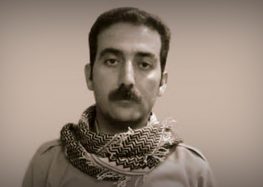
On August 9 five Kurdish prisoners were executed in Urmia Central Prison while 12 were executed in Karaj Prison. All of the prisoners except Mohammad Abdollahi were executed for narcotic-related charges. Abdollahi was charged with moharebeh for his alleged membership in a Kurdish political party; he insisted that he had obtained a membership card from the group so he could legally work to support his family.

The Chairman of the Legal and Judicial Affairs Committee in Parliament Rouhollah Hazratpour said on August 21 that Iran currently has “4,500 death-row prisoners in legal limbo in the country and we must think of a solution for them.”

UN Rapporteur Ahmed Shaheed issued a statement on August 20 describing the executions as a violation of international law. “It is also troubling that courts continue to issue death sentences in trials that not only breach international fair trial standards but even domestic due process guarantees,” he said.

On September 1, in an interview with the Judiciary’s official news service, Mizan, Larijani defended the executions.

“These accusations [by the UN Special Rapporteur] are not new. We have a set of laws by which we severely punish those who play a major role in trafficking drugs and in destroying the lives of our young people,” he said. “These punishments may be life in prison or executions.”

Another senior Judiciary official has, however, admitted that capital punishment has not served as an effective deterrent against drug trafficking. 

“Punishing drug traffickers with the death penalty has not been a deterrent so far and we have expressed this to the judiciary chief in writing,” Judiciary Deputy in Charge of Crime Prevention Mohammad Bagher Olfat said in an interview on August 27. “Those who are being executed are not the real traffickers; they don’t get involved in transporting drugs. Instead they pay a small amount to those who don’t have enough income [and make them carry out the transportation.]”

Call for Investigation

Twenty-two human rights organizations, including the International Campaign for Human Rights in Iran, called for an immediate halt to the executions on August 16 “including against Kurds and other minority groups” and for the United Nations Human Rights Council to investigate the alarming use of the death penalty.

“One focus of the investigation should be the extent to which executions are being carried out as a means to silence political dissent and free association in the country,” said the joint statement.

The Campaign has confirmed the names of ten of the victims who were hanged in Rajaee Shahr on August 2: Bahman Rahimi, Mokhtar Rahimi, Yavar Rahimi, Arash Sharifi, Kaveh Oveisi, Kaveh Sharifi, Ahmad Nasiri, Behrouz Shahnazari, Taleb Maleki and Shahram Ahmadi. 

On August 8, seven death-row prisoners were moved to solitary confinement in Orumiyeh Central Prison in preparation for their execution. The following day, prisoners Parisa Aghaie and Tohid Pourmahdi were spared, but Jahangir Razavizadeh, Jebraeel Kanani, Kamran Pourrafat, Amir Azizi and Mohammad Abdollahi were hanged.

Abdollahi’s lawyer, Mostafa Ahmadian, told the Campaign on August 7 that he requested a stay of execution for his client before Abdollahi was killed.

“There have been many instances of blatant violations of the law in Abdollahi’s case that I am willing to discuss with any relevant official,” he said. “Initially the judicial investigator had issued an order to nullify my client’s prosecution. But the judge unlawfully pursued the case and the prosecutor agreed to go ahead with the unlawful process. In addition, there is ample evidence that suggests my client did not resort to using a weapon and played no role in the charges issued against him….”

The names of nine of the 12 prisoners who were executed in Karaj Prison on August 20 are: Alireza Madadpour, Bahman Rezaie, Arman Bahrami, Alireza Assadi, Mohsen Eslami, Mehdi Rostami, Amir Sorkhah, Alireza Sorkhah and Hossein Bayrami.
Share :
  • Facebook
  • Twitter
  • Pinterest
  • Linkedin
  • Email

Related Posts

  • August 9, 2024

    UN Human Rights Chief Urges Immediate Halt to Executions in

    UN Human Rights Chief Urges Immediate Halt to Executions in Iran After Alarming Surge
    August 7, 2024

    Mass Executions Underway as Islamic Republic Escalates Its Killing Spree

    Mass Executions Underway as Islamic Republic Escalates Its Killing Spree
    June 25, 2020

    Kurdish Prisoner, 27, Secretly Executed Despite Judge Agreeing He Was

    Kurdish Prisoner, 27, Secretly Executed Despite Judge Agreeing He Was Innocent
  • May 7, 2019

    New Chief Justice Appoints Proponent of Public Executions as Tehran

    New Chief Justice Appoints Proponent of Public Executions as Tehran Prosecutor General
    March 1, 2019

    Lawyer of Juvenile Offender on Death Row Says Client Mohammad

    Lawyer of Juvenile Offender on Death Row Says Client Mohammad Kalhori Should be Pardoned
    February 26, 2019

    UN: Iran Must Halt Execution of Child Offender Mohammad Kalhori

    UN: Iran Must Halt Execution of Child Offender Mohammad Kalhori
Read more
  • 2022
  • 2021
  • 2020
  • 2019
  • 2018
  • 2017
  • 2016
  • 2015
  • 2014
  • 2013
  • 2012
  • 2011
  • 2010
  • 2009
  • 2008

CONTACT US

General Inquiries:
Email: info(at)iranhumanrights.org


Media Inquiries:
Email: media(at)iranhumanrights.org


Like CHRI on Facebook
Follow CHRI on Twitter @ICHRI

RECENT PUBLICATIONS

  • Iran Wages War Against Women with Draconian New Hijab Law

    ...

  • CHRI’s Full English Translation of Iran’s New Hijab Law
    CHRI’s Full English Translation of Iran’s New Hijab Law
  • The Death Penalty in the Islamic Republic of Iran – December 2023
    The Death Penalty in the Islamic Republic of Iran - December 2023

Press Releases

  • 23-Year-Old Iranian Student Sentenced to Death Over Social Media Post
    October 19, 2026
  • Iranian Authorities Target Artists, Writers, and Poets in Escalating Crackdown
    October 6, 2026
  • 46 States Condemn Iran’s Escalating Use of the Death Penalty at UN Human Rights Council
    October 1, 2026
  • UN: Iranian Authorities Committed Crimes Against Humanity in January 2026 Suppression of Nationwide Protests
    September 24, 2026
  • The Cost of Impunity: Four Years After Jina Mahsa Amini’s Death, Thousands More Are Victims of Iran’s Brutal Repression
    September 16, 2026
  • Iran's Sweeping New Bill Threatens to Isolate Its People From the World
    September 15, 2026
  • Ten Civil Society Groups Inside Iran Vow to Continue the Struggle for Freedom Ahead of Fourth Anniversary of Mahsa Amini’s
    September 9, 2026
  • UN Fact-Finding Mission Urges Iran to Withdraw Bill Criminalizing Contact With Foreign Entities
    September 3, 2026
  • The Court of History Film Broadcast to Millions in Iran, Envisioning Justice and Accountability in a Future Iran
    August 25, 2026
  • Iran’s New Weapon: Group Prosecutions of Protesters Send Dozens Toward the Gallows
    August 12, 2026
  • UN Experts Urge Iran to End Escalating Targeting of Ethnic Minorities
    August 10, 2026
  • Iran Intensifies Nationwide Crackdown on Teachers and Union Activists
    July 28, 2026
  • UN Fact-Finding Mission Urgently Calls on Iran to Immediately Halt Executions
    July 27, 2026
  • Authorities Escalate Crackdown on Iranian Students Amid Post-War Repression
    July 16, 2026
  • Civilians Must Be Protected At All Times During War
    July 15, 2026
  • Iran Intensifies Assault on Independent Lawyers Amid Expanding Post-War Crackdown
    June 18, 2026
  • As Executions Surge in Iran, Prisoners Risk Their Lives to Protest the State's Killings
    June 8, 2026
  • A Collective Call from Inside Iran for Free and Equal Internet Access
    May 28, 2026
  • Iran’s Baha’i Community Under Intensified State Attack Amid Escalating Domestic Repression
    May 19, 2026
  • Iran’s Execution Machine: Political Hangings Surge as Dozens Face Imminent Death
    April 30, 2026
  • UN Rights Chief Urges Halt to Executions, Warns of Escalating Repression Iran
    April 29, 2026
  • 30 Legal Groups Call for Immediate Release of Detained Iranian Human Rights Lawyer Nasrin Sotoudeh and Her Husband Reza Khandan
    April 14, 2026
  • Attacks on Essential Infrastructure Will Have Catastrophic Consequences for Millions of Civilians Across the Region
    April 6, 2026
  • At least 1,500 Arrested in Iran as State Intensifies Domestic Crackdown
    March 31, 2026
  • Opinion: Iran is already ramping up its next war. Guess who the ‘enemy’ is.
    March 25, 2026
  • Three Protesters Publicly Hanged in Iran; Dozens More At Imminent Risk of Execution
    March 19, 2026
  • Civilians Must Be Protected Across the Middle East
    March 5, 2026
  • Grave Concerns for the Safety of Political Prisoners and Detainees in Iran
    March 2, 2026
  • Iran’s Machinery of Repression Escalates: Arbitrary Arrests, Torture, Enforced Disappearances, and Death Sentences After Protest Massacre
    February 25, 2026
  • UN Experts Demand Iran Reveal Fate of Detainees, Halt Executions
    February 20, 2026

FEATURED REPORTS

Contents

  • Introduction
    • Rouhani’s Remarks on Human Rights
  • President Hassan Rouhani
  • Ministry of Intelligence
  • Ministry of Culture and Islamic Guidance
  • Ministry of Foreign Affairs
  • Ministry of Communications and Information Technology
  • Ministry of Science, Research, and Technology
  • Ministry of Labor, Cooperatives, and Social Welfare
  • Ministry of the Interior
  • Ministry of Education
  • Ministry of Oil

Guards at the Gate

  • Executive Summary
  • Recommendations
  • Methodology
  • Introduction
  • Institutional developments
    • Khamenei consolidates control over internet policy
    • Security and intelligence agencies
    • Rouhani’s influence
  • Iran’s National Information Network
    • Background
    • Implementation phases
    • Speed and Bandwidth
      • Implications
    • Network access
      • Network security
    • User security
      • User authentication
      • Servers and websites hosted inside Iran
      • SSL security certificates
      • Implications
    • Services and tools of the NIN
      • National Electronic Mail Services
      • Data Centers
      • National Search Engines
      • National Operating System
  • Cyber Attacks
    • Tactics and Methods
      • DDoS
      • Phishing
      • Malware
      • Message Tapping
      • Fake Applications
      • Implications
  • Filtering
    • Blocking under Rouhani
  • Implications
  • Conclusion
×

Stay
Informed

Get updates on the latest
human rights issues in Iran

Sign up for CHRI's newsletter.


Get the latest Iran updates. Sign up for our newsletter.

Lists*

© 2019 Center for Human Rights in Iran (formerly known as International Campaign for Human Rights in Iran)