DONATE
فارسی | ENGLISH
Center for Human Rights in Iran Center for Human Rights in Iran
DONATE
  • Home
  • Press Releases
  • Issues
    • Right to Protest
    • Right to Health
    • Internet Freedom
    • Dual and Foreign Nationals
    • Disability Rights
    • Women’s Rights
    • Children’s Rights
    • Labor Rights
    • Right to Education
    • Art, Culture, Society
    • Prisoners / Arrests
    • Free Expression
    • Religious Freedom
    • Human Rights Defenders
    • Ethnic Discrimination
    • Assembly / Association
    • The U.N. and Iran
    • Executions / Life
    • Torture
    • Unfair Trials
  • Publications
  • Multimedia
    • Videos
    • Fact Sheets
    • Posters
    • GIFs & Graphics
    • Illustrations
    • Editorial Cartoons
    • Interactive
  • About Us
    • Donate to CHRI
    • Press Kit
    • Who We Are
    • What We Do
    • Frequently Asked Questions
    • Sign Up
  • Careers
Go to...
April 18, 2016

Imprisoned Young Physicist Stricken with Cancer after Years of Denied Medical Care
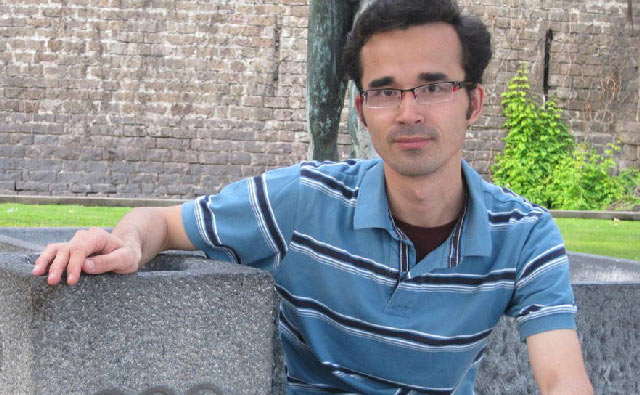
Omid-Kokabee

April 18, 2016—Prisoner of conscience Omid Kokabee, the young physicist who has been imprisoned in Iran for over five years for his refusal to work on military research for the Islamic Republic, has been diagnosed with kidney cancer after years in which prison authorities denied him treatment for his kidney illness.

Kokabee should be released immediately and unconditionally for medical treatment, the International Campaign for Human Rights in Iran said today.

“The continued endangerment of Kokabee’s life is tantamount to torture,” said Hadi Ghaemi, executive director of the Campaign. “The international outcry over the harsh and unjustified treatment of this gifted young scientist must be loud enough for Tehran to hear.”

Kokabee has suffered from kidney stones and other serious illnesses throughout his imprisonment, none of which has been properly treated—a common experience for political prisoners in Iran. This lack of treatment has resulted in the life-threatening situation the 34-year-old scientist now faces.

An informed source told the Campaign that early diagnosis of Kokabee’s condition could have prevented the advanced state of his cancer. “If he had been transferred out of the prison to receive a routine sonography in November 2011, when he first experienced bleeding and pain caused by kidney stones, [the issue] would have been noticed. Even a simple sonography would show a tumor. Omid had repeatedly gone to the prison infirmary, complaining of kidney and stomach pain.”

“The sonogram ordered for kidney stones accidentally revealed the large tumor. He had been waiting for a long time to be transferred to a hospital with a urology department, but the officials wouldn’t agree to it. Prison doctors never even examined him, and kept prescribing painkillers for him. This is the second time he was transferred to a hospital. A week ago, Omid was diagnosed with cancer. His entire right kidney is affected by a cancerous tumor,” said the source.

Kokabee’s lawyer, Saeed Khalili, told the Iranian Labor News Agency (ILNA) on April 16, 2016, “After several tests and check-ups in the hospital, it has become clear that Mr. Kokabee has a malignant tumor in his kidney and needs an immediate nephrectomy to remove all or part of his kidneys.”

The lawyer added that any delay in Kokabee’s release “could result in irreparable harm to this young man.”

Kokabee has been in Evin Prison since he was arrested on January 30, 2011 at Tehran’s Imam Khomeini Airport on his way back to the U.S. to continue his studies as a post-doctoral student in physics at the University of Texas at Austin.

Kokabee said he was imprisoned for refusing an offer from the Iranian intelligence establishment to collaborate on a military research project, writing in an April 2013  open letter from Evin Prison to Iran’s supreme leader, Ali Khamenei, that his punishment was “for someone who refused to work in the security and military system despite financial and technical incentives.”

He is currently serving a 10-year prison sentence for “contact with enemy states.”

Thirty-one Nobel Physics laureates joined thousands of activists in calling for his release in October 2014, and the American Physical Society awarded their 2014 Andrei Sakharov Prize to Kokabee “for his courage in refusing to use his physics knowledge to work on projects that he deemed harmful to humanity.”

The Committee of Concerned Scientists published an open letter on January 30, 2016 to Iranian President Hassan Rouhani calling for Kokabee’s unconditional release.

“My client has passed kidney stones and suffered internal bleeding many times during his five years and three months in prison,” his lawyer Saeed Khalili told ILNA on April 16, 2016.

“Enough evidence has been presented to prove his innocence…in addition to that, he has been eligible for parole for more than two years,” he added, “but the judicial authorities have opposed Kokabee’s release.

“Even Mr. Javad Larijani [Head of the Iranian Judiciary’s Human Rights Council] promised [Kokabee’s] release in an interview with Iran’s Channel 2 television, in March 2015,” said Khalili. “We are bewildered as to why some hands don’t want him to go free.”

“The continuation of my client’s imprisonment is not only dangerous to his health, but also without legal basis,” said Khalili. “For humanitarian reasons, we seek Islamic mercy to save this gifted scientist from danger and ask the honorable judicial authorities to pay special attention to this case and facilitate his freedom as soon as possible.”

Article 502 of Iran’s Criminal Code states: “If a prisoner is suffering from physical or mental illness and his imprisonment would make his illness worse or delay his recovery, the judge can postpone the sentence being served until the prisoner regains his health after consultation with his physician.”

Kokabee’s mother detailed her son’s severe health problems in a 2015 letter to Iran’s supreme leader, Ali Khamenei. “[Omid] has passed kidney stones under great pain four times without any treatment. He has had serious stomach problems and lost four of his teeth…we appeal to Iran once again to release [him]….” wrote Safar Bibi Haghnazari.

“We would like this person to be pardoned,” Larijani told the semi-official Iranian Student News Agency (ISNA) on March 16, 2015, adding that he had held meetings with officials to discuss Kokabee’s release.
Share :
  • Facebook
  • Twitter
  • Pinterest
  • Linkedin
  • Email

Related Posts

  • June 11, 2024

    Crackdown in Iran Intensifies as Iran’s Sham Presidential Election Nears

    Crackdown in Iran Intensifies as Iran’s Sham Presidential Election Nears
    March 19, 2024

    Executions, Murder, Rape, Torture Used to Repress “Woman, Life, Freedom”

    Executions, Murder, Rape, Torture Used to Repress “Woman, Life, Freedom” Protests Detailed in 500+ Page UN Report
    March 4, 2021

    Relatives Visit Ethnic Arab Prisoners in Khuzestan Jail Only to

    Relatives Visit Ethnic Arab Prisoners in Khuzestan Jail Only to Be Handed Corpses Minutes Later
  • June 25, 2020

    Sepideh Qoliyan Refuses to Beg for Pardon, Goes Back to

    Sepideh Qoliyan Refuses to Beg for Pardon, Goes Back to Prison
    May 7, 2020

    Australian Academic Who Attempted Suicide Should be Freed from Unlawful

    Australian Academic Who Attempted Suicide Should be Freed from Unlawful Confinement in Iran
    February 13, 2020

    Evin Prison Sees Inmate Transfers, Construction as Authorities Prep for

    Evin Prison Sees Inmate Transfers, Construction as Authorities Prep for More Protest Crackdowns
Read more
  • 2022
  • 2021
  • 2020
  • 2019
  • 2018
  • 2017
  • 2016
  • 2015
  • 2014
  • 2013
  • 2012
  • 2011
  • 2010
  • 2009
  • 2008

CONTACT US

General Inquiries:
Email: info(at)iranhumanrights.org


Media Inquiries:
Email: media(at)iranhumanrights.org


Like CHRI on Facebook
Follow CHRI on Twitter @ICHRI

RECENT PUBLICATIONS

  • Iran Wages War Against Women with Draconian New Hijab Law

    ...

  • CHRI’s Full English Translation of Iran’s New Hijab Law
    CHRI’s Full English Translation of Iran’s New Hijab Law
  • The Death Penalty in the Islamic Republic of Iran – December 2023
    The Death Penalty in the Islamic Republic of Iran - December 2023

Press Releases

  • 23-Year-Old Iranian Student Sentenced to Death Over Social Media Post
    October 19, 2026
  • Iranian Authorities Target Artists, Writers, and Poets in Escalating Crackdown
    October 6, 2026
  • 46 States Condemn Iran’s Escalating Use of the Death Penalty at UN Human Rights Council
    October 1, 2026
  • UN: Iranian Authorities Committed Crimes Against Humanity in January 2026 Suppression of Nationwide Protests
    September 24, 2026
  • The Cost of Impunity: Four Years After Jina Mahsa Amini’s Death, Thousands More Are Victims of Iran’s Brutal Repression
    September 16, 2026
  • Iran's Sweeping New Bill Threatens to Isolate Its People From the World
    September 15, 2026
  • Ten Civil Society Groups Inside Iran Vow to Continue the Struggle for Freedom Ahead of Fourth Anniversary of Mahsa Amini’s
    September 9, 2026
  • UN Fact-Finding Mission Urges Iran to Withdraw Bill Criminalizing Contact With Foreign Entities
    September 3, 2026
  • The Court of History Film Broadcast to Millions in Iran, Envisioning Justice and Accountability in a Future Iran
    August 25, 2026
  • Iran’s New Weapon: Group Prosecutions of Protesters Send Dozens Toward the Gallows
    August 12, 2026
  • UN Experts Urge Iran to End Escalating Targeting of Ethnic Minorities
    August 10, 2026
  • Iran Intensifies Nationwide Crackdown on Teachers and Union Activists
    July 28, 2026
  • UN Fact-Finding Mission Urgently Calls on Iran to Immediately Halt Executions
    July 27, 2026
  • Authorities Escalate Crackdown on Iranian Students Amid Post-War Repression
    July 16, 2026
  • Civilians Must Be Protected At All Times During War
    July 15, 2026
  • Iran Intensifies Assault on Independent Lawyers Amid Expanding Post-War Crackdown
    June 18, 2026
  • As Executions Surge in Iran, Prisoners Risk Their Lives to Protest the State's Killings
    June 8, 2026
  • A Collective Call from Inside Iran for Free and Equal Internet Access
    May 28, 2026
  • Iran’s Baha’i Community Under Intensified State Attack Amid Escalating Domestic Repression
    May 19, 2026
  • Iran’s Execution Machine: Political Hangings Surge as Dozens Face Imminent Death
    April 30, 2026
  • UN Rights Chief Urges Halt to Executions, Warns of Escalating Repression Iran
    April 29, 2026
  • 30 Legal Groups Call for Immediate Release of Detained Iranian Human Rights Lawyer Nasrin Sotoudeh and Her Husband Reza Khandan
    April 14, 2026
  • Attacks on Essential Infrastructure Will Have Catastrophic Consequences for Millions of Civilians Across the Region
    April 6, 2026
  • At least 1,500 Arrested in Iran as State Intensifies Domestic Crackdown
    March 31, 2026
  • Opinion: Iran is already ramping up its next war. Guess who the ‘enemy’ is.
    March 25, 2026
  • Three Protesters Publicly Hanged in Iran; Dozens More At Imminent Risk of Execution
    March 19, 2026
  • Civilians Must Be Protected Across the Middle East
    March 5, 2026
  • Grave Concerns for the Safety of Political Prisoners and Detainees in Iran
    March 2, 2026
  • Iran’s Machinery of Repression Escalates: Arbitrary Arrests, Torture, Enforced Disappearances, and Death Sentences After Protest Massacre
    February 25, 2026
  • UN Experts Demand Iran Reveal Fate of Detainees, Halt Executions
    February 20, 2026

FEATURED REPORTS

Contents

  • Introduction
    • Rouhani’s Remarks on Human Rights
  • President Hassan Rouhani
  • Ministry of Intelligence
  • Ministry of Culture and Islamic Guidance
  • Ministry of Foreign Affairs
  • Ministry of Communications and Information Technology
  • Ministry of Science, Research, and Technology
  • Ministry of Labor, Cooperatives, and Social Welfare
  • Ministry of the Interior
  • Ministry of Education
  • Ministry of Oil

Guards at the Gate

  • Executive Summary
  • Recommendations
  • Methodology
  • Introduction
  • Institutional developments
    • Khamenei consolidates control over internet policy
    • Security and intelligence agencies
    • Rouhani’s influence
  • Iran’s National Information Network
    • Background
    • Implementation phases
    • Speed and Bandwidth
      • Implications
    • Network access
      • Network security
    • User security
      • User authentication
      • Servers and websites hosted inside Iran
      • SSL security certificates
      • Implications
    • Services and tools of the NIN
      • National Electronic Mail Services
      • Data Centers
      • National Search Engines
      • National Operating System
  • Cyber Attacks
    • Tactics and Methods
      • DDoS
      • Phishing
      • Malware
      • Message Tapping
      • Fake Applications
      • Implications
  • Filtering
    • Blocking under Rouhani
  • Implications
  • Conclusion
×

Stay
Informed

Get updates on the latest
human rights issues in Iran

Sign up for CHRI's newsletter.


Get the latest Iran updates. Sign up for our newsletter.

Lists*

© 2019 Center for Human Rights in Iran (formerly known as International Campaign for Human Rights in Iran)