DONATE
فارسی | ENGLISH
Center for Human Rights in Iran Center for Human Rights in Iran
DONATE
  • Home
  • Press Releases
  • Issues
    • Right to Protest
    • Right to Health
    • Internet Freedom
    • Dual and Foreign Nationals
    • Disability Rights
    • Women’s Rights
    • Children’s Rights
    • Labor Rights
    • Right to Education
    • Art, Culture, Society
    • Prisoners / Arrests
    • Free Expression
    • Religious Freedom
    • Human Rights Defenders
    • Ethnic Discrimination
    • Assembly / Association
    • The U.N. and Iran
    • Executions / Life
    • Torture
    • Unfair Trials
  • Publications
  • Multimedia
    • Videos
    • Fact Sheets
    • Posters
    • GIFs & Graphics
    • Illustrations
    • Editorial Cartoons
    • Interactive
  • About Us
    • Donate to CHRI
    • Press Kit
    • Who We Are
    • What We Do
    • Frequently Asked Questions
    • Sign Up
  • Careers
Go to...
April 10, 2014

Official Makes Rare Admission of Baha’is’ Equal Rights in Domestic Media
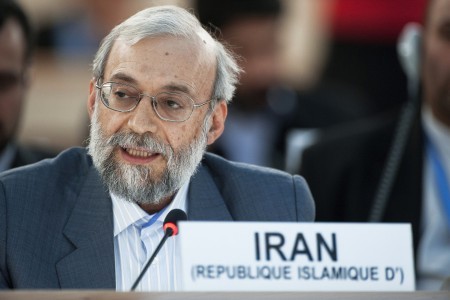
Due to intense international attention to the situation of human rights in Iran, Javad Larijani made a rare statement to the domestic media, acknowledging Baha’is are entitled to equal rights under the constitution.

In a rare statement to the Iranian media on April 6, 2014, Javad Larijani, Head of the Iranian Judiciary’s Human Rights Council, admitted Baha’is in Iran are entitled to full and equal constitutional rights.

Iranian officials, most notably Javad Larijani, have often made similar statements to foreign audiences, claiming that the persecution and prosecution of Baha’is is not due to their faith. However, inside the country, they typically refer to the Baha’is in degrading and inflammatory terms, calling them a cult and accusing them of being agents of foreign powers. They infer that Baha’is should not enjoy equal constitutional protections.

The acknowledgment to their domestic audience that Baha’is are entitled to equal rights is evidence of a new level of domestic accountability, and a clear indication that Iranian hardliners, particularly in the Judiciary, have come under increased pressure to justify their rights violations due to the recent international focus on the human rights situation in Iran.

In an interview with the Iranian Labor News Agency (ILNA), Larijani said: “The authorities never target Baha’is just because they are followers of this faith, because according to the Constitution, all Iranian citizens are entitled to certain rights and cannot be deprived of rights stipulated in the constitution.”

Since the 1979 Revolution, the Baha’is have been one of the most egregiously persecuted minorities in Iran. The debate surrounding the citizenship rights of Baha’is reached a critical stage in December 2009 when the dissident cleric Grand Ayatollah Montazeri issued an unprecedented fatwa acknowledging the full citizenship rights of Baha’is living in Iran, on par with all other citizens. Up to that point, no major Shi’a cleric had recognized the equal rights of Baha’is as Iranian citizens.

Although Larijani acknowledged the constitutional rights of Baha’is, he continued to falsely claim that no Baha’is are prosecuted and imprisoned due to their faith, and that Baha’i students are not barred from access to higher education.

Yet Larijani’s claims are in direct contradiction to the well-documented situation of Baha’is in Iran. “At least 734 Baha’is have reportedly been arrested since 2004 and 136 are currently detained; another 289 have been arrested, released on bail, and are awaiting trial; while another 150 have been sentenced, but are awaiting appeals or summons to serve,” the UN expert, Ahmed Shaheed, reported March 2014 to the Human Rights Council in Geneva.

In addition, seven Baha’i leaders prosecuted in 2008 and sentenced to twenty years in prison remain behind bars and Baha’i students are routinely denied access to higher education, as documented in the Campaign report, “Punishing Stars: Systematic Discrimination and Exclusion in Iranian Higher Education.”

The Campaign welcomes this step forward in domestic accountability in Iran, and urges the international community to maintain its productive focus on the situation of human rights in Iran in general, and on the situation of Baha’is in particular. Over the past few weeks, the UN Secretary General and the UN Special Rapporteur on Iran have issued their latest reports, the UN Human Rights Council has debated the situation, and the EU Parliament has adopted a resolution urging Iran-EU relations to address human rights concerns.
 

Share :
  • Facebook
  • Twitter
  • Pinterest
  • Linkedin
  • Email

Related Posts

  • November 19, 2021

    Victims of State Oppression Defy Iranian Government's Denial of the

    Victims of State Oppression Defy Iranian Government’s Denial of the Right to Mourn
    January 27, 2020

    Unrecognized Minorities in Iran Must Now Hide Religion to Obtain

    Unrecognized Minorities in Iran Must Now Hide Religion to Obtain Crucial Government ID
    September 26, 2019

    Baha’i Woman Blindfolded During Interrogations, Imprisoned Under “National Security” Crimes

    Baha’i Woman Blindfolded During Interrogations, Imprisoned Under “National Security” Crimes
  • March 15, 2019

    Iran Appeals Court Upholds Lengthy Prison Sentences, Lashings Against 23

    Iran Appeals Court Upholds Lengthy Prison Sentences, Lashings Against 23 Dervishes
    January 28, 2019

    Sufi Prisoners Denied Medical Treatment for Painful Pellet Wounds

    Sufi Prisoners Denied Medical Treatment for Painful Pellet Wounds
    January 14, 2019

    Sufi Woman Jailed in Iran Sentenced to 148 Lashes For

    Sufi Woman Jailed in Iran Sentenced to 148 Lashes For Criticizing Gharchak Prison Conditions
Read more
  • 2022
  • 2021
  • 2020
  • 2019
  • 2018
  • 2017
  • 2016
  • 2015
  • 2014
  • 2013
  • 2012
  • 2011
  • 2010
  • 2009
  • 2008

CONTACT US

General Inquiries:
Email: info(at)iranhumanrights.org


Media Inquiries:
Email: media(at)iranhumanrights.org


Like CHRI on Facebook
Follow CHRI on Twitter @ICHRI

RECENT PUBLICATIONS

  • Iran Wages War Against Women with Draconian New Hijab Law

    ...

  • CHRI’s Full English Translation of Iran’s New Hijab Law
    CHRI’s Full English Translation of Iran’s New Hijab Law
  • The Death Penalty in the Islamic Republic of Iran – December 2023
    The Death Penalty in the Islamic Republic of Iran - December 2023

Press Releases

  • 23-Year-Old Iranian Student Sentenced to Death Over Social Media Post
    October 19, 2026
  • Iranian Authorities Target Artists, Writers, and Poets in Escalating Crackdown
    October 6, 2026
  • 46 States Condemn Iran’s Escalating Use of the Death Penalty at UN Human Rights Council
    October 1, 2026
  • UN: Iranian Authorities Committed Crimes Against Humanity in January 2026 Suppression of Nationwide Protests
    September 24, 2026
  • The Cost of Impunity: Four Years After Jina Mahsa Amini’s Death, Thousands More Are Victims of Iran’s Brutal Repression
    September 16, 2026
  • Iran's Sweeping New Bill Threatens to Isolate Its People From the World
    September 15, 2026
  • Ten Civil Society Groups Inside Iran Vow to Continue the Struggle for Freedom Ahead of Fourth Anniversary of Mahsa Amini’s
    September 9, 2026
  • UN Fact-Finding Mission Urges Iran to Withdraw Bill Criminalizing Contact With Foreign Entities
    September 3, 2026
  • The Court of History Film Broadcast to Millions in Iran, Envisioning Justice and Accountability in a Future Iran
    August 25, 2026
  • Iran’s New Weapon: Group Prosecutions of Protesters Send Dozens Toward the Gallows
    August 12, 2026
  • UN Experts Urge Iran to End Escalating Targeting of Ethnic Minorities
    August 10, 2026
  • Iran Intensifies Nationwide Crackdown on Teachers and Union Activists
    July 28, 2026
  • UN Fact-Finding Mission Urgently Calls on Iran to Immediately Halt Executions
    July 27, 2026
  • Authorities Escalate Crackdown on Iranian Students Amid Post-War Repression
    July 16, 2026
  • Civilians Must Be Protected At All Times During War
    July 15, 2026
  • Iran Intensifies Assault on Independent Lawyers Amid Expanding Post-War Crackdown
    June 18, 2026
  • As Executions Surge in Iran, Prisoners Risk Their Lives to Protest the State's Killings
    June 8, 2026
  • A Collective Call from Inside Iran for Free and Equal Internet Access
    May 28, 2026
  • Iran’s Baha’i Community Under Intensified State Attack Amid Escalating Domestic Repression
    May 19, 2026
  • Iran’s Execution Machine: Political Hangings Surge as Dozens Face Imminent Death
    April 30, 2026
  • UN Rights Chief Urges Halt to Executions, Warns of Escalating Repression Iran
    April 29, 2026
  • 30 Legal Groups Call for Immediate Release of Detained Iranian Human Rights Lawyer Nasrin Sotoudeh and Her Husband Reza Khandan
    April 14, 2026
  • Attacks on Essential Infrastructure Will Have Catastrophic Consequences for Millions of Civilians Across the Region
    April 6, 2026
  • At least 1,500 Arrested in Iran as State Intensifies Domestic Crackdown
    March 31, 2026
  • Opinion: Iran is already ramping up its next war. Guess who the ‘enemy’ is.
    March 25, 2026
  • Three Protesters Publicly Hanged in Iran; Dozens More At Imminent Risk of Execution
    March 19, 2026
  • Civilians Must Be Protected Across the Middle East
    March 5, 2026
  • Grave Concerns for the Safety of Political Prisoners and Detainees in Iran
    March 2, 2026
  • Iran’s Machinery of Repression Escalates: Arbitrary Arrests, Torture, Enforced Disappearances, and Death Sentences After Protest Massacre
    February 25, 2026
  • UN Experts Demand Iran Reveal Fate of Detainees, Halt Executions
    February 20, 2026

FEATURED REPORTS

Contents

  • Introduction
    • Rouhani’s Remarks on Human Rights
  • President Hassan Rouhani
  • Ministry of Intelligence
  • Ministry of Culture and Islamic Guidance
  • Ministry of Foreign Affairs
  • Ministry of Communications and Information Technology
  • Ministry of Science, Research, and Technology
  • Ministry of Labor, Cooperatives, and Social Welfare
  • Ministry of the Interior
  • Ministry of Education
  • Ministry of Oil

Guards at the Gate

  • Executive Summary
  • Recommendations
  • Methodology
  • Introduction
  • Institutional developments
    • Khamenei consolidates control over internet policy
    • Security and intelligence agencies
    • Rouhani’s influence
  • Iran’s National Information Network
    • Background
    • Implementation phases
    • Speed and Bandwidth
      • Implications
    • Network access
      • Network security
    • User security
      • User authentication
      • Servers and websites hosted inside Iran
      • SSL security certificates
      • Implications
    • Services and tools of the NIN
      • National Electronic Mail Services
      • Data Centers
      • National Search Engines
      • National Operating System
  • Cyber Attacks
    • Tactics and Methods
      • DDoS
      • Phishing
      • Malware
      • Message Tapping
      • Fake Applications
      • Implications
  • Filtering
    • Blocking under Rouhani
  • Implications
  • Conclusion
×

Stay
Informed

Get updates on the latest
human rights issues in Iran

Sign up for CHRI's newsletter.


Get the latest Iran updates. Sign up for our newsletter.

Lists*

© 2019 Center for Human Rights in Iran (formerly known as International Campaign for Human Rights in Iran)