“Stop Executions,” Four UN Human Rights Experts Tell Iran
 On 22 September 2011 four United Nations Special Rapporteurs for executions, torture, human rights in Iran, and independence of the judiciary, issued a joint statement condemning Iran’s recent execution of a juvenile and called for the country to immediately institute a moratorium on the death penalty. (Full Statement Below)
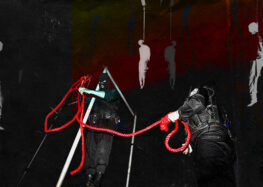
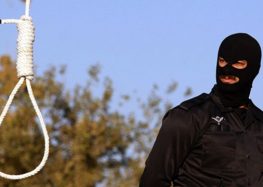
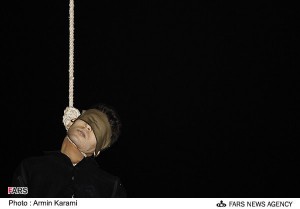
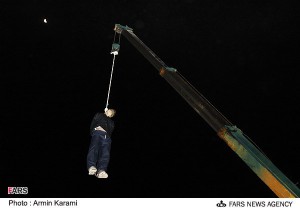
Yesterday, 21 September, Iranian authorities hanged 17-year-old offender Alireza Molla-Soltani in public. Under the International Covenant on Civil Political Rights and the Convention on the Rights of the Child it is illegal to execute someone for crimes committed under the age of eighteen. Iran is party to both treaties. Nonetheless Iran remains one of a handful of countries still putting juveniles to death. This year Iran executed at least 3 juveniles, including Soltani.
 The International Campaign for Iran has repeatedly expressed concern about Iran’s skyrocketing executions, the vast majority of which do not meet international standards. Iran puts to death more people per-capita than any other country in the world and is only second to China in total numbers of executions. In the first three weeks of September alone Iran has executed 51 people.
________________________________________________________________

GENEVA – Four United Nations experts* condemned the public execution by hanging of 17-year-old Alireza Molla Soltani, which was carried out yesterday, and the ongoing practice by the Iranian authorities, of executing people charged with drug-related offences.
“We are outraged at the execution practice in Iran despite the international community’s and our repeated calls for a moratorium,” said the experts recalling that three juveniles have been executed in public so far this year in the country, according to reliable information.
The UN Special Rapporteurs on Iran, on summary executions, on independence of the judiciary and on torture stressed that “any judgment imposing the death penalty upon juveniles below the age of 18, and their execution, are incompatible with Iran’s international obligations.”
“There is an absolute ban on the death sentence against persons below the age of 18 at the time of commission of the offence under international human rights law”, they said referring to the UN Convention on the Rights of the Child and the International Covenant on Civil and Political Rights, to which the Islamic Republic of Iran is a party.
In 2011 alone, over 200 people have been executed in Iran, the majority of whom were charged with drug-related offences. It is widely accepted that the death penalty is an extreme punishment, and exception to the right to life, and that it may only be imposed for the most serious crimes. “We, however, regret that execution is common practice for people charged with drug-related offences, which do not amount to the most serious crimes.”
In most cases brought to the Special Rapporteurs’ attention, there have been concerns regarding fair trial safeguards and access to a lawyer and families.
“We reiterate this clear message to the Government of Iran,” said the human rights experts, “to immediately implement a moratorium on the death penalty particularly in drug-related and juvenile cases.”
(*) Special Rapporteur on extrajudicial, summary or arbitrary executions, Christof Heyns; Special Rapporteur on the situation of human rights in the Islamic Republic of Iran, Ahmed Shaheed; Special Rapporteur on the independence of judges and lawyers, Gabriela Knaul; Special Rapporteur on torture and other cruel, inhuman or degrading treatment or punishment, Juan Méndez.
Original Source: http://www.ohchr.org/EN/NewsEvents/Pages/DisplayNews.aspx?NewsID=11415&LangID=E