Nadarkhani Refuses to Repent; Awaiting Final Ruling on Apostasy Death Sentence
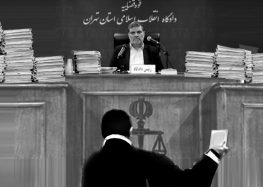
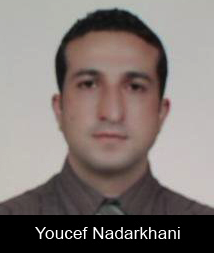 In his last court session on Wednesday, 28 September, Christian Pastor Youcef Nadarkhani, charged with apostasy and sentenced to execution, refused to repent of his Christian faith despite the judge’s repeated requests.
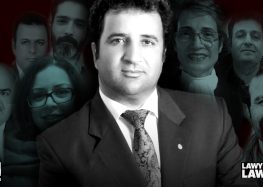
Youcef Nadarkhani’s lawyer, Mohammad Ali Dadkhah, expressed hope that the court would eventually declare his client innocent. As he told the International Campaign for Human Rights in Iran, “[Nadarkhani] was brought to court to repent for three days. He denied repentance on all three days. I said in my last defense that his execution is not an appropriate and legal action from the viewpoint of Sharia Law, our own laws, and international laws, and I believe that the court accepted my opinion. I hope the court will vote for his acquittal and he will be released in the coming week. His apostasy charges were eliminated before, and I provided the necessary defense regarding the illegality of repentance.”
Youcef Nadarkhani is a 33-year-old pastor who was born to Muslim parents and converted to Christianity at the age of 19. Prior to his arrest, he was a pastor for the Church of Iran, a 400-person congregation of Christians in the city of Rasht. His death sentence on the charge of apostasy was upheld on 23 August 2010 by Branch 11 of Gilan Province Appeals Court. The death sentence was overturned on 28 June, pending Naderkhani’s repentance. The suspect’s first court date was held on 25 September and continued through three more sessions until Wednesday 28 September.
“The Judge kept asking my client to say, ‘I have renounced Christianity and I recognize Islam as rescinder of all other regions,’ and he kept saying ‘I won’t say that,'” said Dadkhah.
“His Appeals Court death sentence had already been sent to the Supreme Court and as it lacked legal and logical justification, it was eliminated. But the Supreme Court wanted them to get a repentance from him, [stipulating] that if he does not repent, he should be executed. I said in the court that from the point of view of our country’s laws, Islamic spirituality, and jurists such as Montazeri, Ardabili, and Sanei, demanding a repentance is not legally valid. We had solicited these individuals’ specific opinions about this case. I told the court that from the standpoint of international law accepted by our own country, this move is not legal. Unfortunately, in the first session the court did not treat me very well,” continued Dadkhah.
“They thought I had gone there to tell my client not to repent. Otherwise, they said, why would I have gone all this distance to participate in the court session?,” said Dadkhah, adding that, “Or, for example, I was told at the entrance, ‘If you come wearing a tie tomorrow, we won’t let you in.’ I went back wearing a tie.”
“Our legal system, and the list of our crimes, does not include apostasy, and according to the article of the Constitution governing the legality of a crime and its punishment, the government must insist on safeguaring the people’s rights. Otherwise it is possible for some judiciary staff to follow this precedence,” added Dadkhah.