Member of Iranian Parliament’s Judicial Commission Expresses Support Public Executions
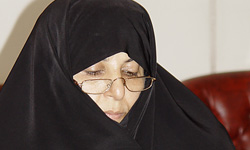
Nayereh Akhavan, member of Parliament from Isfahan and member of the Judicial Commission of Parliament
In an interview published by Fars News Agency, an Iranian member of parliament (MP) supports the implementation of executions publicly. Nayereh Akhavan, an MP from Isfahan and a member of the Judicial Commission of Parliament, told Fars News: “It seems carrying out such sentences may be effective in preventing certain crimes.” Human rights activists continue to express concern about the negative effects of public hangings on Iranian society. Responding to such objections Akhavan said: “Those who oppose carrying out Qisas sentences in public on the excuse of its ‘harming public morale,’ are those who have been educated in the western system.”
“The principle is to determine the proper punishment and to carry it out against those who have committed a crime, but in some cases, based on the judge’s determination, such sentences are carried out in public, where the public can see it…we most definitely cannot overlook the results and the impact of carrying out such sentences in public and deny them, as public executions will both punish the criminal and raise awareness among those who are watching the scene of the execution…Certainly, those who do not appreciate seeing such scenes will never go to the determined location of the execution, and these are people who will not commit any crimes in the future, either, so there is no problem,” she added.
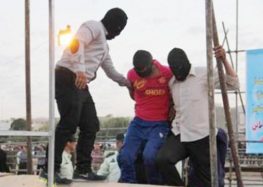
In the past few years, judicial authorities have conducted several executions in public. The last public execution in Tehran took place following a murder in the Sa’adat Abad neighborhood and the Qisas sentence was carried out in public in January, two months after the suspect was arrested. Last May, a public hanging of a serial murderer was carried out in the city of Qazvin. Despite claims by Islamic Republic officials that public executions prevent crimes, no evidence has been presented to support such claims.
Many human rights organizations, including the International Campaign for Human Rights in Iran, support a ban on capital punishment, and have urged transparency and accountability from Iranian officials in relation to the hundreds of secret executions carried out in Iranian prisons each year.