“Another Kidney Infection and My Son Will Die,” Says Imprisoned Blogger’s Father
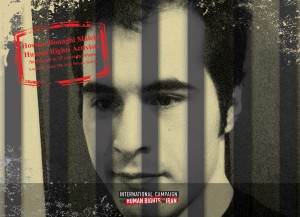 Following a deterioration in the condition of Hossein Ronaghi Maleki’s health in prison, his father, Ahmad Ronaghi Maleki, shared his concern with the International Campaign for Human Rights in Iran. “My son’s interrogators told us that they would kill Hossein and now they are delivering on that promise. When I reached Tehran from Malekan on 15 June, as I was getting off the bus to go pursue furlough for Hossein, my wife called to say that she was contacted from Evin Prison and told that Hossein is in poor condition and in Evin’s infirmary. I went to prison immediately and told them that I was his father and to let me see him but they did not agree. I said I hear Hossein has had seizures, let me take him to hospital and I will pay all his expenses like the last time, but they didn’t accept this. First, they said he is inside the ward, then they said he was in the shower. I waited a long time. Then I said to them that I didn’t want to see him or talk to him, and that they should only let him call his mother, so she could hear his voice and find peace. They said O.K., but nothing happened,” Maleki said.
“I went to the Tehran Prosecutor’s Office right away and informed them. They contacted the prison, but prison authorities told them that Hossein is in the shower and he is well. I wrote two letters that same day, and delivered one to the Islamic Human Rights Office and the other to the Tehran Prosecutor’s Office. I wrote in the letters that Hossein’s life is in danger and if his kidneys are infected one more time, he would die. I am shouting this, announcing it, so the world can hear me,” he continued.
According to Ahmad Ronaghi Maleki, his 26-year-old son has undergone kidney surgery twice in the past few months. His left kidney has lost 80% functionality and his right kidney has lost 20%, and yet he received no treatment at the hospial. “He had two surgeries at Hasheminejad Hospital. We were not permitted to visit him. Even the nurses were not allowed to do their work freely. They told the nurses ‘you help him plan an escape.’ His hands and feet were tied to the bed and there were three guards next to him. The first time the doctors ordered one month’s house rest under the care of physicians, and the second time [they ordered] two months [of house rest]. But unfortunately he was not allowed furlough and he was returned to prison immediately following his operations. I took all the doctor’s prescriptions and his lawyer’s letter in which he had requested furlough according to law to Branch 26 of Tehran’s Revolutionary Court but they didn’t accept the letter and they wouldn’t even let me go upstairs,” added Maleki.
“When Hossein was in solitary, his interrogators contacted us every day and said ‘we will kill Hossein. We won’t let him live.’ They would say that ‘even judicial authorities couldn’t do anything else.’ When Hossein’s case went to trial, they said he would be tried in the presence of myself and his lawyer, but unfortunately, neither of us were present. They forced him through pressure and torture to sign his verdict even though he didn’t accept his charges,” said Maleki.
“Hossein was in a solitary cell, under the worst conditions for 13 months. He lost his kidneys. There is a 17 mg stone in his gallbladder, and he has developed psychological problems. He is under pressure in prison right now and his life is not safe. When we talk to the media or when I write letters to authorities, he is put under pressure in prison. Right now as you called us, we are under pressure and threats because we are not supposed to talk to you; we should let them kill Hossein!” said Hossein Ronaghi Maleki’s father, fearing for his son’s life.
“When I wrote letters to the authorities about my son’s conditions, my home was stormed one night and they wanted to beat me, and I took my witnesses to the regional hall of justice, but they didn’t pay any attention to it. And one night I was on my way home when they were going to attack me with an axe, and because I was carrying a shovel, they were unable to harm me and ran away on a motorbike. I reported all of this at the regional hall of justice,” he added.
“Hear my voice, please. I ask the Supreme Leader, the human rights activists in Iran and in the world, Iranian judicial authorities, and the Tehran Prosecutor to please grant Hossein leave. He is a scholar, not a criminal. He was kept in solitary confinement for 13 months under the worst conditions. And when we want to talk about this, they put him under pressure. I ask for help to save Hossein’s life. If there is no attention, Hossein will die,” said Ahmad Ronaghi Maleki.
“We are allowed a 15-minute visit through a booth every week. We have to travel all night to get there from Malekan in Eastern Azerbaijan. We arrive in the morning and go visit him, then we go back to our town. They wouldn’t let him call us. I won’t be able to find out where he is until next Monday. The doctors said that if he remains in prison, he won’t be able to have kidney transplants. There is only a 5% chance that a kidney transplant operation for him would be successful,” Ronaghi Maleki concluded.