Torture at Evin Prison: Journalist’s Own Experiences and His Interviews with 19 Political Prisoners
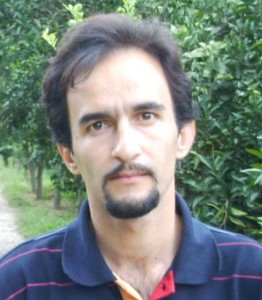
Saeed Pourheydar
In an interview with the International Campaign for Human Rights in Iran, journalist Saeed Pourheydar, who was arrested twice after the 2009 election and eventually sentenced to five years in prison, described his prison abuse, charges, his detention conditions inside Evin Prison, and the torture of other political prisoners.
Saeed Pourheydar is a journalist who formerly worked for several reformist newspapers. He told the Campaign that after the 2009 presidential election, he was arrested twice: once on 6 February 2010 at his home when he was arrested by Intelligence Ministry and served one month inside Ward 240 of Evin Prison, and another time on 10 October 2010, when he was detained after being summoned to Evin Prison Court and spent 52 days in prison until his appeals court issued a ruling. When the appeals court upheld his conviction, Pourheydar left Iran and currently resides abroad.
“The investigative judge raised five charges against me” ‘propagating against the regime,’ ‘assembly and collusion with the intent to overthrow,’ ‘disrupting public order,’ ‘insulting the president,’ and ‘insulting the sanctities and questioning Islamic orders.’ Judge Pirabbasi, the presiding judge of Branch 26 of the Revolutionary Court, sentenced me to five years in prison, a ten-year ban on journalistic activities and a payment of $3,000 in fines … In my case file, other than my personal blogs and my interviews with media outside the country, there were no reasons or logical evidence for arresting or sentencing me,” said Pourheydar.
“Even if a prisoner is not to suffer any compounded physical torture or abuse, solitary confinement is in itself a manifestation of psychological and mental torture. The most significant abuse I suffered in prison was my psychological and mental torture (white torture). Sometimes I was physically tortured, which included beatings during interrogations, sleep deprivation, once throwing me inside a cold water barrel, or keeping me naked outside in the cold weather. Some of the mental and psychological torture included giving me false news and information, threatening me with flogging, forcing me to accept immoral charges, threatening me with arrests of my family members or giving me false news about the arrests of my wife and my father, playing my daughter’s voice during an interrogation session and telling me that my wife and my daughter were also arrested, threatening me with a long prison sentence, and banning my visitations and contacts with my family,” he continued.
“Before prison, I used to take one pill a day for my heart condition. The ‘gift’ of my one-month solitary cell was that after I was released, I had to take three pills daily for my heart and use sedatives. Also, after four days of hunger strike, which normally lead to a prisoner’s weight loss, I lost nine kilograms in one month and once, after my interrogation session ended, I suffered a heart attack,” added Pourheydar.
“The conditions of wards containing solitary cells are different from the conditions inside the General Ward. Inside the solitary cells, the prisoner has no access to the store, sports equipment, books, etc. Some cells have a john, and some don’t, so the prisoner must go to the bathroom blindfolded and with the help of a prison guard every time… Inside General Ward 350, where political prisoners are kept, the conditions are slightly better. Ward 350 has a store, fresh air courtyard, a library, limited sports equipment, heating systems, etc., and the prisoners also has access to other amenities which they can pay for personally.”
“There were awake and sleeping hours inside Ward 350, but inside solitary cells, the prisoners were not even aware of what time of day or night it was. Inside Ward 350, wake-up time was at 7:00 a.m. and 10:00 p.m. was bedtime. Twice daily there was a roll call. Twice daily, prisoners inside the General Ward went to the courtyard where they were counted. They did the morning headcount at 7:00 a.m. and the nightly headcount at 6:00 p.m. But it wasn’t like the prisoners were forced to sleep during sleeping hours or be awake during the waking hours. Except for two times during the day when they performed the headcount and everyone had to be present, we could decide whether we wanted to be awake or asleep during other parts of the day,” said Pourheydar.
“The books in Ward 350’s library were all books that entered the prison after approval by prison authorities, and it is natural that most of these books would not be appreciated or used by the prisoners. Many of the books were old and as my friends called them “low- or no-risk” books. Though the Kayhan newspaper was delivered to ordinary wards, it was not distributed to Ward 350. After I was released, I learned from my friends that prisoners no longer have access to even those useless newspapers. There are no books or newspapers available to the prisoner inside solitary cells.”
“Many of my prisoner friends inside Evin’s Ward 350, who had prior experience in solitary cells inside Wards 209, 240, and IRGC’s Ward 2-A, had been exposed to some type of psychological, mental, or physical torture. During my time in Ward 350, I was able to talk to 19 friends who had been tortured. Most of the torture took place inside the ward affiliated with the IRGC (Islamic Revolutionary Guard Corps), and depending on what the security forces decided for the prisoner, the type and intensity of the torture differed. For example, if they were set on extracting confessions out of someone, they would force him to confess and accept his charges in whatever way they could. During the talks I had with my friends, they gave me a complete description of what they went through in solitary cells. The stories I heard about the horrible psychological and physical torture provided me with new insight about how brutally the regime treats its political prisoners,” he added.
“Beatings, urinating on the prisoner’s head and face, hanging the prisoner by his feet, flogging, using electric shockers, hitting sensitive spots on one’s body, and one case of horrible rape using glue, were parts of the physical torture my friends told me about. Fake executions, insults and degradation, arrests of family members, threats of arresting and raping the prisoner’s wife or daughter, threatening the prisoner with the death sentence, forcing the prisoner to take psychedelics, etc., were only a small part of the psychological and mental tortures used inside the Islamic Republic prisons that these 19 prisoners experienced. Though the number of prisoners who were tortured was far more than this number, when I was inside Ward 250, I was only able to talk to 19 individuals, some of whom were unfortunately executed later and some others who continue to serve their time there.”