“I Saw Prison Abuse,” Says Mohammad Nourizad
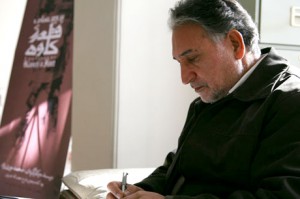
Mohammad Nourizad told the Campaign he spent 68 days in solitary confinement inside Wards 209 and 240 of Evin Prison, having had no access to "paper, pen, or telephone."
In an interview with the International Campaign with Human Rights in Iran, Mohammad Nourizad, a filmmaker, journalist and prisoner of conscience currently on furlough, provided details about his own case as well as the abuse of other prisoners. “I saw a young man who had been beaten, his lips were torn, and he had been slapped in the face numerous times. I believe what Hamzeh Karami and Abdollah Momeni said [about prison abuse] was accurate. They were badly tortured.” In separate letters from prison, political prisoners Hamzeh Karami and Abdollah Momeni reported being abused and tortured.
“I was transferred to Evin Prison on 20 December 2009. It appeared that everything had been planned before. During a superficial case and setting a $500,000 bail during a tight time frame, it was obvious that Evin awaited me…Judge Pirabbasi sentenced me to 3.5 years in prison; two years for insulting the Supreme Leader; one year for propagating against the regime; three months for insulting the president; three months for insulting the Head of the Judiciary, and 50 lashes for insulting the Mashad Friday Imam,” said Nourizad, adding that he has already served exactly 1.5 years of his prison term. “They will flog me in the end to remember the taste.”
Nourizad emphasized that he has already spent 68 days in solitary confinement inside Wards 209 and 240 of Evin Prison, having had no access to “paper, pen, or telephone” in that time. In the beginning of his imprisonment, he was not allowed to be represented by a lawyer, but after some time Mahmoud Alizadeh Tabatabaei took on his case. About facilities provided to him in Evin Prison he said, “The same things that must be given to a horse or a donkey to keep them alive. It is only later, in the General Ward, when some concessions such as books, papers, pen, etc. are provided.”
“Insults, curses against my honor, and beatings; these are the things that happened to me twice. In the following sessions, insults, humiliations and threats to my family continued, and things that shame me to repeat. Perhaps for about a year we were forced to wear blindfolds. Later, when I realized that the use of blindfolds was illegal, I resisted, and that by itself is another long story. My access to telephone calls, visitation, etc. was cut off. I told them [my access to those things] is the law. They said, we defecate on this law. Because they cursed my family, as an objection, I personally refused to call my family. Ninety three days later, I started to make telephone calls around the Persian New Year in March 2011,” Nourizad explained.
“They sentenced me based on my own confessions. They would mention a charge as my ‘crime,’ and I would name ten more myself, telling them: ‘If you didn’t know, I also believe in the following and I have also said the following.’ So, they sentenced me according to my own confessions. But what crimes?! That’s the funny part!” Nourizad told the Campaign.
“I developed a skin condition. I developed an infection in my jaws. My teeth became loose. Maybe it was because of the prolonged hunger strikes, but the prison itself is a contributing factor which affects [one’s health] silently,” said Nourizad about his health after prison.
Nourizad wrote several letters about prison conditions to Iran’s Supreme Leader, Ali Khamenei. “I don’t know whether he knows this or not. If he doesn’t know, he will not be relieved of his responsibilities. After I wrote those letters inside the prison, they sentenced me to two more years. It [the trial court] was quite satirical! They asked me two questions in three minutes. In fact my sentence is 5.5 years plus 50 lashes,” Nourizad added.
Mohammad Nourizad has written wrote for Kayhan newspaper. The documentary filmmaker and blogger wrote three critical letters to Ali Khamenei after the 2009 elections which led to his arrest. He has been sentenced to a total of 5.5 years in prison and 50 lashes on charges of “propagating against the regime” and “insulting” several Islamic Republic officials. He is currently out of prison on furlough.