Authorities Responsible for Death of Imprisoned Dissident on Hunger Strike
Many Other Political Prisoners Vulnerable to “Willful Neglect”
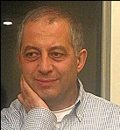
Hoda Saber
(13 June 2011) The Iranian Judiciary and prison officials are responsible for the death of Hoda Saber, a prominent dissident who died of a heart attack on 10 June, the International Campaign for Human Rights in Iran said today. Saber had been on a hunger strike.
According to public statements by Firuzeh Saber, Hoda Saber’s sister, Hoda suffered a heart attack at 4:30 a.m. on Friday, but prison officials failed to transfer him to a hospital until 10:30 a.m.
“Iranian authorities have demonstrated once again their disregard for UN standards mandating proper care of prisoners, and they bear responsibility for this death,” said Aaron Rhodes, a spokesperson for the Campaign.
Saber began a hunger strike on 2 June to protest the death of Haleh Sahabi, another activist, who died on 1 June after being beaten by security agents at her father’s funeral. Saber had been jailed since July 2010 in Evin prison. He had been jailed on several previous occasions for his political activism. Saber was a prominent dissident and a leading member of the Religious-Nationalist movement.
Fariden Jamshidi, wife of Hoda Saber, has publicly stated that personnel at Modares Hospital, where Saber had been taken, said he could have been saved had prison officials brought him in earlier. She also said she had not been informed by prison officials of his death for two days.
The United Nations Standard Minimum Rules for the Treatment of Prisoners, first approved by the UN Economic and Social Council (ECOSOC) in 1955, state that prisoners requiring specialized medical treatment be transferred to medical institutions if necessary to receive the care they need.
The document also states that prison officials should immediately notify relatives of the death of a prisoner.
Among the core principles informing the UN standards is that no discrimination should take place regarding the treatment of prisoners, including discrimination on political grounds.
“We are concerned, and the international community should be concerned, about the vulnerability of hundreds of political prisoners in Iran, any of whom could fall victim to willful neglect by the authorities,” Rhodes said.