“Gross Negligence, Rulers Wanted Him Dead,” Says Hoda Saber’s Former Cellmate
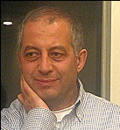
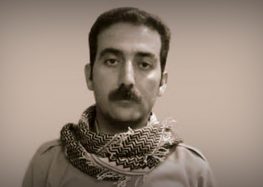
Reza Alijani, a former cellmate of Hoda Saber (above), described to the Campaign the extent of torture and abuse Saber was under and the denial of medical attention that led to his death.
In an interview with the International Campaign for Human Rights in Iran, political activist Reza Alijani, talked about his former cellmate Hoda Saber and his death. “All the evidence shows that the rulers and security apparatus wanted him to die,” Alijani told the Campaign. “I see Hoda’s death as an invisible execution and a type of threat against others on hunger strike, that if they continue their strike, they will face death,” he said, referencing the negligence of prison authorities that resulted in Saber’s death.
Following his hunger strike and subsequent heart attack, journalist and Nationalist-Religious political activist Hoda Saber died on the morning of 11 June. Saber had been on a hunger strike since 2 June to protest events leading to the death of Haleh Sahabi. Starting on Friday morning, as Saber’s health deteriorated, he repeatedly asked prison authorities for help, but was transferred to Tehran’s Modarres Hospital hours later, where he died of a heart attack following his hunger strike.
“All prisoners and interrogators know that a prisoner may face death under two circumstances–one is when they are flogged with a cable and there is a high probability that they will need kidney dialysis; that’s why interrogators make prisoners drink water and force them to walk. The other is during hunger strikes. On the eighth day of his hunger strike, Hoda developed chest pains and called on prison officials several times, but they only went to check on him several hours later. I heard an hour ago that all of Saber’s cellmates are willing to testify that he kept screaming and asking for help, and that his death was caused by intentional negligence, and he was sent to hospital very late. When Dr. Shakouri Rad visited him later, he said that if he had been sent to the hospital earlier, he could have been saved,” said Alijani.
“If Mr. Nourizad had not gone to Modarres Hospital that day for his medical treatment, if he had not heard about Hoda Saber’s death from one of the hospital personnel, and if he had not put the news on his Facebook page, who would have known about it?! They probably wanted to announce the news after 12 June. Visitation days are on Mondays and Thursdays, and Hoda’s cellmates have no contact with the outside world and their telephones are cut off. Nobody would have found out that he was transferred to the hospital or that he died,” Alijani told the Campaign.
One week after Hoda Saber and Amir Khosrow Dalirsani announced their hunger strike, Nationalist-Religious activists Habibollah Peyman, Hossein Shah Hosseini, and Ahmad Sadr Haj Seyed Javadi asked the two in a letter to end their hunger strike. There is no news of the condition of Amir Khosrow Dalirsani.
“If messages asking Saber to break his hunger strike had reached him, he would have broken his hunger strike. If prison authorities had told him that Shamekhi, Shah Hosseini and Peyman had asked him to end his hunger strike, he would have broken his hunger strike because he believed them to be the elders of the Nationalist-Religious movement. Hoda’s interrogators were very familiar with his characteristics and knew how he would react if the news reached him, and that he would end his strike,” said Alijani.
“I believe next to Mr. Sahabi, Mr. Saber was interrogated most intensively and for the longest period of time. This in itself was a harsh torture. Most of the pressure was put on him during interrogations. They would take him to several hours-long interrogations in the middle of the night. I can testify that Saber was threatened with execution and rape. Beatings were common during the interrogations and of course he was also kept in a long solitary confinement for over 200 days,” said Alijani about Saber’s torture in prison.
Hoda Saber had been arrested several times over the past decade. The last time he was arrested was in July 2010, when he was transferred to Evin Prison without being informed of his charges.