Imprisoned Student Activist’s Mother: “I Don’t Know Why They Are Keeping Him”
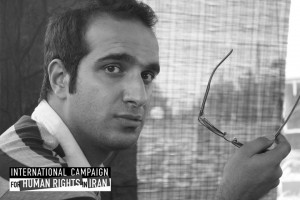 In an interview with the International Campaign for Human Rights in Iran, Roghieh Jafarian, mother of imprisoned student activist Ashkan Zahabian, spoke about her son who has been in detention for the past 16 days inside Sari’s Intelligence Office. Ashkan Zahabian, a member of the Tahkim-e Vahdat student organization, was banned from continuing his education. Jafarian told the Campaign that though the officials are polite, they don’t allow her to see her son. She expressed concern about her son’s health and the reasons for his detention considering he was previously sentenced to six months in prison.
“The Intelligence Office had previously asked us to provide a letter from the Prosecutor’s Office for a visitation. We went and got a letter from the Babol Prosecutor’s Office for a visitation permit. When we went to Sari Intelligence Office yesterday, they were surprised. They said this letter is [normally] used to receive permission for visiting prisoners with drug-related crimes, not for political prisoners. My husband returned to the Babol Prosecutor’s Office to get a letter for visiting my son, but this time they said they couldn’t do anything and we had to go to Babolsar Prosecutor’s Office. My husband went there and they said: ‘Why did you turn your son in at the Intelligence Office? You should have turned him in to us.’ He told them: ‘Well, they were following him and they arrested him. Right now all we want is to see him,’ and they said: ‘We can’t give a letter. You must first bring your son’s lower court ruling [document], showing that he was sentenced to six months in prison. We can then see what we can do.’ We didn’t know where that ruling document was. I just don’t think that ruling is necessary for receiving a visitation permit. We thought they are just bouncing us here and there. So my husband gave up and we returned home,” said Zahabian’s mother.
“When we returned home, my husband contacted the Sari Intelligence Office and asked to talk to my son. They said that they can’t allow the [phone] conversation, but that he is well. Then they asked for some food items such as mineral water, fruits, and food, and his father took the items to the Intelligence Office. They took the things from him there, but didn’t let him visit Ashkan. They just told him that he is fine,” Jafarian added.
“We were both really worried yesterday. You know how parents would feel in a situation like this. Since the day they arrested Ashkan, he has only called home once, when he talked to his father. With the news we heard in the media about his illness and hospitalization, our concern has increased. Yesterday, when my husband contacted the Intelligence Office and asked to talk to Ashkan, for a moment he broke into tears and I started crying, too. They said: ‘He is well. He doesn’t have such a bad time here. You shouldn’t worry about him.'”
“They told my husband: ‘We can’t let you see him, but Ashkan is well. We almost believed them, because a while back when they came to our home to arrest Ashkan and he wasn’t home, their treatment of us wasn’t bad, it was good. They treat us with respect now, too, so we accepted what they told us. But we are parents, we want to see our child for a moment to make sure, that’s all,” continued Jafarian.
“I don’t know why they have kept him there all this time. We don’t know his charges or what kind of ruling he will get. We don’t know.”
Earlier this month, a friend of Ashkan Zahabian told the International Campaign for Human Rights in Iran that his family has been subjected to immense pressure and abuse by security forces. On 3 April 2011, intelligence forces went to Zahabian’s home and threatened to confiscate the home, the deed to which had been posted for his release from prison. The intelligence forces said they would auction the house.
Zahabian was a student campaigner at Mehdi Karroubi’s campaign headquarters in the city of Babol. During the post-election arrests, he was severely beaten by security forces and in one instance was unconscious for three days. He was imprisoned for a total of 8 weeks.
In 2008, Ashkan Zahabian was suspended for one academic term because of his student activism at Babol’s Anousirvani Industrial University. Only four days after the disputed election of 2009, he was arrested by the Ministry of Intelligence. Plainclothes forces known as Ansar-e Hezbollah severely beat him during the arrest. During the Student’s Day protests on 4 November 2009, he was arrested for a second time. The Revolutionary Court in Babol sentenced him to six months in prison in his absence. In February 2009, while still suspended from university, he was banned from continuing his education based on a decision by the Intelligence Ministry, and was expelled from university just one term shy of graduating.