Senate Hearing on Human Rights in Iran
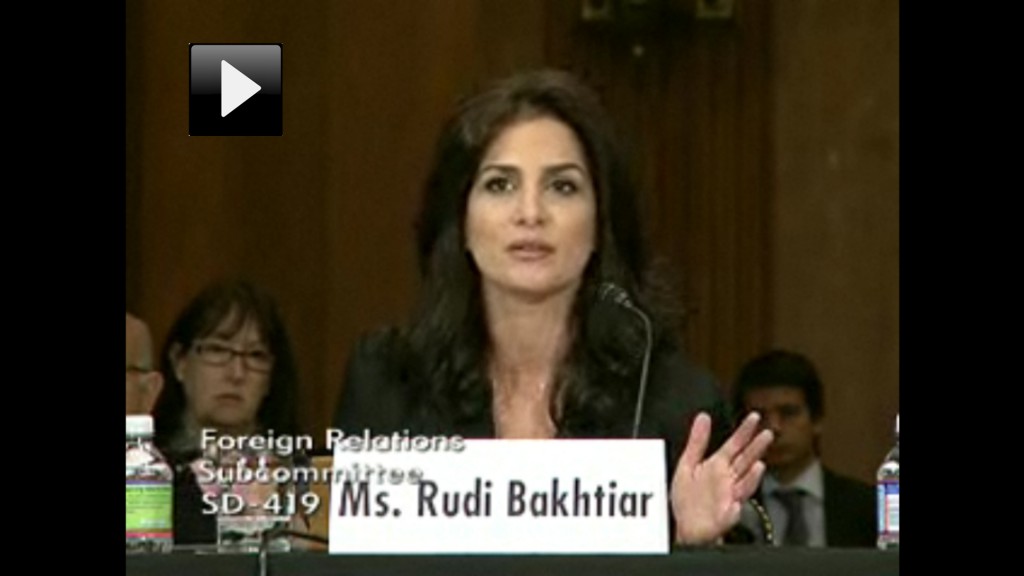
Click the image to watch the Campaign’s testimony to the Senate Foreign Relations Committee. The testimony begins at 84 minutes.
——–
FULL TESTIMONY TO SENATE COMMITTEE ON FOREIGN RELATIONS DELIVERED BY RUDI BAKHTIAR
INTERNATIONAL CAMPAIGN FOR HUMAN RIGHTS IN IRAN
5/11/2011
I would like to thank the Chairman for providing this opportunity to speak to you on behalf of the International Campaign for Human Rights in Iran, an independent NGO dedicated to research and advocacy regarding the human rights situation in Iran. We want to share our main concerns and offer some recommendations.
Two years after the disputed presidential election of 2009, the human rights situation in the Islamic Republic of Iran continues to deteriorate and is in a state of unprecedented crisis.
Under the Presidency of Mahmoud Ahmadinejad, Iran has become one of the world’s worst violators of human rights, egregiously violating virtually every article of the International Covenant on Civil and Political Rights of which Iran is a state party, and ignoring the human rights protections in Iran’s own Constitution.
Since the start of 2011 Iran has been on an execution binge. In January 2011 alone, Iran executed 85 persons, compared to 86 in all of 2005, the year President Ahmadinejad assumed power.
In all of 2010, Iran executed at least 542 people, 242 officially announced and over 300 reportedly put to death in secret executions inside Vakilabad Prison in Mashad.
Reports of cruel and inhumane punishments including stoning, limb amputations and floggings are also on the rise. The government falsely justifies these practices on the basis of Iran’s religion and culture, while they are clearly part of a program to terrorize the citizens.
Human rights defenders, civil society activists, journalists, as well as, minority ethnic and religious groups, have been facing growing repression; the authorities silences those who try to expose and criticize its violence, or hold it accountable.
The Iranian Judiciary has become deeply politicized under the influence of the state security establishment. The Judiciary and security forces regularly use coerced confessions obtained under torture or duress to issue lengthy sentences on vaguely worded offences including “acts against national security,” and “enmity against God.”
Over the past two years, numerous detainees have risked their lives and come forward with personal accounts of rape, severe beatings, sleep deprivation, verbal threats and other ill treatment by interrogators.
An estimated 500 persons remain arbitrarily detained for peaceful activities or the exercise of free expression. Another 500 prisoners of conscience have been sentenced to lengthy prison terms following unfair trails.
Authorities in Iran are effectively criminalizing human rights based legal representation by prosecuting a number of lawyers who represent political detainees including Nasrin Sotoudeh and Mohammad Seifzadeh, sentenced in 2010 to eleven years and nine years respectively.
Even the creation of an independent human rights organization has become a crime in Iran. Mohammad Kaboudvand was sentenced to 10 years in prison for starting the first human rights organization in Kurdistan. Family members and colleagues of Shirin Ebadi, Iran’s 2003 Nobel Peace Laureate, have been arrested, harassed and intimidated in order to force them to disassociate themselves from Ms. Ebadi, who led the country’s most effective human rights organization, the Center for Human Rights Defenders.
Leading human rights advocate Emad Baghi of the Association for Prisoner’s Rights, who has shown how Iran’s policy of executing juvenile offenders is not justified by Sharia law, is serving six years in prison.
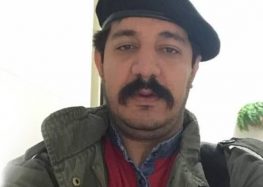
The government continues to impose increasingly severe restrictions on freedom of expression, association and assembly, including widespread censorship of newspapers and the Internet, imprisoning numerous Iranian journalists including Bahman Ahmadi Amouee and Issa Saharkhiz.
Religious and ethnic minorities continue to face discrimination. In December 2010, Iranian courts sentenced Christian pastor Youcef Nadarkhani to death for “apostasy,” an offense that has no basis in Iranian law.
The broad scale discrimination against members of the Baha’i Faith has included the sentencing of seven Baha’i leaders to twenty years in prison each on baseless espionage charges in August 2010, and denying Baha’is access to higher education. Sufi followers have been routinely persecuted and prosecuted solely for their beliefs.
Furthermore, violent suppression of the ethnic Arab population in Khuzestan, continues. Dozens of protesters were killed and many were injured during demonstrations on April 15 2011, and many have since been arrested.
Despite unassailable evidence of wide scale rights violations by the government, Iranian officials continue to misrepresent their human rights record, reject calls for reform, and block attempts by international human rights mechanisms to cooperatively address the crisis in Iran. In this connection I wish to note the critical role of the Administration for its leadership and support of the United Nations Human Rights Council resolution that established a special rapporteur on Iran. It is something the Iranian people deeply appreciate.
Two years ago, millions of Iranians took to the streets demanding respect for fundamental freedoms, human rights and democracy. Today popular movements throughout the Middle East are making similar calls.
Iranians are today living under severe repression, but there is no doubt their civil and human rights movement cannot be contained in the long term.
We believe United States policy toward Iran must give priority to the dire human rights situation. In particular we recommend the following actions:
- Access to information is of critical importance today. While the Iranian government engages in broad censorship and implements severe restrictions on internet access and broadcast media, the US could help Iranian people to gain access to the internet and satellite channels as a means to expand communications, access impartial news and information and to challenge the government’s narrative and expose the truth. For example, the US should lift sanctions on hardware technology that would allow ordinary Iranians to download internet content wirelessly through their television satellite dishes and should facilitate providing such wireless access. US policy should also focus on ending the illegal jamming of satellite channels by the Iranian government.
- The Administration and Congress should express clear moral support for the Iranian people in responding to the unfolding human rights crisis. This moral support should be articulated in a way that does not allow legitimate aspirations of Iranians to be falsely portrayed by the government as foreign intervention. Upholding international legal commitments is not interfering in the internal affairs of another state.
- As noted above, the Administration’s diplomacy at the Human Rights Council, leading to a multilateral consensus on appointing a special reporter for Iran is welcomed and should be strongly supported. This special mechanism should be strengthened to result in tangible improvements.
- The US government should target companies that sell surveillance technologies to the Iranian government, empowering its repression. Several European companies are suspected of such business activity and should be denied access to American markets.
- The US should continue to expand its targeted sanctions against government officials implicated in gross human rights violations. It should also encourage countries such as Canada, Australia, New Zealand, and Japan to adopt similar travel bans and financial freezes. The US Treasury should put financial institutions in countries such as Thailand, Malaysia, Singapore, and the UAE on notice that any financial services to sanctioned individual will result in their losing the ability to engage in financial transactions through US institutions.
Thank you for your attention and concern. And thank you in advance for concrete steps that you can take to help the people of Iran realize their fundamental human rights.