Protestants Acquitted of Political Charges, Recognized Under Iran’s Constitution

Pastor Abdolreza Ali-Haghnejad and Zainab Bahremend
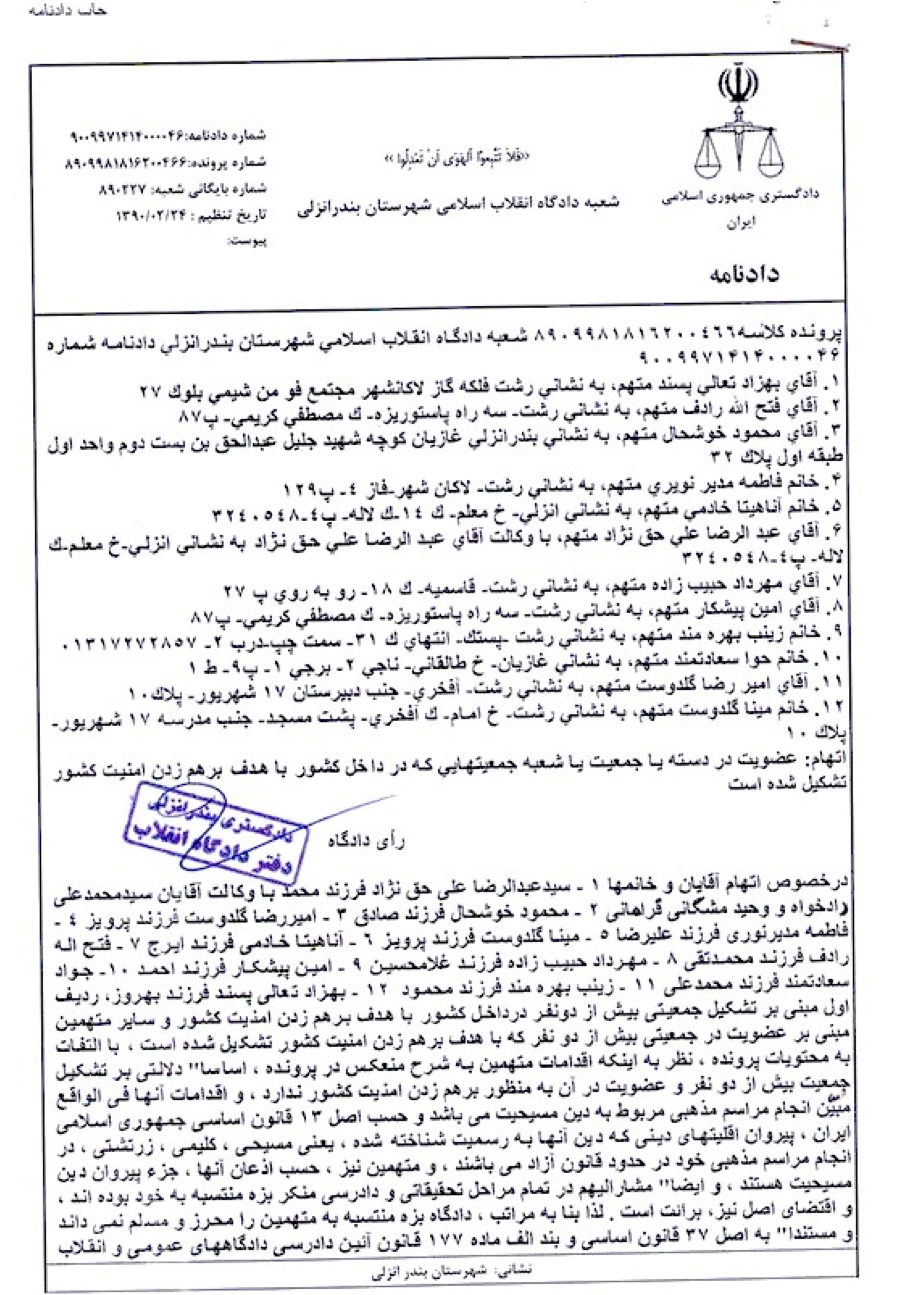
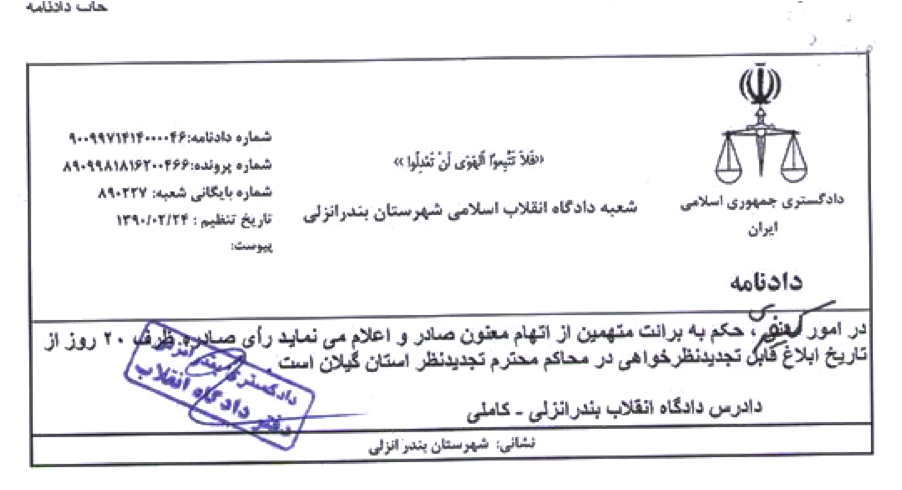
On 14 May 2011 the Revolutionary Court of the northern city of Bandar Anzali acquitted twelve Protestant Christians of the specific charge of “forming a society with the intent of disrupting national security.”
The International Campaign for Human Rights in Iran had previously issued a statement raising concern for these Christian defendants and calling on the judiciary to stop the legal persecution of Protestants. The acquitted defendants, including Pastor Abdolreza Ali-Haghnejad and Zainab Bahremend, the 62-year-old grandmother of two other defendants, are all Christian converts and members of a group called the Church of Iran. (See full list of defendants here)
The court found that all evidence showed the defendants were simply practicing their Christian religion. The court ruled:
“Considering the content of their case file… and the activities of the defendants described in the case file, fundamentally [there is nothing that] leads to the conclusion of forming a society… with intent to disrupt national security. And their activities, in reality, are consistent with performing religious rituals according to their religion… According to the principle of presumption of innocence … the court does not see any [evidence for the] offense associate with the charges.”
Moreover, the court rested its decision on the legal finding that the defendants’ religious practices are protected by Iran’s Constitution.
“According to Article 13 of the Constitution of the Islamic Republic of Iran, followers of minority religions that have been officially recognized, meaning Christianity, Judaism, and Zoroastrianism, are free to perform their religious rituals as long as they are within the limits of the law,” the court stated. “And the defendants have confirmed that they are followers of the Christian religion.”
“It is significant that the judge recognizes that Iran’s Constitution protects the religious freedoms of Protestant Christians and converts, as opposed to just ethnic, Orthodox and Catholic Christians,” said Hadi Ghaemi, the Campaign’s spokesperson. “Recently authorities have been treating Protestants and converts as criminals and apostates. Other Iranian courts should follow the legal precedent set by this ruling.”
The prosecutor’s office has 20 days to appeal the Bandar Anzali verdict. The Campaign stresses that given the solid constitutional basis of this ruling there is no justification for its appeal.
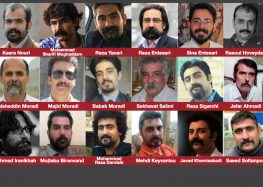
The Campaign continues to express concern for several other members of the Church of Iran that still face prison terms including Pastor Behrouz Sadegh-Khanjani, Parviz Khalaj, Amin Afshar Manesh, Mehdi Forutan, Mohammad Baliad, and Nazli Makarian; and also Pastor Youcef Nadarkhani who has appealed his death sentence for apostasy. Apostasy is not a crime under any Iranian law.
“This ruling properly recognizes the rights of Christian converts as religious minorities under the Constitution and therefore the appeals court reviewing Pastors Nadarkhani’s apostasy sentence should immediately overturn the conviction,” added Ghaemi.
See the May 14 verdict below: