Transfer of Prisoners Is Against The Law, Says Lawyer
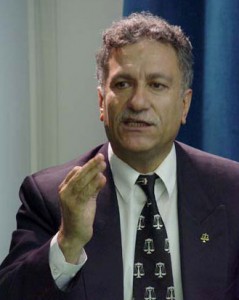 Following the transfer of several female prisoners to Gharchak Prison in Varamin, Iranian lawyer Mohammad Ali Dadkhah told the International Campaign for Human Rights in Iran that according to Iranian law, each prisoner must be transferred to the prison closest to his or her residence.
“According to the law, each prisoner must be transferred to a prison closest to his residence. Even if he has committed a crime and has been arrested in a different city, the Prisons Organization can, based on a request by the prisoner to facilitate visits with his family, transfer him to the prison in his city of residence. On principle, the law stipulates that any action other than the sentence itself, which could lead to psychological and physical harm for the prisoner, should not take place,” Dadkhah, who represents several political prisoners, told the Campaign.
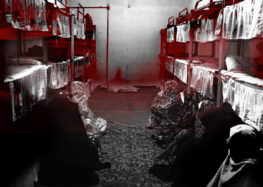
Two weeks ago, the women’s ward inside Rajaee Shahr Prison in Karaj was dissolved and several prisoners were abruptly transferred to Gharchak Prison in Varamin, a prison which political prisoners say lacks basic facilities and is in dire shape in terms of its hygiene, space, and security. The prisoners in this prison have not been separated according to their crimes and political prisoners are kept alongside other prisoners.
This transfer decision raises the question of whether after issuing a ruling and sentencing the suspects, the prison location may be changed. This is an especially significant question in light of the cases of several female prisoners transferred to Varamin, such as Shabnam Madadzadeh, whose final ruling and sentencing stated that she was to be imprisoned in Rajaee Shahr Prison.
“Our law expressly states that no official authority and no government organization can change the court ruling or prevent its implementation. Therefore, as the law is explicit about this area, this action cannot be carried out. On principle, the purpose of imprisonment is to restrict some of the normal liberties and freedoms, not to harm or further abuse the prisoner. From a humane point of view, a prisoner is a human being who is being stripped of certain rights and liberties for a set period of time. Even so, he must have proper hygiene and nutrition and, according to what has been stipulated in the Prisons Organization of Iran’s system, the prisoner should be able to have visitations with his family, lawyer, doctor, and under special circumstances, even his friends,” added Dadkhah. “Iran has unconditionally accepted the International Declaration of Human Rights and is committed to international civil, economic, and cultural covenants. Iran has also signed the 1969 Vienna Treaty, and Article 9 of Iran’s Civil Law sanctions international laws. As we have signed the international human rights treaties, we are bound by international and national laws to observe the rights of prisoners. In current international penal laws, revenge, intimidation, or shaming a prisoner is not intended.”
According to several reports, Varamin’s Gharachak Prison is comprised of seven pre-fabricated structures each of which holds more than 200 prisoners. The ineffective air conditioning system causes the constant presence of sewer smells in the structures. There are only two bathrooms and two shower stalls for 200 inmates, which fails minimum prison standards. After the female prisoners of Rajaee Shahr Prison were transferred to this facility, the female political prisoners of Evin Prison were also planned for a transfer, but it appears that those plans have been canceled.