Executions – Distortion & Disinformation
1. Political Executions—————————–2. Enmity with God
3. Juvenile Executions—————————–4. Stoning
———————————————
With regard to execution, given that execution is recognized in international law and in the legal system of many countries, and according to Article 6 of the ICCPR, the sentence of execution is permissible in case of most serious crimes. The Islamic Republic of Iran considers execution as permissible only in the above cases and after due process, presence of attorneys and a multi-stage process which includes reviews by the Supreme Court.4
– Seyed Ali Raeis Sadati, Deputy Minister of Justice, during Iran’s UPR, 15 February 2010
In the context of capital punishment in Iran, 65 percent of that is not a public responsibility. It is private responsibility. What it means. It means that when the judge rules that this person should get capital punishment, it is left to the [victim’s] first-degree family.5
-Mohammad-Javad Larijani, interview with Public Broadcasting Service (PBS), 16 December 2010
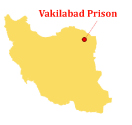
Vakilabad Prison is located in the major eastern city of Mashad
As of December 2010, Iran has been engaged in an execution binge. In December 2010 authorities executed 48 people. In January 2011, official media reported 85 executions, averaging one execution every 9 hours. If rates continue, Iran will execute over 900 persons by the end the year.6
Already the world’s leading executioner on a per capita basis, there is credible evidence from multiple sources of secret, mass executions taking place at Vakilabad Prison in Mashad that would dramatically increase known totals.7 Although Iran does not publish reliable information and statistics, local sources and family members of executed prisoners have told the Campaign that the majority of these executions are for drug-related crimes.8 According to Christof Heyns UN Special Rapporteur on extrajudicial, summary, or arbitrary executions, and the Human Rights Committee, drug related-crimes are not punishable by death as they do not satisfy the condition of being a “most serious crime” under international law.9 On 2 February 2011, Special Rapporteur Heyns and Gabriela Knaul, Special Rapporteur on the independence of judges and lawyers, urged “the Iranian Government to immediately declare a moratorium on the death penalty in view of the gravity of the situation and the regular disregard of due process guarantees.”10
Iran executed at least 346 persons in 2008; at least 388 in 2009; and over 542 in 2010, including 242 officially announced, and over 300 secret executions reportedly taken place at Vakilabad Prison.11 For example, the Campaign documented credible allegations of group executions in 2010 of 67 inmates on 12 August, 13 inmates on 5 October, and 10 inmates on 12 October inside Vakilabad.12 Vakilabad officials, in violation of Iranian law, reportedly carried out these executions without the knowledge or presence of the inmates’ lawyers or families and without prior notification of those executed.
These executions have also included foreign nationals. On 26 October 2010, Paul Chindo, a citizen of Nigeria, was executed with nine other Iranian men, while on 18 August 2010, a Ghanaian citizen, Aquasi Aquwabe, was put to death in another group execution.13 Reportedly, these executions were carried out without informing the staffs of embassies, lawyers, or families of the inmates.14
Political Executions
Nobody’s executed because of demonstration.15
– Mohammad-Javad Larijani, interview with CNN, 16 February 2010
Since October 2009, at least 13 political prisoners, including 5 convicted during post-election trials, have been executed.16

- Arash Rahmanipour and Mohammad Reza Ali Zamani’s lawyer responded to charges that they participated in protests by saying, “Both of these men were arrested 2 months before the elections, and they were in prison until their sentences were carried out. So how can someone who’s in prison take part in protests?”

On 25 January 2011, Jafar Kazemi and Mohammad Ali Haji Aghaee convicted of moharebeh, or “enmity against God,” for their participation in post-election protests and alleged membership in the Mojahedin-e Khalgh Organization (MEK) were hung inside Tehran’s Evin Prison without their family or lawyers being notified. Kazemi’s wife, Roudabeh Akbari, reported that authorities forced her husband to make a confession under torture and his only contact with the MEK is the presence of his son at the paramilitary group’s Camp Ashraf in Iraq.17
On 29 January 2011, Zahra Bahrami, a Dutch-Iranian dual national who was arrested during a protest, was executed. She was originally charged with security-related crimes but was hanged under allegations of drug-trafficking. Bahrami’s daughter has vehemently denied these charges and said her mother told her she was forced to make false confessions under coercion.18
Authorities executed Arash Rahmanipour and Mohammad Reza Ali Zamani on 28 January 2010. They were convicted during the post-election mass-trials held in August 2009. Although arrested months before the presidential election, authorities accused Rahmanipour and Zamani of involvement in post-election protests.19
Enmity with God
[The death penalty is for] terrorist activities. … You should not be mistaken. [Enmity with God] is legal word. Those who start – indulge themselves in terrorist activities, in the – with the aim of changing the regime or the government or – or killing and bringing and damaging the security of the people. This is a legal term. This is a kind of war with God. If you damage the life of the people, it is a war that is against the will of God. So definitely those indulge in terrorist activities, they are pursued by law. They will face a very harsh sentence, if it is proved by the court, in fact.20
– Mohammad-Javad Larijani, interview with CNN, 16 February 2010
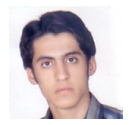
Mohammad Amin Valian’s lawyer on his charges: “If the arrested individual is a member or a supporter of an armed group, or commits actions on behalf of that group, the law can treat him as a mohareb. When an individual vandalizes or injures another person the law should punish him, but these actions do not constitute moharebeh.”
In practice, the Iranian Judiciary arbitrarily applies the charge of moharebeh [i.e. enmity with God] in an egregiously broad set of cases, including against demonstrators who have done nothing except thrown rocks during demonstrations. Mohammad Amin Valian, a 20-year-old student, was charged with moharebeh and sentenced to death in February 2010, based on photos showing him throwing rocks into empty space at a demonstration.21 In May 2010, following intense international protests, as well as widespread outrage inside Iran, Valian’s death sentence was commuted to a three and a half year prison sentence and a fine of 3 million Rials ($300).22
Article 183 of the Islamic Penal Code stipulates that: “whoever resorts to arms to cause terror, fear or to violate public security and liberty will be considered as a mohareb and be corrupt on earth.” Armed activity is an essential element of legally charging someone with moharebeh. Prosecutors specifically charged several post-election defendants, including human rights advocates and political activists, under Article 186 of Iran’s penal code under which anyone taking up arms against the state, or belonging to any group taking up arms against the state, may be considered guilty of moharebeh and sentenced to death.23
Juvenile Executions
As far as the juveniles, the death penalty, it is not death penalty in the legal sense. It is called qisas. It means that, first of all, the age, if it is between 15 and 18 years, this is the area of dispute. If their age is less than 15, well, we consider them – they should not get any capital punishment. Between 15 and 18, there is a dispute among the legal experts in Iran that, are they held responsible for their action or not?24
– Mohammad-Javad Larijani, interview with CNN, 16 February 2010
Iranian officials often try to displace their responsibility for the country’s numerous juvenile execution by noting that under Iranian law the punishment for some crimes, including homicide, is construed as the private right of the victim or, in the case of death, their next of kin, under the law of retribution, or qisas.25 Regardless of this legal construction, these death sentences are governed by Iranian law, imposed by court orders, and implemented by authorities.
Furthermore, under Article 49 the Islamic Penal Code, the age of criminal liability is 9 years old for girls and 15 years old for boys and they are treated as adult offenders for receiving the capital punishment.26
While one may blithely call juveniles, as they are defined by the Convention on the Right to the Child, adults, and call the state action of taking an individual’s life “qisas,” instead of the death penalty, the fact is that Iran is one of the few countries in the world that executes persons for crimes they have committed under the age of 18. More than a hundred juvenile offenders are currently on death row.27
Stoning
Miss [Sakineh Ashtiani] Mohammadi was never sentenced to stoning. This was news that was produced and incorrect… there was no sentence of stoning issued in the first place… this was the news that was made up.28
– Mahmoud Ahmadinejad, interview with ABC, 19 September 2010
As far as stoning is concerned, it is a rare judgment passed in extreme cases of adultery combined with criminality. Stoning is considered by some judges less harsh than execution. Stoning means to throw a limited number of stones with limited intensity to the accused. There is more than a 50 percent chance he can survive.29
– Mohammad-Javad Larijani, interview with Newsweek, December 2010
Cruelty is a notion which is very much culturally relative.30
– Mohammad-Javad Larijani, interview with CNN, 21 November 2010
Despite Ahmadinejad’s claim to the contrary, Sakineh Ashtiani was sentenced to death by stoning for the crime of adultery by the 6th Branch of the Criminal Court of Eastern Azerbaijan Province on 10 September 2006.31 After international outcry authorities suspended Ashtiani’s stoning sentence on 8 September 2010.32 Currently, at least three men and eleven women remain on death row in Iran waiting stoning sentences.33
Under Iran’s penal code, death by stoning is mandated for most forms of adultery.34 For some scenarios, such as if the convicted party is not married, the punishment is flogging.35 Article 102 and 104 of the penal code state that:
[Convicted male adulterers] should be buried up to their waists and women up to their breasts for the purpose of execution by stoning.36
The stones used should not be large enough to kill the person by one or two strikes; nor should they be so small that they could not be defined as stones.37
If a convicted person manages to dig him or herself out of the ground and escape during the implementation of the stoning, they are set free.38
——
Back to Main———————————————————-Next Section: Torture
————————————————————