Ten More Secret Executions at Mashad’s Vakilabad Prison
The Campaign expresses grve concern about secret executions inside Iranian prisons and believes that the government's announced statistics are only a portion of the total number of execution while the actual numbers are withheld from the public.
Local sources told the International Campaign for Human Rights in Iran that on Monday, 7 February 2011, only a few days after the United Nations’ Special Rapporteur for extrajudicial, summary or arbitrary executions expressed concern about the secret executions inside Vakilabad Prison, 10 more prisoners with drug-related offenses were secretly hanged at Vakilabad. Five of those executed were Afghan citizens.
Trusted sources with access to inside Vakilabad Prison as well as government agents tasked with certain related logistics, told the Campaign dozens of prisoners with drug-related crimes have also been secretly executed in Birjand Prison, and Taibad Prison over the past few months. The Campaign will publish additional information about the execution of Afghan prisoners as more information becomes available.
The 7 February executions have not been officially announced by the Iranian government or judiciary. The executions were again carried out without informing the lawyers or families of the prisoners, and even without the prisoners’ prior knowledge. The executed prisoners were told about their imminent execution only a few hours before.
It appears that in all secret, group executions in Vakilabad, Birjand, and Taibad Prisons, neither prisoners nor their lawyers were served a written ruling from the Supreme Court upholding their death sentence.
The previous round of secret group executions took place on 20 December when ten prisoners were hanged.
According to local sources, on 6 January the execution orders of ten prisoners were delivered to authorities at Vakilabad Prison, the Prosecutor’s Office, and Mashad security and police authorities. While all preliminary steps and procedures for the executions were carried out, for unknown reasons, Mashad Prosecutor Mohammad Zoghi ordered a halt to planned executions on that day only a few hours before they were scheduled to be carried out.
The Campaign has learned that during secret executions, Mashad’s Coroner’s Office routinely issues prisoner death certificates one day before, while prisoners are still alive. This action is not only against Iranian law, but also against Islamic Sharia law. According to Sharia law, if an individual survives an execution (under stipulated conditions), he or she is free to walk and be released. Issuance of prisoner death certificates one day in advance corroborate testimony of systematic arbitrary and summary executions and is an indication that the Iranian government lacks respect for even its own laws.
The Campaign reported recently about dozens of secret executions inside Birjand Prison carried out within the past few months.
During a six-week period between 20 December 2010 and 31 January 2011, the government did publish the news of 121 executions throughout the country. The real number is likely higher.
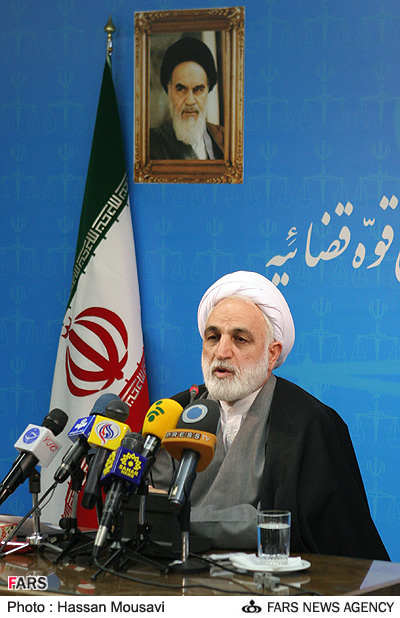
On 31 January, Gholamhossein Mohseni Ejei, the Islamic Republic’s Prosecutor General said during a press conference that “several” drug-crime prisoners had been hanged inside Birjand Prison on that day.
- Mohseni Ejei’s Press Conference (in Persian)
News about executions in Vakilabad, Birjand, and Taibad Provinces have not been published by official media outlets. Official statistics and the identities of executed prisoners have not been revealed by the government.
The Campaign expresses grve concern about secret executions inside Iranian prisons and believes that the government’s announced statistics are only a portion of the total number of execution while the actual numbers are withheld from the public.
The Campaign is also concerned about the Iranian government’s use of widespread executions as a tool for managing its international and foreign policies.