Two Post-Election Protestors Hanged
Others face death on trumped-up Moharebeh charges as execution surge continues
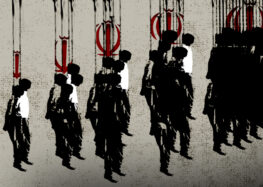
 (24 January 2011) Following the execution of two post-election protestors today, the International Campaign for Human Rights in Iran reiterated its call on the Iranian Judiciary and Parliament to immediately institute a moratorium on all death penalty cases and put a stop to the growing wave of executions.
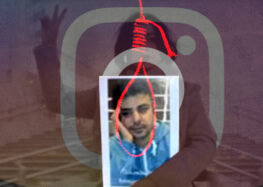
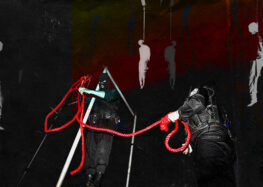
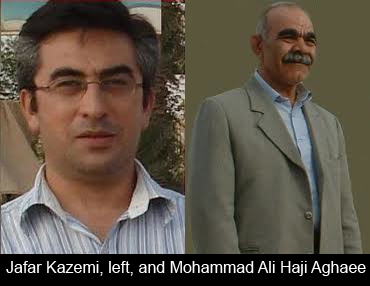
Jafar Kazemi and Mohammad Ali Haji Aghaee, two post-election protestors charged with Moharebeh, or “enmity against God,” were hung today inside Tehran’s Evin prison without their family or lawyers being notified. Four other prisoners allegedly charged with criminal activity were also hung in Iran today, according to official reports.
Since 1 January 2011, Iranian media have reported at least 60 executions with another 43 taking place between 20 December 2010 and 1 January 2011. A total of four political prisoners were among these executed: Ali Saremi, Hossein Khezri, Jafar Kazemi, and Mohammad Ali Haji Aghaee.
Political prisoners Jafar Kazemi and Ali Haji Aghaee were hung in the early hours of 24 January 2011. Both were convicted of Moharebeh for their participation in post-election protests and alleged membership in the Mojahedin-e Khalgh Organization (MEK).
Although the crime of Moharebeh explicitly refers to taking up arms against the state under Iranian laws, no evidence was produced to support such activity. The evidence used against the men included sending photographs of protests to contacts abroad, and visiting Camp Ashraf of MEK in Iraq.
Kazemi’s wife, Roudabeh Akbari, informed the Campaign that he had been tortured to try to force him to confess to the charges, but Kazemi consistently denied any illegal activity. Neither Kazemi nor Aghaee’s legal defenses challenging the charge of Moharebeh were properly considered by appeals courts. Kazemi’s lawyer has noted that, while Kazemi had been accused of having a planning and organizing role in massive 27 December 2009 Ashura Day protests, he had been arrested months before and was in jail at the time.
“The execution binge in Iran continues and the international community must do all it can to convince Iranian authorities to end it. No evidence of taking up arms against the government has been presented in Kazemi’s or Aghaee’s trials,” said Hadi Ghaemi, the Campaign’s spokesperson.
“Moharebeh has become the Iranian Judiciary’s catch-all justification for killing political dissidents,” he said.
In addition to the protestors executed today, the Iranian Judiciary sentenced seven other protestors to death, three of whom had their sentences reversed and changed to prison terms. But four others, Zahra Bahrami (an Iranian-Dutch citizen), Mohsen Daneshpour, Meysam Daneshpour, and Abdolreza Ghanbari are in danger of imminent execution. Ghanbari’s sentence is reportedly under consideration for pardon, but given the recent executions, the Campaign is seriously concerned about further political executions.
Since the mass arrests and show trials that followed the tainted June 2009 presidential election, increasing numbers of Iranians have been charged with Moharebeh, one of the most serious crimes identified in the Criminal Code, which carries the death penalty. Judiciary officials and clerics have claimed that human rights defenders and common hooligans and burglars are guilty of the crime. But leading legal scholars have clarified that the charge can only legally be applied in cases where firearms have been used in active resistance against state authorities.
As reported earlier by the Campaign, Kazemi was arrested on 18 September 2009, and charged with Moharebeh for his alleged “support and propagation for the MEK,” based on a visit he had paid to his son at Camp Ashraf in Iraq. Kazemi’s wife, Roudabeh Akbari, informed the Campaign that he had been tortured in order to force him to confess to the charges, but Kazemi has consistently denied any illegal activity. His wife has written to the United Nations Secretary General asking for intervention to save his life.
None of the three courts that reviewed Kazemi’s case have taken appropriate consideration of his defense, according to his lawyer Nasim Ghanavi. Kazemi’s initial sentence was handed down by Judge Moghiseh in Branch 28 of the Revolutionary Courts, who reportedly claimed that his ruling was the result of political interference. Branch 36 of the Tehran appeals court, under Judge Zargan, upheld the sentence, ignoring defense documentation, and the case was eventually upheld by Branch 31 of the Supreme Court.
Ms. Ghanavi, Kazemi’s lawyer, noted that while Kazemi had been accused of having a planning and organizing role in massive 27 December 2009 Ashura Day protests, he had been arrested months before and was in jail at the time.
A human rights activist familiar with the case told the Campaign, “During all phases of his interrogation, investigation, and lower court trial, Jafar Kazemi has been denied the right to a lawyer and a fair trial. The ruling issued for him was completely political and only aimed to intimidate society during the post-Ashura days and the days leading to February 11, 2010 [the anniversary of the Iranian Revolution]. Right now, also, there is concern that in pursuit of its political goals inside and outside the country, the Iranian government may suddenly carry out the execution at an unknown time. Mr. Kazemi is innocent and his only contact with the MEK is the presence of his son at Camp Ashraf.”