Imprisoned Female Student Activists Denied Visitation Rights Again
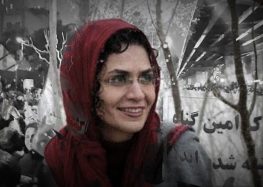
In an interview with the International Campaign for Human Rights in Iran, Mehdi Lalipour, husband of imprisoned student activist and member of the Right to Education Council, Mahdieh Golroo, said that starting this week, both Golroo and Bahareh Hedayat have been barred from having visitors in Evin Prison. After a whole month of being deprived the right to have visitors Golroo and Hedayat were allowed to visit with their families through booths last week, but were once again barred from visits through a new order from the Prosecutor.
Lalipour told the Campaign that he is not aware of the reasons for the visitation ban. “To tell you the truth, we don’t know the reason ourselves, either. Up until last week, we thought the reason for the visitation ban was because they were informing Mahdieh of new charges. We thought the issue has been solved when we were given visitation last week. But this week we went to Evin on visiting day. They even read our names and like the other prisoner families, we went up and waited for Mahdieh to be brought in, but she didn’t come. All the other prisoners came, but Mahdieh didn’t come. We asked and they said that maybe she was left behind. But five minutes later, they came and said that she has a visitation ban,” Lalipour said.
“We asked the prison guard to call the Women’s Ward and find out the reason. He said the prison has no problems with Mahdieh’s visitation, but that according to a letter the Prosecutor’s Office sent to them, she and Bahareh Hedayat are barred from having visitors. I tried to get some news through the families of other prisoners going up to see their relatives, whether any interrogation or any particular entanglement had happened the prior week leading to the two of them being barred from visitation again. But they all said that nothing had happened and everything was as before, meaning that they continue to remain in the Methadone Ward, without telephone or fresh air privileges. It seemed that they had just received the letter from the Prosecutor’s Office, because they called her name for her visitors and we went up, but at the last minute they said that she couldn’t come. We could see the lack of coordination,” added Lalipour.
Lalipour told the Campaign that no one is accountable in Golroo’s case. “When we went to visit her two weeks ago and they told us that Mahdieh is barred from having visitors, I tried to get some information from wherever I could to find out the reason, but no one was accountable except the Prosecutor’s Office. There was a man there who did not seem to be terribly in the know. He heard what I had to say and said that he would follow up the issue. When they allowed me to go visit her, I was so grateful to him for having solved the issue. Now I don’t know the reason the visitations have been barred again,” he said.
“I believe they want to break these two and hurt them. If any living creature is this isolated, to the point where they have no contact with the outside world or even with other prisoners, they are being abused. They are re-experiencing the same conditions as they had in Ward 209, meaning they have no fresh air breaks, contact, or booth visitation. They have not allowed us to have in-person visitations for the past six months, and we are not even asking for them anymore,” Lalipour said about the pressure and abuse the Golroo and Hedayat have endured.
“Over the past month, we only had one visit. I don’t know what they are trying to achieve with these actions. Do they think that all the country’s problems would be solved if the female prisoners, particularly these two, are isolated? I believe the pressure on female political prisoners is more than on male political prisoners, as they don’t even have fresh air breaks, and Mahdieh and Bahareh are deprived of even booth visits. I really don’t know the reason for it. I have been thinking about this all morning and I can’t seem to come to any conclusions, except that they want to break them with these actions,” said Lalipour.
Mahdieh Golroo was arrested on 2 December 2009 at her home and was sentenced to two years and four months in prison on charges of interviewing with foreign media, acting against national security, and relations with the Mojahedin-e Khalgh Organization (MEK).