Citizens of Nigeria and Ghana Reportedly Put to Death in Secret Group Executions Inside Iran
Foreign Ministers urged to respond
(11 November 2010) The governments of Nigeria and Ghana should press Iranian authorities to provide a full and transparent account concerning the alleged execution of their citizens inside Iran, the International Campaign for Human Rights in Iran said today.
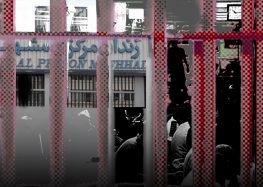
The Campaign has sent letters to Nigerian Foreign Minister Henry Odein Ajumogobia and Ghanaian Foreign Minister Alhaji Muhammad Mumuni informing them about credible reports of two executions of Africans carried out at Vakilabad prison in Mashad. On 26 October 2010, Paul Chindo, a citizen of Nigeria, was reportedly executed with nine other Iranian men, while on 18 August 2010, a Ghanaian citizen, Aquasi Aquwabe, was allegedly put to death in another group execution.
The Campaign has issued several reports of allegations of multiple, unannounced group executions of inmates inside Vakilabad prison. For months, former prisoners and sources with access to official information have been telling the Campaign about dozens of executions conducted by prison officials in 2009 and 2010.
“The governments of Nigeria and Ghana should let the public know whether or not Iranian officials told them they were going to prosecute and execute their citizens,” said Hadi Ghaemi, Executive Director of the Campaign. “If not, Iran has failed its international obligation to permit foreign nationals facing criminal charges to seek assistance from their embassies,” he added.
Under article 36 of the Vienna Convention on Consular Relations, Iran was required to report the arrest of Chindo and Aquwabe to their respective embassies “without delay” and give the suspects the right to seek assistance from their governments. Sources told the Campaign, however, that Iranian officials allegedly denied Chindo and Aquwabe this right and deprived the men of basic elements of a fair trial mandated by international law.
“The executions were carried out without informing the staffs of the two embassies, lawyers, or families of the convicts,” a source told the Campaign. “The two individuals did not know Persian [but] no translators were recruited to communicate with the suspects so to inform them of their sentences.” ”Even during their trials, these convicts were deprived of their basic rights,” sources added. “Neither one of them were aware of their sentences and both of them were deprived from having lawyers [whether selected or court-appointed]. They were even deprived from freely contacting their embassies in Iran.”
“Given the Iranian government’s lack of transparency concerning executions and general lack of respect for due process, Nigerian and Ghanaian officials should ensure that the rights of their citizens are upheld and press Iranian authorities to provide a transparent account of the fate of these two men,” Ghaemi said.
According to multiple accounts, the majority of inmates on Vakilabad’s death row were convicted for narcotics-related crimes. Some reported that they were tortured and forced to make confessions, but that trial judges ignored their claims of physical coercion. Several former Vakilabad inmates reported that officials tried to limit information about group executions from leaving the prison.
Reportedly, 600 inmates remain on death row inside Vakilabad. Iran executes the second highest number of individuals annually of any nation, after China, and has the highest per capita rate of executions. Amnesty International reports that at least 388 executions took place in Iran in 2009, yet the numbers of executions publically reported by the authorities are likely notably less than the actual numbers. The government fails to release the names of convicts executed each year or the crimes for which they were found guilty.
“Families, lawyers, and the prisoners themselves not only do not receive any written ruling pertaining to the execution, they do not have any idea of when the executions will be carried out, let alone being present during the executions,” one former Vakilabad prisoner told the Campaign about executions at the facility.
“When [officials] want to perform the executions, prison telephones are cut off at around 4:00 p.m. so that no one can report the news to the outside world. The yards are evacuated, and [almost] all prisoners are moved inside the ward,” the former prisoner said. “At this time everyone knows that it’s time for the executions. No one knows whose turn it is until the names are read on a loud speaker by [prison and judiciary officials] and [officials] and guards remove the prisoners from the ward.”
In March 2010, during Iran’s Universal Periodic Review at the United Nations Human Rights Council, several UN member states, including Brazil, Germany and Slovakia, advocated Iran impose a general moratorium on the death penalty. On 26 March 2010, the United Nations General Assembly Resolution 64/176 expressed concern about “the continuing high incidence and increase in the rate of executions carried out in the absence of internationally recognized safeguards.”
The Campaign called on the Iranian Judiciary to end its secrecy and to provide transparent information about the alleged mass executions at Vakilabad prison.