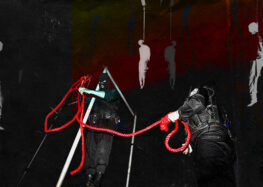
More Secret Executions in Mashad: 23 Executed in October
Reliable sources continue to present reports to the International Campaign for Human Rights in Iran, indicating widespread, clandestine group executions of hundreds of inmates. Most of those executed were charged with transportation and storage of drugs and were held in Vakilabad prison in Mashad. The Campaign has learned that executions were carried out on 5 and 12 October 2010 inside Vakilabad prison. Reliable sources told the Campaign that a total of 23 prisoners were executed, thirteen on 5 October, and ten on 12 October. The executions were carried out without any regard for official Islamic laws or respect for fair judicial procedures. Lawyers and family members were not present nor given prior notice. A number of former prisoners from Vakilabad prison have reported forced confessions under torture and pressure.
Prison officials collected inmates from various wards of Vakilabad prison only a few hours before their execution and took them to “Execution Hallway” near the entrance area of the Visitation Hall, and executed them in a row.
In recent weeks, authorities have reported on several occasions about the executions of convicted drug traffickers, but there have been no statements about the executions inside Vakilabad prison. On 12 October, Attorney General Gholam Hossein Mohseni Ejei said in a press conference that Iranian prosecutors nationwide should try drug-related suspects in the shortest time possible and not show any mercy in implementing verdicts. He even implicitly stated during the press conference that in some cases, low-level hirelings might have been executed when he said, “Some of the people who are arrested with drugs are not the main drug traffickers, and they don’t benefit from this materially, but the main drug trafficker deceives these people while he is sitting in a safe place and another person is tried in his place, and even executed.” (Fars News Agency)
The Campaign has repeatedly called on Iranian authorities to release statistics pertaining to the number of prisoners who were executed in this prison, and to provide accurate information to the public. However, authorities have failed to furnish the information.
Several former prisoners from Vakilabad told the Campaign that between July 2009 and March 2010 prison officials executed around 200 people. Sixty-eight people in August 2009, forty people in October 2009, thirty people in January 2010, approximately twenty people in February 2010, and more than fifty people in April 2010. These figures are separate from the number of women executed inside the Women’s Ward, for which no information is available to the Campaign. Also, these figures are separate from the number of inmates transferred to Vakilabad to be executed from towns surrounding Mashad, particularly from Torbat Heydarieh and Fariman. Also, according to the Campaign’s sources, in August 2010, every week on four separate occasions, group and mass executions of about seventy people were carried out. On Wednesday, 4 August 2010, eighty-nine people, and on Wednesday 18 August 2010, sixty-seven people were executed. On 28 July 2010 and 10 August 2010, between sixty and seventy people were executed.
In an interview with the Campaign, Ahmad Ghabel, a theological scholar and well-known student of the late Ayatollah Montazeri, said that in the three months between March 2010 and May 2010 when he was a prisoner inside Ward 6/1 of Vakilabad prison, he witnessed the executions of fifty people up close, and one time even loaned his pen to inmates who were going to be executed in order to write their last will. Also, in interviews with various media outlets, Ghabel said that these executions were in violation of Sharia Law, and distant from justice. He asked “if these execution sentences were without any problems, why were they being carried out secretly?”
The disclosure of these widespread clandestine group executions in Vakilabad prison by Ghabel led to his arrest in September again, and his transfer back to Vakilabad.
At this time, the Campaign is being told hundreds of prisoners on death row are awaiting execution inside Vakilabad Prison.