Detained Journalist Sues Nokia For Aiding Iranian Crackdown
NGOs calls for transparency and accountability
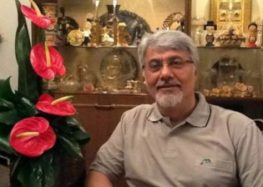
 On 10 October 2010, detained Iranian dissident journalist Issa Saharkhiz and his son Mehdi filed suit against Finnish telecommunication company Nokia Siemens for damages they suffered as a result of Saharkhiz’s June 2009 arrest in Iran. Saharkhiz’s complaint, filed in federal court in Virginia, argues that he was arrested and detained after Iranian authorities tracked him on his Nokia cell phone using technology a Nokia subsidiary sold the state-owned Telecommunications Company of Iran. Saharkhiz has been in prison for the past 14 months and alleges authorities tortured him, breaking his ribs and wrists.
“My dad was almost most paralyzed because Nokia thought about money before thinking about the consequences of selling monitoring equipment to a country where human rights are given no priority and are routinely abused,” Mehdi Saharkhiz told the International Campaign on Human Rights in Iran.
Nokia has moved to have the case dismissed by arguing that corporations cannot be held liable for violations of international human rights law and cannot be legally responsible for selling equipment used by foreign governments to commit human rights violations.
The digital freedom organization Access is lending its support to Saharkhiz and others detained in Iran by launching a “No to Nokia” petition that criticizes the company for “selling surveillance technology to repressive regimes,” including Iran. The petition demands that Nokia “completely end all sales, support, and service of tracking and surveillance technology to governments with a record of human rights abuses.”
“The time is now for Nokia to ‘be accountable’ for its role in the repression of Mr. Saharkhiz and likely thousands of others,” wrote Eddan Katz, international affairs director of the internet freedom group Electronic Frontier Foundation. “[It] must do so not just in the press room, but in the court case, dropping its cynical claims that corporations should never be held accountable for their role in human rights violations.”
On 2 June 2010, in a statement made to the European Parliament’s Subcommittee on Human Rights’ hearing on new information technologies and human rights, Barry French, the Executive Board Member and Head of Marketing and Corporate Affairs for Nokia Siemens, said:
While [Nokia] halted all work related to monitoring centers in Iran in 2009, including service and support, we believe that we should have understood the issues in Iran better in advance and addressed them more proactively. There have been credible reports from Iran that telecommunications monitoring has been used as a tool to suppress dissent and freedom of speech. We deplore such use of a technology that can bring so many positive benefits to society – and that, in fact, we believe has brought so many positive benefits to Iran.
Nobel Peace Laureate Shirin Ebadi held negotiations with Nokia Siemens Networks on 4 September 2010. After these negotiations Nokia issued a press release acknowledging “as a result [of credible reports that the Iranian authorities use communications technology to suppress political activity], Nokia Siemens Networks halted all work related to monitoring centers in Iran in 2009. Nokia Siemens Networks divested its monitoring center business in 2009 and will no longer provide monitoring centers to any country.” “The company has voluntarily restricted its business in Iran by not seeking or accepting new customers and by limiting its activities with its current customers,” it added.
Nokia has publicly clarified that it sold Trovicor, the subsidiary company reported to produce the surveillance and tracking technology sold to Iran, in March of 2009. Nokia continues to have “some technical contractual links” with Trovicor, but claims it has no connection to the company beyond referring former clients, who have not recognized that Nokia no longer supports their old products, to Trovicor.
“According to reports that Access has received from Iran, Trovicor is now providing the same services to Iran that Nokia Siemens once did,” explained Access Executive Director Brett Solomon. “Indeed we’re told many in the Iranian government believe that they are still doing business with Nokia Siemens.” Access has demanded Nokia provide full disclosure on its dealings with the Iranian government, along with a detailed account of its past and present relationship with Trovicor. Access also urges Nokia to use the profits from its sales to the Iranian government to fund a human rights defenders fund.