International Record and Cooperation on Human Rights
Next: Interviewing Ahmadinejad
- Since 1984, the United Nations has expressed concern about human rights practices in the Islamic Republic of Iran through successive resolutions of the UN General Assembly and Commission on Human Rights. Iran has failed to abide by these UN resolutions to improve its human rights record. Since 2007, the UN Secretary General has been asked by the UN General Assembly to report on the situation annually.
- As noted by the UN General Assembly resolutions, most recently in December 2009, Iran fails to uphold its international human rights obligations as required by human rights declarations and treaties it has ratified, including the Universal Declaration of Human Rights, the International Covenant on Civil and Political Rights, the International Covenant on Economic, Social, and Cultural Rights, and the International Convention on the Rights of the Child.
- In 2009, UN human rights experts reported more urgent communications about alleged human rights violations in Iran than any other country in the world, yet the Iranian government had the lowest number of responses to these communications of any other state in the world.
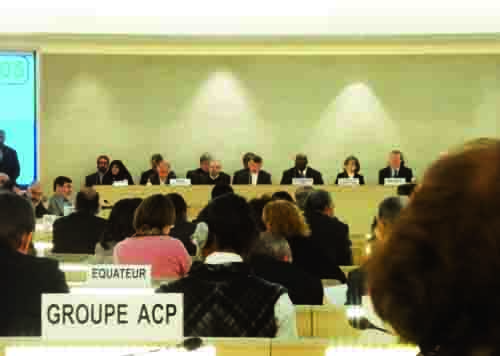
- During a review of its human rights record at the UN Human Rights Council in February 2010, the head of Iran’s delegation, Mohammad Larijani, challenged the universality of human rights standards as enshrined in the Universal Declaration of Human Rights and related human rights treaties to which Iran is a signatory. Larijani claimed that Iranian culture was different than Western culture. Leading Iranian human rights defenders, civil society leaders, intellectuals, and opposition, have strongly rejected this notion.
- Simultaneously, Iran was seeking a seat on the UN Human Rights Council in elections in May – a UN body mandated to ensure the protection and promotion of human rights as enshrined in international law. Iran withdrew its bid due to strong international and domestic opposition by Iran’s human rights defenders.
——————————————————————–
——————————————————————–

Back to Main ———————————————————————————— Next
Share :