Post-Election Protester’s Death Sentence Upheld; Re-Trial Denied By Supreme Court
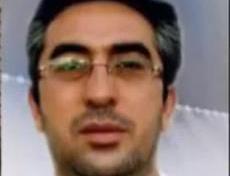
"Jafar Kazemi's case has been forwarded to the Implementations Unit, and legally, there are no further steps possible for saving his life," said Kazemi's lawyer.
A post-election protester’s death sentence has been upheld in an appeals court in Tehran, according to his lawyer. Jafar Kazemi’s lawyer, Nasim Ghanavi told the International Campaign for Human Rights in Iran that her client’s sentence has been upheld and that Branch 31 of the Supreme Court has also turned down a re-trial request. Branch 36 of the Tehran Province Appeals Courts, presided by Judge Zargar, issued the ruling.
Jafar Kazemi, 46, a lithographer of textbooks at Amir Kabir University Press, was arrested on September 18, 2009 in Tehran. He was transferred to a solitary cell inside Ward 209 of Evin prison where he remained for 74 days before being transferred to Ward 350 of Evin prison.
“Jafar Kazemi is accused of moharebeh, enmity with God, through his alleged support for the Mojahedin-E Khalgh Organization (MEK), even though he has not accepted these charges during any of his interrogation sessions,” said Ghanavi about her client’s charges.
“The charge of moharebeh, enmity with God, is one of those charges which must only be levied against a suspect with full consideration for conditions defined in Islamic jurisprudence for it, including the requirement of “armed action.” Many Shiite scholars believe that a mohareb is an individual who takes up arms. This was not the case for my client. He merely participated in the post-election gatherings. He may have chanted some slogans, but as his lawyer, I am convinced that the charge of moharebeh does not apply to him at all,” she added.
Ms. Ghanavi stated that her client has spent a long time in solitary confinement, but that she is not aware of other types of pressure he or his family may have faced.
Previously, Jafar Kazemi had served time in prison from 1981 to 1989.
Jafar Kazemi’s wife, Roudabeh Akbari, wrote a letter to the Secretary General of the United Nations, asking for his assistance to stop her husband’s death sentence. Kazemi was initially tried at Branch 28 of the Revolutionary Courts.
Regarding the defense presented for Mr. Kazemi in court, Ghanavi said: “Unfortunately, our defense was ignored in the lower court, in the appeals court, and at the Supreme Court. They all confirmed the moharebeh charge against him.”
“Jafar Kazemi’s case has been forwarded to the Implementations Unit, and legally, there are no further steps possible for saving Jafar Kazemi’s life,” said Kazemi’s lawyer.