Massoumeh Yavari’s Lawyer: “I hope my client is acquitted”
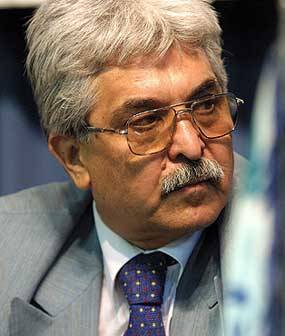
Dr. Mohammad Seifzadeh, Human Rights Lawyer
Mohammad Seifzadeh, the lawyer who represents Massoumeh Yavari, told the International Campaign for Human Rights in Iran that he hopes his client is acquitted of her charges. Seifzadeh, a founding member of the Defenders of Human Rights Center, said that he has appealed the lower court’s decision and the case is currently in Branch 36 of the Appeals Court.
Massoumeh Yavari, a homemaker mother of two, was tried in court on charges of moharebeh, or enmity against God. The Prosecutor asked the judge to sentence Yavari to death. The court, however, sentenced her to seven years in prison at Rajaee Shahr Prison in Karaj.
“There were numerous points for appealing this decision, including the fact that according to Article 190 of Islamic Penal Code, a moharebeh conviction cannot receive a prison sentence,” said Seifzadeh who says he is hopeful to have the charges against his client dismissed.
Seifzadeh, who had not been allowed to see his client until the first session of her trial, said that the reasoning offered to prove the charges against his client was unfounded. “One of the reasons offered by the court is that Ms. Yavari was carrying ‘a large cold weapon.’ What they meant was a small pocket knife which she carried in her purse! Whoever has lived in Iran in recent years knows that most women carry a sharp item in their purses for personal safety. What’s interesting is that this knife was actually returned to Ms. Yavari, but it is referenced in the sentence and used as a reason for moharebeh!”
“Next is that they have named someone, saying that Ms. Yavari was in touch with this person who is an MKO contact. The person named in the case is a supervisor at a hospital in Tehran right now. We provided that individual’s details to the court to research,” added Seifzadeh.
Seifzadeh: Increasing Pressure on Defenders of Human Rights
Referring to the pressure put on members of the Defenders of Human Rights Center, Seifzadeh said, “Due to the immense pressure put on Ms. Narges Mohammadi in prison, she continues to suffer from poor health. She routinely has seizures and passes out.” Narges Mohammadi, Deputy Director of the DHRC was arrested on 10 June 2010 at her home and was released on 1 July 2010.
The DHRC was closed down and its offices were sealed by security and police forces without judicial orders. The closure caused widespread national and international objection. “Closing down the Center was illegal from the very beginning; it was a crime,” said Seifzadeh.
“Unfortunately, in an attempt to show animosity toward Ms. Ebadi and the DHRC, a lie was propagated through society, trying to show that the Center was Ms. Ebadi and Ms. Ebadi was the Center. The truth is that Ms. Ebadi is just a member of this organization. She was voted as the Head of the Center through votes of other members,” he added.
Like other members of the Center, Mohammad Seifzadeh is banned from traveling abroad. “I told them that if teaching the Constitution, the Penal Code Procedures, the Islamic Penal Code, the International Declaration of Human Rights, and conducting academic seminars, monitoring human rights, and accepting pro bono legal representation for those whose rights have been violated is a crime, then I admit to this ‘crime.’ I admit it and of course I am proud of it,” he said.