Shirin Ebadi: Deterioration of Judiciary and the Need for UN Rapporteurs
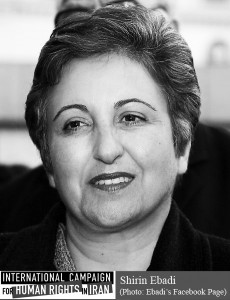 In an interview with the International Campaign for Human Rights in Iran, 2003 Nobel Peace Prize Laureate Shirin Ebadi called on the United Nations to send special rapporteurs to Iran to review cases of arbitrary arrest and torture before more executions take place.
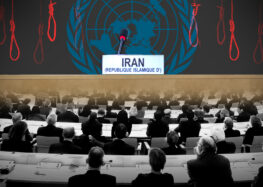
During recent weeks, Tehran’s Prosecutor has defended executions and threatened those who criticize them in Iran. Ebadi said that the recent execution of five political prisoners poses a danger for more prisoner executions in whose indictments the death penalty has been requested. She said, “The Iranian government announced recently that they would allow visits by human rights rapporteurs. If this is true, and they are willing to deliver on their promise, they must allow the rapporteurs to arrive in Iran immediately. It is best if the Iranian government makes good on this promise and issues visas for special rapporteurs in order for them to travel to Iran. The Iranian government should let them review the case files and facilitate their access to prisons and families of those executed, as well as families of other political prisoners. An impartial international authority’s review can show the facts.”
Reflecting on the performance of the Iranian Judiciary since Sadeq Larijani’s appointment, she said, “Unfortunately, during recent months and especially since Mr. Larijani assumed responsibility of the Judiciary, we have witnessed the deterioration of the Judiciary’s independence. We observe that politics plays the main role in courtrooms and many political prisoners state that their sentences are pre-determined by intelligence officials who dictate them to judges who in turn confirm those sentences.”
According to a new directive by the General Council of the Supreme Court, appeals courts now have the final ruling on death sentences. Previously, death sentences had to be confirmed by the Supreme Court. Ebadi considers this process against the law, saying, “This procedure is completely illegal. One of our problems is that some government officials consider themselves even above the Islamic Republic’s laws and are not willing to obey the law. I should say such violations happen more in the cases of political prisoners.”
Regarding the acquittal of Kayhan Newspaper’s Editor-in-Chief Hossein Shariatmadari in the case she brought against him, she said, “This is another example of the courts’ lack of independence. While people like Ms. Badrossadat Mofidi are in prison for writing the truth, we observe that other individuals with considerably heavier charges are acquitted. I can only say that I am sorry this id what has become of the Judiciary.”
Ebadi, who heads the Defenders of Human Rights Center, said that “the use of violence always indicates a state’s weakness. The government’s lack of transparency indicates that they are afraid of people. A government that fears its own people is weak.”