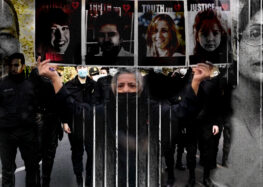
Intelligence Agents Pressure Judiciary for Harsh Sentences
Lawyer Cites Illegal Procedures
(10 April 2010) The Iranian Intelligence Ministry is manipulating the judicial process by forcing the issuance of harsh and long sentences for activists regardless of the lack of credible evidence against them, the International Campaign for Human Rights in Iran said today.
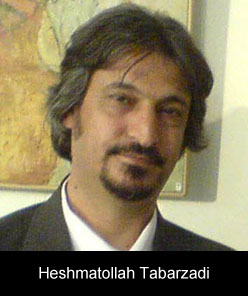
The attorney for jailed political activist Heshmatollah Tabarzadi has told the Campaign that intelligence agents pressuring court officials have demanded excessive punishments, while the entire case deserves to be dismissed because of procedural violations.
“The case of Heshmatollah Tabarzadi and those of numerous others show that one cannot speak of a fair trial conforming to international standards of due process when the Judiciary is merely a tool of security agencies and executive powers,” said Aaron Rhodes, a spokesperson for the Campaign.
“Any fair review of his case would conclude that it is baseless and that he should be released immediately,” he said.
Tabarzadi, who has been kept in solitary confinement in Evin prison’s notorious Ward 209 and harshly interrogated since his arrest on 28 December 2009, ostensibly for participating in Ashura protests, claims he was simply driving near the protests in his automobile. Tabarzadi previously spent nine years in Evin prison on account of his political activism.
In an interview with the Campaign, Nasrin Sotoudeh, Tabarzadi’s lawyer, said her client was arrested using a warrant not showing his name, as required by law. As a political prisoner, the procedures in his case must conform to the demands of Article 168 of the Iranian Constitution, which stipulates that a political prisoner should be tried in a public and open court. Tabarzadi has been in detention for four months, and, according to Sotoudeh, under severe pressure and beatings during interrogation.
Sotoudeh said that intelligence agents have demanded that the judge in Tabarzadi’s case sentence him to the harshest possible punishment, including exile and a permanent ban on any social and political engagement.
Sotoudeh stated: “We can assume that the intelligence agents lacked knowledge of the law, as this action [pressuring a judge] is, according to the law, a crime….In many cases we have seen that unfortunately, some judges have not only applied such recommendations, but have gone further. The principle of the independence of the judiciary system obliges the judge to refuse such a recommendation by an intelligence agent. The procedure that was applied in Tabarzadi’s case is completely illegal.”
Tabarzadi faces four charges: propaganda against the state, gathering and colluding against national security, insulting the Supreme Leader and President, and insulting Islam. He was arrested for allegedly participating in protests and rallies. While Tabarzadi had denied such participation, clarifying that he was merely driving his car, Sotoudeh noted that even if he had been participating in a peaceful protest, it would not have been a legitimate basis for his arrest.
As recently detailed by the Campaign, the infiltration and manipulation of the Iranian Judiciary and court system, while a chronic problem, has become more widespread since the current period of intensified repression of civil liberties began after the June 2009 presidential elections. “Court officers” representing the police units, the Intelligence Ministry, and other intelligence and security formations influence decisions about sentences, as well as those affecting interrogation methods, visitation rights, bail, and other issues.
“Tabarzadi’s arrest was arbitrary, the process has been unconstitutional, and his prosecution has been shamelessly politicized,” Rhodes said.