Former President’s Travel Ban Part of Systematic Effort to Contain Criticism
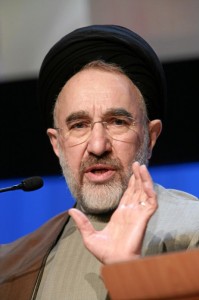
Mohammad Khatami
(15 April 2010) The Iranian government’s refusal to allow former president Mohammad Khatami to attend a conference in Hiroshima, Japan, is a violation of his freedom of movement and part of a broad but futile effort to contain critical voices and prevent them from having contact with the international community, the International Campaign for Human Rights in Iran said today.
“Numerous human rights defenders, women’s rights activists, and others with independent views have had their passports confiscated, in effect making them prisoners in their own country,” said Hadi Ghaemi, spokesperson for the Campaign.
“The return of the passports has often been made contingent on silence and cooperation with the authorities,” he added.
Khatami was to travel to Hiroshima to attend a nuclear disarmament conference, according to Iranian reformist sources who have told the media that the Foreign Ministry informed Khatami in writing of his travel ban. When Khatami attempted to find the reason for this decision, none was provided.
Seven members of the Human Rights Defenders Center, a leading human rights group forced to close in 2008, have been banned from leaving the country, including Mohammad Seifzadeh, Mohammad Ali Dadkhah, Narges Mohammadi, Hadi Esmailzadeh, Nasrin Sotoudeh, and Abdolfattah Soltani. Javad Tavassoli, the husband of Nobel Peace Laureate Shirin Ebadi, one of the founders of the Center, has also been banned from travel, solely for his association with her.
The authorities have also banned a large number of women’s rights activists from traveling abroad without providing any specific reason for such a decision, including Mansoureh Shojai, Simin Behbahani, Hayedeh Tabesh, Gina Modarres Gorji, and Soraya Aziz Panah.
Jafar Panahi, an internationally acclaimed film director, was banned from attending the Berlin Film Festival in February 2010, and was subsequently arrested on 1 March 2010, and remains in prison.
Banning individuals from travel abroad may take place under Iranian law, according to Article 133 of the Procedures for Criminal Prosecution, only if an active prosecution case is underway against the person.
Although travel bans can only be applied in cases of open prosecution by judicial orders, on numerous occasions in recent years, security and intelligence agents, without any permit from the Judiciary, have confiscated the passports of activists, journalists, and political personalities, barring them from boarding planes and traveling abroad.