Report from Geneva: United Nations Human Rights Council Resolution on Iran Unlikely
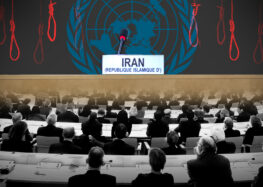
Members of the United Nations Human Rights Council (HRC) are virtually certain not to vote on a resolution dealing with the human rights crisis in Iran in the March Session of the Council, based on numerous meetings between diplomats and the International Campaign for Human Rights in Iran.
For the past several months, human rights groups and human rights experts have been urging the Council to take appropriate measures in response to the violent crackdown on human rights in the Islamic Republic. They urged a Special Session of the Council to address the issue. They urged a strong resolution that would establish a new mechanism to monitor human rights violations in Iran and help the Iranian authorities conform to international standards, which they are bound by international law to uphold.
These ideas were downsized to a proposal for a resolution that would simply mandate the Secretary General to make an additional report about Iran to the HRC under the terms of the last General Assembly Resolution, which passed in December 2009. But even this modest proposal will apparently not be tabled.
Why don’t the HRC members want an action dealing with Iran? They give several reasons:
First, delegates say such a resolution might fail, and that such a failure would be seen by Iran and its allies as a victory against human rights, which would make Iran a stronger candidate in the election for the Human Rights Council in May 2010. A lop-sided vote, with only “Western” states supporting it, would appear as the West ganging up on Iran, and might rally Asian, African, and Latin American countries to the side of Iran.
A resolution concerning human rights in Iran could theoretically have the votes to win, if all the HRC members that supported the General Assembly resolution voted for it, but it would be a very close vote.
Some delegates say that a weak resolution, even it were successful, would be a victory for Iran. Some others say the “process concerning Iran should be kept in the deliberations of the General Assembly,” and say they don’t want to jeopardize another General Assembly resolution in the fall of 2010. Delegates said they were not sure a resolution would have “added value.”
Many diplomats refer to a recent vote on Sri Lanka to justify their caution. The HRC was persuaded to hold a Special Session on Sri Lanka, but the result was a resolution supporting Sri Lanka. Sri Lanka came out on top, and Iran might likewise come out on top if a Special Session were held.
A substantial number of HRC member states would not support any resolution naming a specific country. South Korea, for example, only votes for resolutions that name North Korea. India says country-specific resolutions do not work, but only create conflict and are used for political purposes.
In the complex politics of the HRC, the powerful countries and blocks, in particular the European Union and the United States, exert a very strong influence. Numerous delegates said that without strong US support, they would not go along with any proposal for a resolution on Iran. It seems the US does not support such a resolution at this time, and it is not clear why.
Although a resolution is highly unlikely, Iran has been criticized by HRC members and by UN officials during the session so far. The Special Rapporteur on Torture noted that he had sent numerous inquiries to Iran based on complaints received, and has received no replies in return. The Special Rapporteur on Freedom of Religion and Belief spoke at length in her report on the problem of violating human rights, for example the right of women, in the name of religious dogmas, in what was clearly a reference to Iran and other Islamic states. Canada criticized Iran for the treatment of Baha’is.
In the discussion during the week of 15 March, more such statements will likely be made in the course of the general debate under Item Four in the HRC agenda.