Minister of Science’s Statements Are Against the Iranian Constitution, Islamic Penal Code, and International Conventions
In statements which have caused grave concern amongst Iranian human rights and social activists, Iranian Minister of Science, Research, and Technology, Kamran Daneshjoo, has said that only those who have proven commitment to Islam and velayat-e-faghih can teach or study at universities. Therefore university students and faculty members who are studying or teaching at universities may lose their jobs or be deprived of continuing their education on grounds of their differing points of view and political ideas.
The International Campaign for Human Rights in Iran believes that the Minister of Science’s remarks are completely against the principles expressed in the Iranian Constitution, and also in violation of the United Nations International Covenant on Civil and Political Rights (ICCPR), to which Iran is a signatory. Such statements demonstrate the intentions of a Minister inside Mahmoud Ahmadinejad’s cabinet to deliberately violate the aforementioned laws, which can put many individuals’ lives in jeopardy and complicate situations at Iranian universities. When it was suggested that the caliber of Iranian academia has been diminishing, he added: “We have sufficient caring people and we are able to push out those who do not share the same direction as the regime and this action will not embarrass us.”
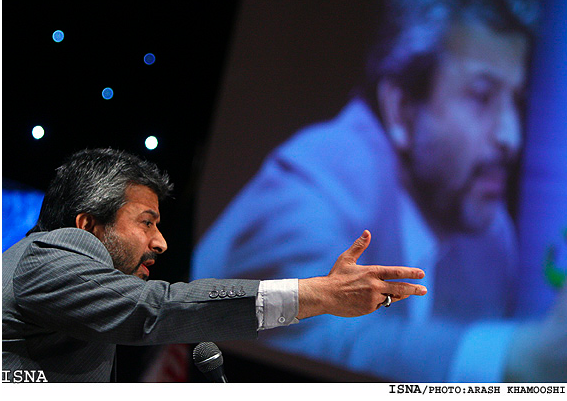
Campaign- The Minister of Science's statements create a serious concern that as in the past years--and more specifically the past 3 years--the right to education as a student or the right to employment as a university faculty member may be subjectively interpreted by university or security authorities and where students or faculty members are not in agreement and unison with government authorities' positions, they may lose their right to an education or to teach.
Remarks of the Minister of Science pertaining to the dismissal of students and faculty members on political grounds follow a few years of forced retirements or resignations after intimidation of humanities faculty members. Additionally, some undergraduate students who have had political activities permitted by Islamic Republic of Iran and Iranian universities’ laws have become “starred students,” deprived of continuing their education due to their political viewpoints, even though they have passed graduate school entry exams. These individuals have not had a chance to defend themselves in a fair court and there has never been a legal verdict about their deprivation of education. The Minister seems to have forgotten that according to the Iranian Constitution, people can only be deprived of social or political rights through instances stipulated by the law. According to Article 107 of Iranian Constitution, “The Leader is equal to other citizens in observing the law.”
Article 14, item 3 of the Iranian Constitution also expresses that the government is responsible for “maintaining the entire rights of individuals, whether men or women, and creating fair judicial security for all and equality of all in the face of law.”
Therefore the Minister of Science denies the the rights of students to an education or the rights of faculty member to teach at universities due to their ideas and thoughts, where according to the Iranian Constitution, only breaking the law can be grounds for prosecution. Only after an individual has been tried and found guilty in a fair court with a jury, can a decision be made to deprive him or her of social and political privileges. According to Iranian laws, the court’s decision may be appealed and so long as someone has not been found guilty, it is not possible to deprive him or her of social and political rights including higher education or teaching at Iranian universities.
In addition, the Minister of Science’s statements create a serious concern that as in the past years–and more specifically the past 3 years–the right to education as a student or the right to employment as a university faculty member may be subjectively interpreted by university or security authorities and where students or faculty members are not in agreement and unison with government authorities’ positions, they may lose their right to an education or to teach.
Even if students and faculty members have committed a crime, only under certain circumstances they may be deprived of an education or teaching, none of which is the way they think or their political positioning. Article 62 of the Islamic Penal Code states:
“A definite criminal conviction of intentional crimes as described below will deprive the convict of his social rights and after the stipulated duration is complete and the sentence has been carried out, the rights shall be restored:
1. Those sentenced to amputations in crimes that require physical punishment (hadd), five years after the sentence has been carried out.
2. Those sentenced to flogging in crimes that require physical punishment (hadd), one year after the sentence has been carried out.
3. Those sentenced to imprisonment of over three years, two years after the sentence has been carried out.
Mr. Daneshjoo’s statements are not addressed toward criminal individuals or those who have received a conviction, but dismissal for the way they think. Remarks of Iran’s Minister of Science are also a violation of Iran’s international obligations. Article 19 of United Nations’ International Covenant on Civil and Political Rights,of which Iran is a State party, makes it clear:
Article 19
Everyone shall have the right to hold opinions without interference.
Everyone shall have the right to freedom of expression; this right shall include freedom to seek, receive and impart information and ideas of all kinds, regardless of frontiers, either orally, in writing or in print, in the form of art, or through any other media of his choice.
The exercise of the rights provided for in paragraph 2 of this article carries with it special duties and responsibilities. It may therefore be subject to certain restrictions, but these shall only be such as are provided by law and are necessary:
1. For respect of the rights or reputations of others;
2. For the protection of national security or of public order (ordre public), or of public health or morals.
Article 26 of the Convention makes it clear that all people are equal under the law and no one should be discriminated against because of their political opinion:
«All persons are equal before the law and are entitled without any discrimination to the equal protection of the law. In this respect, the law shall prohibit any discrimination and guarantee to all persons equal and effective protection against discrimination on any ground such as race, color, sex, language, religion, political or other opinion, national or social origin, property, birth or other status.»
Remarks of the Minister of Science are also opposed to Article 18 of the Convention. According to this article:
«Everyone shall have the right to freedom of thought, conscience and religion. This right shall include freedom to have or to adopt a religion or belief of his choice, and freedom, either individually or in community with others and in public or private, to manifest his religion or belief in worship, observance, practice and teaching. No one shall be subject to coercion which would impair his freedom to have or to adopt a religion or belief of his choice.»
For the reasons mentioned, the remarks of Kamran Daneshjoo, Minister of Science, are against the Constitution, the Islamic Penal Code, and Iran’s international obligations. Mr. Minister with his remarks has exposed the fact that all three mentioned obligations have been ignored by the government officials, and political motivation, inquisition, and limitation of freedom of expression and freedom of association will be intensified more than ever before during his management of the Ministry.