Sadegh Larijani and the Pressure on the Judiciary to Execute Dissidents: Has Justice Given Way to Politics?
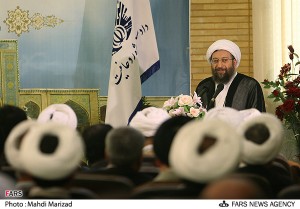 Sadegh Larijani, Head of the Iranian Judiciary, said on Sunday that a group in Iran are demanding “accelerated” punishments for protesters arrested during the post-elections events in Iran. He has added that such demands are politically-motivated and illegal. Though Larijani’s statement reveals immense political pressure for harsh handling of those arrested post-elections, it does not reveal who these groups and individuals are. More importantly, Larijani’s words do not indicate how involved these groups and individuals have been during the arrests in abuses of prisoners for extracting confessions, the laying down of heavy prison sentences, the implementation of death sentences, and hijacking control of the Judiciary from its inexperienced Head.
Larijani has also omitted clarification on why only a few days after the executions of Mohammad Ali Zamani and Arash Rahmanipour, which brought on international condemnation, he is discussing the expectations of certain groups and political pressures. Could the two executions have been results of his referenced pressures? It would explain why Larijani, who now has two executions on his report card and scores of other questionable execution verdicts on his desk, would reveal for the first time a trend which has been taking shape over the past few months, saying: “Despite past warnings, some people keep expecting more of the Judiciary and these political expectations are against the law and Sharia.” Is this the Head of the Judiciary’s way of showing his concern over a Judiciary spinning-out-of-control through political pressures exerted by security and military organizations? Unfortunately, none of these questions are answered in Mr. Larijani’s statements.
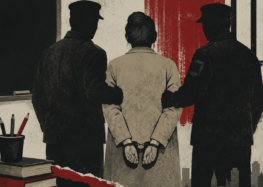
For those who have been following the Judiciary’s situation since the 12 June 2009 elections, political decisions, unfair trials, irregular investigations, and an overtly politicized judicial system are nothing new. During the months right after the elections, some conservative newspapers, many Friday Prayers’ preachers, high-ranking pro-government clerics, and many Islamic Revolutionary Guard Corps (IRGC) and Police commanders have explicitly spoken about the use of violence against protesters. Using force and violence for intimidating the government’s opposition to keep them from continuing their protests went so far that Parliament Member Ruhollah Hosseinian submitted a bill in Iranian Parliament, demanding accelerated executions of dissidents. Illegal arrests, heavy prison sentences without any reason or evidence, or prison abuse for the unnamed groups about whom Larijani is speaking, seem to not have been enough and now they are accusing the Iranian Judiciary of “negligence.”
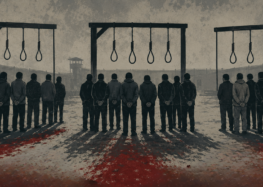
Sadegh Larijani, speaking at a high level judicial authorities’ gathering on January 31, insisted that the executions of Mohammad Ali Zamani and Arash Rahmanipour last week were legal. He said: “These two carried arms and belonged to heretic and terrorist groups, or had been arrested carrying explosives.” Also, regarding the treatment of the executed individuals, he said: “During the entire review stages, the penal code was strictly followed.” But attorneys of both individuals said in different interviews that their clients had confessed to crimes they had not committed. Confessing to uncommitted crimes has been a frequent occurrence since the Islamic Revolution in Iran, but its use has increased over the past four years. Political influences and a disregard for due process are clearly visible throughout the case files of the two individuals executed this week, whether in their case process or the way they were executed, and Larijani’s statements about these executions clearly indicate that the Judiciary has caved in under pressures. One of the attorneys of the two executed convicts told the International Campaign for Human Rights in Iran that his client had been told that if he confessed he would be released soon, but the confessions obviously cost him his life.
He calls these pressures “political and illegal,” but there is no doubt that as Head of the Judiciary and having taken over this new post a few months after the elections during the show trials of prominent reformist politicians, Larijani is fully responsible for the illegal arrests, the bad condition of Iranian prisons, attempts for extracting fake confessions from political prisoners, unwarranted death sentences, and a lack of will to deal with prison abusers and street thugs. He seems to be aware of political pressure, so he can’t ignore the fact that most of the arrests, trials, and sentences after the elections have taken place under such political pressure and if he believes these pressures are “illegal,” and “illegitimate,” he must immediately review these arrests and prison and execution sentences, holding the culprits accountable.