Iran’s ‘Excruciating’ Human Rights Record – Council on Foreign Relations
 Interviewee:Rudi Bakhtiar, Director of Communications, International Campaign for Human Rights in Iran
Interviewer:Bernard Gwertzman, Consulting Editor, CFR.org
February 19, 2010
The UN Human Rights Council this week issued its first review of Iran’s human rights record, on the heels of what was widely seen as the Iranian government’s stifling of protests during the Islamic Revolution celebrations on Feb. 11, 2010. The protests are an extension of the ongoing unrest in the country since the disputed presidential election results of June 2009. Iran accepted some of the review’s recommendations, but rejected many others. Rudi Bakhtiar, a journalist and spokesperson for the International Campaign for Human Rights in Iran, says the country “continues with its own agenda,” since the government has been “arresting, torturing, and killing people ruthlessly.” She says that “hundreds of people who were arrested during the post election violence are still missing.” The result, she adds, is that the government has lost all legitimacy and “Iranians will continue their protests through creative means, and not just by going back to streets.”
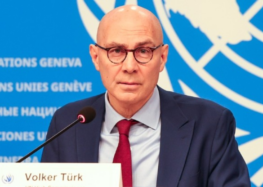
The UN Human Rights Council in Geneva wrapped up its first review of Iran’s human rights record this week. Iran it seems was able to escape any real censure.
The Universal Periodic Review is meant as a long-term process of engagement between the council and all UN member states to improve the situation of human rights. But the coincidence of Iran’s review with the current human rights crisis is significant because it provided the rare opportunity of putting Iran on the spot for the first time following the post-election violence regarding the atrocities that have taken place.
It is quite instructive to see Iran’s response to the questioning by council members. Although they denied all the well- documented human rights violations and appeared to escape scrutiny at this stage, it provided momentum for meaningful action during the upcoming sessions of the council. I believe the Iranian delegation’s answers to concerns raised showed their utter contempt for international human rights law and its mechanisms. For example, they outright rejected a visit by the UN expert on torture and ending politically motivated trials and executions, which in itself is a reaffirmation that these gross violations are taking place.
Your organization tracks human rights in Iran and is a persistent critic. How bad is the situation in Iran today?
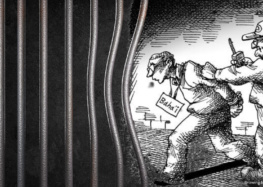
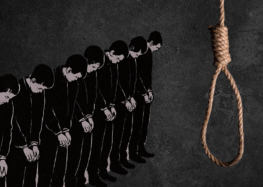
Excruciating. There are over one thousand political prisoners in Iran right now…students, professors, human rights activists, journalists, among other innocent Iranians, some who never even took part in a protest. Last month two men were hanged in secret–one only 19 years old–for being part of anti-government organization. Nine others are on death row. And of course the level of repression [is high] and a heavy atmosphere of fear is prevalent.
Also in Geneva, Tehran’s Prosecutor General Abbas Jafari Dolatabadi denied the public charges leveled by the wife of the opposition leader Mehdi Karroubi, that their son, Ali, had been arrested and tortured in a mosque during the anniversary celebrations last Thursday. What do you make of that?
This has been one on the most bizarre and 1984-ish moments, when the authorities are basically saying the burden of proof for anyone arrested and tortured is on them, even if they produce pictures of their wounds and documentation. This government has a thirty-one-year history of lying. This is the same government that blamed the CIA for Neda Agha-Soltan’s death [videos of the shooting of the 27-year-old dissent during the summer 2009 unrest have become a rallying symbol for protesters], put on show trials, and aired false testimonials on national television to validate their lies.
I’m not surprised they are denying it. The letter from Mrs. Karroubi indicates her son was beaten in a mosque, a place of worship for Muslims, which doesn’t look good for a country claiming to be built on the principles of Islam.
Iran’s chief representative to meeting in Geneva, Mohammad Larijani, said Iran was “in full compliance with the relevant international commitments it has taken on… to safeguard human rights.” Some Western governments urged Iran to accept a human rights inspector. Does Iran think that by continuing to deny violations, the West will just have to accept the status quo?
Not only is this government not showing any signs of improvement on human rights, they have actually upped the ante since their embarrassment last December when anti-government protestors took over the funeral for one of the leaders of the revolution, Ayatollah [Hossein Ali] Montazeri, and then a few days later, the biggest religious holiday for Iran, Ashura. In order to avoid any embarrassment on the 31-year anniversary of the revolution, in the two months leading up to the anniversary the government arrested thousands using “blanket detention warrants,” giving authorities the power to go to any home, at any time, and arrest anybody without a charge.
The Supreme Leader Ayatollah Ali Khamenei rebuked U.S. Secretary of State Hillary Clinton, who had said that Iran was increasingly becoming a “military dictatorship” under the control of the Revolutionary Guards. He said these were just the usual lies spread by the West.
Throughout the years Khamenei’s rhetoric has never shifted from the suspicious anti-American position he loves to espouse. But he’s in dire straits right now as an embarrassed Supreme Leader, whose own people are chanting “Death to Khamenei” on the holiest holiday of the year, Ashura. I imagine these days he welcomes any excuse to divert [attention] from his own tenuous predicament.
What should the outside world do to relieve the human rights problems in Iran? Criticism only seems to strengthen the determination of the leadership in Iran to continue what they are doing.
The outside world must continue to apply pressure on Iran and hold this government accountable for its unacceptable human rights record and violations of international treaties it has voluntarily signed. That is very much the demand of the Iranian people and is quite distinct from interfering in Iran’s domestic affairs.
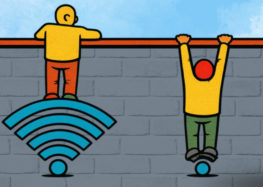
But what has been proven is the Islamic Republic is being outed by technology. Post-election, Iranians were able to use Twitter and Facebook to circumvent the government’s media blackout, exposing the violence and brutality of the Basijis. Since then it has been a cat-and-mouse game of the government setting up Internet filters and people both within Iran and outside of Iran finding ways around them. A focus on technological aid could empower the people of Iran by giving them the tools they need to communicate, exchange information, and coordinate their activities. It also has the added effect of putting this government at a huge disadvantage, considering its posturing on the issue of human rights, the likes of what we just witnessed.
Can you compare the current situation with previous years of the Islamic Republic? Is the situation today unique?
The situation is worse today than it’s been in the past. But make no mistake, this government has been imprisoning, torturing, and killing those who don’t agree with their politics, however peacefully, since the day they took power. They had repression down to a science until technology outmaneuvered them.
What do you hear from Iran? Are the protestors now intimidated and afraid to go to the streets again?
The level of fear is high now. Since June, this government has been arresting, torturing, and killing people ruthlessly. Most of us live our entire lives and are never fired upon, never know anyone who’s been killed or jailed, simply for attending a protest. These are scary times for Iranians. But the people of Iran are angry. They feel cheated by the election. They feel a sense of injustice – in a way their collective sense of national honor has been wounded. Couple that with the country’s economic situation–inflation is still in the 20 percentile, unemployment is still in double digits, the deficit is high, despite the fact that they are the fourth-highest crude-oil producer in the world. The situation is not sustainable. Iranians will continue their protests through creative means and not just by going back to streets. The legitimacy of the government has been lost, and I don’t think they are taking any steps to restore it.
Weigh in on this issue by emailing CFR.org.
© Copyright 2010 by the Council on Foreign Relations. All Rights Reserved.