More will be hanged, Iranian official says; 2 executions last week are seen as intimidation; big rally is set for Feb. 11
 —
—
—
—
——–
By Nazila Fathi
3 February 2010
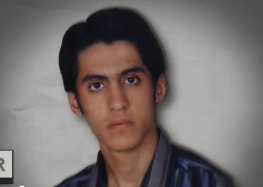
Every Thursday since last April, Davoud Rahmanipour traveled to the Evin prison in northern Tehran to visit his son, Arash, 19, who was being held there while his lawyer appealed his death sentence.
The elder Mr. Rahmanipour was unsettled last Thursday to hear from the prison authorities that his son had been transferred to a different prison. His misgivings gave way to shock and grief that afternoon when he heard, on state-run television, that his son had been hanged that day at dawn.
‘‘We are in a devastating psychological and physical situation,’’ Mr. Rahmanipour said Monday in a tearful voice in a telephone interview.
He told Al Jazeera television on Friday that he was refusing to accept messages of condolence. ‘‘My son is a martyr for democracy,’’ he said.
Iran experts have said that the government hastily ordered the executions of Arash Rahmanipour and Mohammad-Reza Ali-Zamani, 37, another political prisoner, to intimidate the opposition and to silence the protests that have persisted since the disputed June 12 presidential elections.
With the government’s opponents planning another large demonstration on Feb. 11, the country is bracing for another wave of executions. At least nine other prisoners have been charged with the capital crime of moharebeh, or waging war against God.
On Tuesday, a senior judiciary official said the nine would be executed soon, Reuters reported.
‘‘Nine others will be hanged soon,’’ said the official, Ebrahim Raisi, according to the Fars News Agency.
‘‘The nine and the two who were hanged on Thursday were surely arrested in the recent riots and had links to anti-revolutionary groups.’’
Hadi Ghaemi, the executive director of the International Campaign for Human Rights in Iran, a group based in the United States, said: ‘‘The executions are clearly a sign of the government’s frustration to end the protests. There are fears that the government might engage in the kind of cleansing that it did between 1980 and 1988, when it executed more than 3,000 political prisoners.’’
Mehdi Karroubi and Mir Hussein Moussavi, the two leading figures in the opposition, have condemned the hangings and warned that they are aimed at intimidating the opposition.
Ayatollah Ahmad Jannati, a senior cleric, praised the executions at Friday Prayer sermons at Tehran University and called for more.
‘‘I thank the judiciary for executing these two men so quickly,’’ Ayatollah Jannati said in comments broadcast on state television, ‘‘but the judiciary needs to stand firmly. Otherwise, if it shows weakness, we will suffer more. There is no room for Islamic mercy.’’
Arash Rahmanipour and Mr. Ali-Zamani, who were hanged on Thursday, were arrested before the June 12 elections. But their cases became linked with those of protesters arrested in the postelection demonstrations.
Abbas Jafari Dolatabadi, Tehran’s chief prosecutor general, said in an interview on Thursday that the two men had been found guilty of ‘‘planning to assassinate officials and to carry out explosions.’’ He said they had confessed to their crimes and had been tried in the presence of their lawyers.
Nasrin Sotoodeh, Mr. Rahmanipour’s lawyer, said that the confessions had been extracted under duress and that she had not been allowed to attend the trial.
Her client’s pregnant sister was arrested and held for more than two months, Ms. Sotoodeh said, to put pressure on Mr. Rahmanipour, and the woman ultimately had a miscarriage. And his father was handcuffed and carried away when he tried to attend the trial. He was told that his son needed to make confessions.
On Aug. 17, Arash Rahmanipour was shown on Press TV, a state-run, English-language channel, confessing to plans to bomb shrines. Mr. Ali-Zamani was shown confessing to having ties to American, Israeli and royalist agents.