
Sudden and Unannounced Execution of Two Political Prisoners (audio interview with attorney)
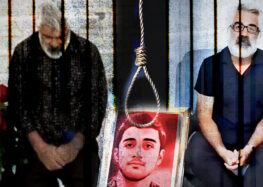
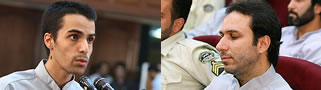 Nasrin Sotoudeh, attorney of Arash Rahmani Pour, told the International Campaign for Human Rights in Iran: “Arash’s father spoke to me on the telephone today and he had not been informed of the execution. This shows that not only was the execution carried out in secrecy, but not even the families were informed. The law necessitates the Judiciary to inform the family of a defendant and to allow for due judicial and legal processes to take place in the presence of the defendant and his attorney. All of this was foregone in my client’s case and we heard about this in the media after the fact.”
Only hours after her client’s execution, Sotoudeh told the Campaign: “As Arash Rahmani Pour’s attorney, I was shocked to hear of his sudden execution. According to the law, no verdict can be carried out prior to its being served to the defendant. This verdict was issued in secrecy and and it was sent forward in secrecy from those who should have been informed about it, and it was only announced by the judiciary’s web site after it had been carried out. Arash’s sentence had no reason other than to create fear and intimidation. Despite what has been announced on the Revolutionary Court’s web site, Arash was not arrested in the post-elections events. He had been arrested in April, two months before the [June 15] elections at his home and at the time of his arrest, he was only 19. Many of the charges made against him pertained to the time when he was not yet 18. To be sure, Arash’s case is a juvenile crime execution, only this time a political prisoner was executed because of what he did before he was 18. During his entire arrest, imprisonment, and trial, there was a lot of pressure and many promises. First Arash’s sister was arrested. She was in prison for two months. She was then acquitted and released, but pressures she had endured during her detention caused her miscarriage. In the only meeting I was allowed to have with Arash for 15 minutes, he told me that during two of his interrogation sessions, his sister was brought to the interrogation room and seated opposite him. He was then told that if he wanted to be released he had to confess to the things that he was told. I was Arash’s attorney, but I was never allowed to participate in his trial. I insisted to be allowed to attend a trial session in August. Security Officers threatened to arrest me and took away my attorney license, which they returned to me later.”
The Tehran Revolutionary and General Courts’ web site announced that after “riots and anti-revolutionary actions of recent months, especially Ashura,” branches of the Tehran Islamic Revolutionary Courts have put several individuals on trial and have reached the verdict of death sentence in 11 cases. This report adds: “Sentences of 9 other convicts of recent riots are in appeals courts and should the sentences be finalized, they will be carried out according to policy. Heretics [moharebeh] and attempts to overthrow the Islamic Republic of Iran and membership in the armed anti-revolutionary group, the Monarchy Society of Iran, and the terrorist group, MKO, are some of the charges against the said individuals.”
Sotoudeh added: “In a letter I wrote to Head of Judiciary at the time, I stated that if such pressure is carried out against lawyers, it is hard to fathom what kind of pressure is carried out against the accused. At the same meeting where they kept me from attending the trial session, they asked Arash’s father to convince him to stand in front of a camera, and when his father resisted, he was threatened that if he didn’t convince his son to confess, he, himself, would be arrested on the spot. Therefore I have one question: if Arash had committed such a serious crime to warrant a death sentence, why was it necessary to put so much pressure on him? Why was there so much pressure to force him to confess to things he hadn’t done? For these reasons this sentence was completely illegal and unfair.”
Regarding Saeed Mortazavi’s role and the need to review all such cases in view of charges made against him in a parliamentary report, she said: “I was allowed to review the case once. I discovered that criminal cause was not established in the file. Arash’s indictment had been signed in an irregular process by Mr. Mortazavi who was the Tehran Prosecutor at the time. If Mr. Mortazavi’s charges are under review in the Judges’ Court after the report of Parliament’s Special Committee, all sentences issued under his indictment must be stopped and reviewed. I use this opportunity to state my concern for other death sentences issued. My clients Reza Khademi and Yaghoub Porkar have both received death sentences. The society has to be alert. I am concerned that my clients will be executed.”
Sotoudeh said: “I think all these sentences were made to create fear and intimidation. After the events on Ashura and the fear they have created in the rulers, they hurriedly made these sentences, encouraging and demanding judges to hand out heavy sentences. They even announced that they were taking a bill to the Parliament to change the laws so that executions could be carried out five days after a sentencing.”
Related Videos:


)