No Evidence of Espionage in Tajbakhsh’s File, Lawyer Says
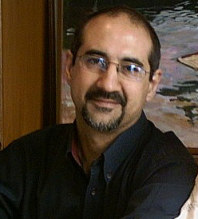 (14 December 2009) The case against the Iranian-American social scientist Kian Tajbakhsh contains no evidence to support the allegations against him, according to the International Campaign for Human Rights in Iran, following interviews with Masoud Shafie, Tajbakhsh’s lawyer.
Tajbakhsh has been sentenced to a 15-year prison term for alleged espionage and actions against national security by a lower court and is currently in the appeals stage. The case has also been substantially invalidated by gross breaches of Iranian law and international standards for due process.
Shafie recently studied the entire file compiled by prosecutors against Tajbakhsh. There is apparently no correlation between the evidence in his file and the conviction and sentencing of Tajbakhsh, while the file itself is evidence of the blatantly political and arbitrary nature of the case. Espionage is closely defined under Iranian law, and guilt needs to be established by evidence that highly confidential documents were passed to foreign governments. There are no references to such documents in the file.
The file, only recently seen by Shafie, contains video clips of public demonstrations that Tajbakhsh allegedly emailed which hardly qualify as confidential or classified government documents. Tajbakhsh had no access to such documents in any event.
Shafie has been continually prevented from seeing his client. After he reviewed the file, he received permission from the Revolutionary Court, branch 54, which is in charge of reviewing Tajbakhsh’s case as the court of appeal, to visit him in order to finalize the defense statement.
On 12 December, Evin prison authorities would not allow the visit. He was told to obtain permission from Judge Salavati of branch 15 of the Revolutionary Court. But Judge Salavati, who presided over the lower court sentencing Tajbakhsh, has no role in the appeals stage, based on applicable regulations.
The authorities in ward 2 A of Evin Prison, under Revolutionary Guard management, did not permit the visit. The defense statement will need to be submitted without a prior meeting between lawyer and client, and their communications have been limited to sporadic telephone calls and messages transmitted by other visitors.
Some of the more egregious violations of due process standards in this case include maintaining the defendant in temporary detention, which violates both Article 182 and Article 37 of the Judicial Proceedings of Penal Courts [Aiin Dadrasi Keyfari]. Under Iranian law, Tajbakhsh had the right to be released on bail after the primary investigation of his case.
Moreover, in his file it is mentioned that Judge Salavati, had ordered his release on bail, stating that Tajbakhsh had refused the offer of bail, and accepted to go to prison, which is patently false.
The process also violated principle 139 of the Constitution and article 188 Judicial Proceedings of Penal Courts which stipulate that a defendant is to remain anonymous until charges against him are approved by the court. But charges against Tajbakhsh were publicized prior to their being approved by the court.
The charges against Tajbakhsh are without merit because they do not refer to criminal acts. Under Article 2 of the Islamic Penal Code, any actions that have not been identified as criminal may not be considered as the basis for a criminal charge. This applies to the acts for which Tajbakhsh is charged, including for example, working as a consultant for the Open Society Institute (OSI) , which is not a crime, Shafie said.
The indictment against Tajbakhsh described his service as a consultant to the OSI, an international foundation, as de facto seditious. But the activities of the OSI in Iran had been agreed to with the government of the Islamic Republic under a memorandum that defined those activities, and no activities were performed by Tajbakhsh or by the OSI that were not agreed to by Iranian officials, Shafie said. Furthermore, Tajbakhsh’s consultancy with OSI ended in 2007, well before the recent elections.
Finally, the indictment is ridden with factual errors that invalidate it. Among its unreal claims, for example, is that the defendant participated in illegal demonstrations, and was arrested while committing this crime, while in fact he was arrested on 9 July, 2009, at 21:00 at his home while he was with his wife.
The Campaign reiterates its appeal to the Judiciary to examine the case against Kian Tajbakhsh in view of the numerous legal irregularities and politicized charges that invalidate it, and to drop the charges so that he may return to his family and scholarly career.