
Close

Your Name (required)

Your Email (required)

logo

Press Archive - 25th November 2009 - 2 Comments »

New Charges of Espionage Filed Against Iranian-American Sociologist
Print
(26 November 2009) The International Campaign for Human Rights in Iran expressed  serious concerns about new charges  introduced by Revolutionary Guards commanders in the prosecution of Kian Tajbakhsh, an Iranian-American sociologist.
“It appears the Revolutionary Guards are seeking to justify their severe repression since the June elections by ratcheting up baseless espionage charges against Tajbakhsh in order to demonstrate foreign involvement and make him a scapegoat,” said Aaron Rhodes, a Campaign spokesperson.
Earlier this week, Tajbakhsh was brought in front of the Third Branch of the Security Court,  which is a new court  created and controlled apparently by the Revolutionary Guards to prosecute dissidents. He was charged with new allegations of spying based on emails he wrote to Middle East specialists on the Gulf 2000 list, which includes hundreds of experts, diplomats, and journalists. According to information received by the Campaign, high ranking Revolutionary Guards commanders initiated the new charges against Tajbakhsh. He is currently held in solitary confinement in Evin prison and denied release on bail.
Tajbakhsh has been already sentenced to 15 years in prison by a lower court, which charged him with multiple counts, including “acting against national security, by membership in the internet network related to Gary Sick, a CIA agent, and other foreign elements with the purpose of urging people to riot in presidential elections; spying and connections with foreign elements against the sacred system of the Islamic Republic; accepting a consultancy position with the Soros Foundation aimed at the soft overthrow of the Islamic Republic of Iran; propaganda activities against the sacred system of the Islamic Republic by participation in illegal assemblies and causing doubt and giving impression of fraud and cheating in election results; and causing lack of public trust towards the official national organs and the ruling system by instigating rioting, mayhem, fear and terror within the society.” No evidence was presented in Tajbakhsh’s trial to support these grave charges.
“If an innocent man’s freedom and well-being were not at stake, the espionage charges based on participation in the OSI and Gulf 2000 would be nothing more than ludicrous attempts to smear a noted scholar who has assiduously steered clear of political entanglements,” Rhodes said.
The Campaign fears for the health and safety of Tajbakhsh in view of recent judicial proceedings in dissidents’ cases that have contravened Iranian law.
On 11 November, Ehsan Fattahian, a Kurdish activist, was executed even though a lower court had sentenced him to 10 years in prison. The appeals court added the charge of Moharebeh, or “enmity towards God,” and issued the death sentence for Fattahian.  Iranian law explicitly forbids appeals courts from increasing a lower court’s sentence. New charges against Tajbakhsh signal that a similar extrajudicial process maybe underway.
Tajbakhsh has been denied access to an independent lawyer and the authorities have restricted his legal representation to a court appointed lawyer, Houshang Azhari.
The Campaign called on the Iranian judiciary to immediately release Tajbakhsh and all other dissidents and activists who have been unfairly persecuted and prosecuted. The Campaign also expressed serious concerns that the Revolutionary Guards appear to be taking over judicial organs and manipulating them to permit extrajudicial detentions and sentences.

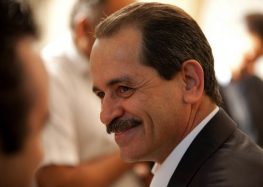
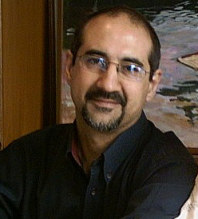
kian_tajbakhsh(26 November 2009) The International Campaign for Human Rights in Iran expressed  serious concerns about new charges  introduced by Revolutionary Guards commanders in the prosecution of Kian Tajbakhsh, an Iranian-American sociologist.

“It appears the Revolutionary Guards are seeking to justify their severe repression since the June elections by ratcheting up baseless espionage charges against Tajbakhsh in order to demonstrate foreign involvement and make him a scapegoat,” said Aaron Rhodes, a Campaign spokesperson.

Earlier this week, Tajbakhsh was brought in front of the Third Branch of the Security Court,  which is a new court  created and controlled apparently by the Revolutionary Guards to prosecute dissidents. He was charged with new allegations of spying based on emails he wrote to Middle East specialists on the Gulf 2000 list, which includes hundreds of experts, diplomats, and journalists. According to information received by the Campaign, high ranking Revolutionary Guards commanders initiated the new charges against Tajbakhsh. He is currently held in solitary confinement in Evin prison and denied release on bail.

Tajbakhsh has been already sentenced to 15 years in prison by a lower court, which charged him with multiple counts, including “acting against national security, by membership in the internet network related to Gary Sick, a CIA agent, and other foreign elements with the purpose of urging people to riot in presidential elections; spying and connections with foreign elements against the sacred system of the Islamic Republic; accepting a consultancy position with the Soros Foundation aimed at the soft overthrow of the Islamic Republic of Iran; propaganda activities against the sacred system of the Islamic Republic by participation in illegal assemblies and causing doubt and giving impression of fraud and cheating in election results; and causing lack of public trust towards the official national organs and the ruling system by instigating rioting, mayhem, fear and terror within the society.” No evidence was presented in Tajbakhsh’s trial to support these grave charges.

“If an innocent man’s freedom and well-being were not at stake, the espionage charges based on participation in Gulf 2000 would be nothing more than ludicrous attempts to smear a noted scholar who has assiduously steered clear of political entanglements,” Rhodes said.

The Campaign fears for the health and safety of Tajbakhsh in view of recent judicial proceedings in dissidents’ cases that have contravened Iranian law.

On 11 November, Ehsan Fattahian, a Kurdish activist, was executed even though a lower court had sentenced him to 10 years in prison. The appeals court added the charge of Moharebeh, or “enmity towards God,” and issued the death sentence for Fattahian.  Iranian law explicitly forbids appeals courts from increasing a lower court’s sentence. New charges against Tajbakhsh signal that a similar extrajudicial process maybe underway.

Tajbakhsh has been denied access to an independent lawyer and the authorities have restricted his legal representation to a court appointed lawyer, Houshang Azhari.

The Campaign called on the Iranian judiciary to immediately release Tajbakhsh and all other dissidents and activists who have been unfairly persecuted and prosecuted. The Campaign also expressed serious concerns that the Revolutionary Guards appear to be taking over judicial organs and manipulating them to permit extrajudicial detentions and sentences.



2 Comments

You can follow any responses to this entry through the RSS 2.0 feed. You can Make a Comment, or trackback from your own site.

mahasti
Nov 26, 2009 18:44

This is a horror story. The regime has become a true monster. It makes me shudder to think of the ultimate scenario, which is a Stalinist purge by IRGC of all real and potential dissidents.

The bottom line is that the Iranian regime is fueled by oil and not by people. People figure as porters and supporters, or they’re useless pawns and pests. What they’re good for is their arms, not their brains. Case in point, Kian Tajbakhsh: highly educated and smart; rational; honorable; an East-West crossover; a genuinely good person; an active humanitarian . . . That’s the profile of a pawn and a pest in the IRI.

Paola Maggiore
Nov 26, 2009 22:44

FREE IRAN

Make a Comment

Comment

Recently Added Content

Women’s Rights

No Information About Detained Women’s Rights Activist

The Iranian women’s rights movement is the most vibrant social movement in Iran today. Having built an extensive grassroots base, Iranian women are campaigning to fight legal gender discrimination. The government routinely persecutes and prosecutes women’s rights activists.

Report on the Status of Women Human Rights Defenders — April 2009
The Systematic Repression of Women — May 2008

_____________________________________

More on Women’s Rights


Academic Freedom

Imprisoned Student Reveals Details of Unfair Prosecution

During the past few years, Iranian universities have been experiencing a new phase of government intervention in academic affairs, which is considered a second Cultural Revolution. The present government policy is demonstrated on several fronts and is resulting in severe infringements on academic freedoms.
 
Report on the Situation of Academic Freedom on University Campuses — December 2008
_____________________________________

More on Academic Freedom


Workers’ Rights

Clampdown on Teachers and Labor Activists

Iranian workers and teachers are denied many protections of basic workers rights, as defined and articulated under longstanding international labor standards. Iranian workers are deprived of such fundamental rights both under Iranian labor law and in practice.
   
  
Background Information on the Rights of Workers in Iran — March 2008  
_____________________________________

More on Workers’ Rights