Three Sentenced to Death in Post-Election “Show Trials”
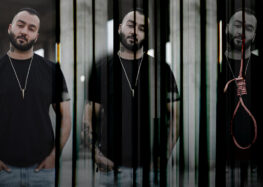
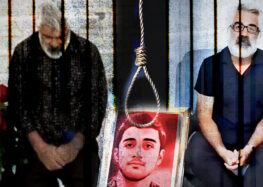
Behnoud Shojaii, Juvenile Offender, Executed
(11 October 2009) The International Campaign for Human Rights in Iran condemned the sentencing to death of three men convicted for alleged activities in connection with political protests following the disputed 12 June presidential elections, and expressed its serious concerns about further political execution sentences.
On 10 October, Bashiri Rad, an official with Tehran Judiciary, told the Iranian Students News Agency that two men, identified by their initials as M. Z. and A. P., had been sentenced to death for their connections with Anjoman-e Padeshahi-e Iran (Kingdom Assembly of Iran), an opposition group based abroad. He identified the third person sentenced to death as N. A., accused of membership in another opposition group Mojahedin Khalq Organization (MEK).
Although the three were brought to trial together with over a hundred other defendants accused of fomenting post-election protests, the Campaign believes the three men sentenced to death had no role in these protests. Both men accused of connections with Anjoman-e Padeshahi-e Iran had been arrested before the election.
The indictment of Mohammad Reza Ali Zamani, identified by officials as M. Z., (see below) states that he was arrested before engaging in any actions. According to his indictment, Zamani’s conviction for the capital crime of Mohareb, or “taking up arms against God,” was based on his membership in the pro-Royalist group Anjoman-e Padeshahi-e Iran, and on alleged meetings in Iraq with United States operatives and with his allegedly having received money from a source based in the US, all for the purpose of instigating unrest in Iran. The indictment by Public Prosecutor Saeed Mortazavi is founded on the claim that Zamani confessed to associations with the American operatives, but notes that he was arrested before he took any actions.
“The contradictory indictment, which accuses a person of actions that it states he never took, indicates the political nature of these trials. Starting with members of these groups and tying them to post-election unrest without any evidence suggest a public relations strategy to lay the groundwork for future political executions,” according to Aaron Rhodes, a spokesperson for the Campaign.
“Numerous completely innocent citizens could be similarly convicted on the basis of forced confessions to instigating unrest along with foreign agents or the MEK, following formulaic indictments apparently provided by the Intelligence ministry,” he said.
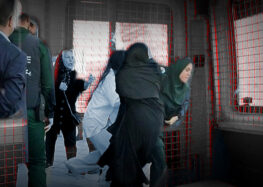
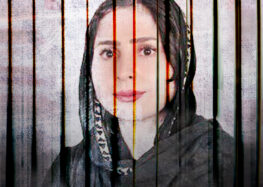
In one case, Atefeh Nabavi, a student who had been denied admission to graduate school, was arrested on 20 June on Azadi street. She was charged with Mohareb in connection with alleged partisanship with the MEK. However, according to her attorney, Nasrin Sotoudeh, there are no documents in her file proving that she had any connection to the MEK. The “evidence” of the connection lies only in the fact that some members of her family resided at Camp Ashraf in Iraq, a compound inhabited by members of the group.
The disclosure of information about the results of the ongoing trials of over 100 detained protesters and reformists in Iran has lacked transparency. During the week of 28 September, it was announced that the sentences of 20 of the accused were issued, yet neither their names, nor the sentences, were revealed. Reportedly, they include the sentencing of ordinary citizens for participating in protests to prison terms ranging from six months to five years.
The unfolding of events surrounding the hundreds of political detainees in Iran is all the more disturbing as it takes place against a rising tide of executions and scheduled executions. On 11 October, Behnoud Shojaii, convicted of murder when he was under the age of eighteen, was hanged in Tehran’s Evin prison. Iranian civil society activists had campaigned to stop the execution. Iran is the only country to carry out execution of juvenile offenders in 2008 and 2009.
In only 50 days following the disputed 12 June presidential elections, 115 persons were executed in Iran, although the authorities have disclosed almost no information about who they were, or the crimes for which they were convicted. As detailed by Amnesty International, 12 individuals face imminent execution in the coming days, including a number of members of minority groups as well as another juvenile offender.
“The death sentences and executions of protesters and dissidents, whose legal and peaceful actions have been criminalized and who could be sentenced to death based on nothing except forced confessions and falsified evidence could be blended into this wave of capital punishment, which is in itself a gross violation of human rights,” Rhodes said.
The International Campaign for Human Rights in Iran reiterated its strong recommendation that a Special Envoy be dispatched by the United Nations to monitor the situation of political detainees and to ensure the Iranian authorities adhere to international due process standards and to Iran’s legal human rights obligations.
—————-
Text of Mohammad Reza Ali Zamani’s Indictment, read in the courtroom on 8 August 2009
In this indictment Mr. Mohammad Reza Ali Zamani, son of Ismail, 37 years old and resident of Islam Shahr is charged with:
1. Moharebeh (taking up arms against God) through membership and active participation for implementing the aims of the terrorist group “Iranian Association for Monarchy”;
2. Insult to sacred beliefs;
3. Propaganda against the sacred system of the Islamic Republic of Iran;
4. Conspiracy and assembly with the aim of acting against domestic national security;
5. Illegal exit from the country.
Accordingly, the defendant became familiar with the Iranian Association for Monarchy through the satellite channel of Your TV and he made connections with elements of this network including Dordaneh Fouladvand and Foroud Fouladvand and adopted anti-religious sympathies.
The named person (the defendant) who has a prior criminal record for fabrication of the Revolutionary Guards’ and the Judiciary’s seals, together with the defendants Hamed Rouhinejad and Ahmad Karimi acted to prepare a CD containing propaganda against the system and insults to the sacred, and distributed them in large numbers within the city of Tehran.
Then, the defendant illegally exited the country for Iraq and in the Ankaveh region of Irbil went to the headquarters of the American forces in the region. He held a meeting with a member of the American forces, named Frank and provided him information in form of photographs and reports regarding the social and political situation in Iran and received money.
Then he contacted a person in the United States, named “Jamshid” who is an element of the Iranian Association for Monarchy. The defendant received $2000 from Jamshid as well as plans for making chemical bombs, which he passed on to one of his contacts in Iran. In several radio interviews with Jamshid, broadcast from Radio Tandar, the defendant insulted the sacred.
The said defendant, then in a meeting with two US intelligence officers, “Michael” and “Robert”, in Dehouk, Iraq, provided information about the political and social conditions in Iran. He also provided them names of some of the members of the government with the aim of assassinating them. The meeting was arranged through Davood Baghistani.
The defendant participated in the “Salman” project, which collected the names of Basij members and provided this information to the Iranian Association for Monarchy. Upon return to Iran, with the aim of instigating unrest and rioting during the elections and its aftermath and with the guidance of American forces and the Iranian Association for Monarchy, the defendant made extensive connections and activities. Before committing any acts, he was arrested (emphasis added) by the Unknown Soldiers of the Twelfth Imam (phrase used for members of the Intelligence Ministry).
Therefore, noting the explicit confessions of the defendant during the judicial investigations at the Intelligence and Security Court and the existing documents proving his guilt, and in accordance with articles 513, 500, 190, 189, 187, 186, and 610 of the Islamic Penal Code and article 34 of the Passport Law and considering its articles 42,46, and 47, request prosecution and sentencing of the defendant to the maximum punishment.
Saeed Mortazavi
Public and Revolutionary Prosecutor of Tehran