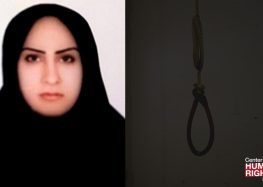
Delara Darabi, Juvenile Offender, Executed in Rasht
Execution shows hardliners reject widespread calls for change
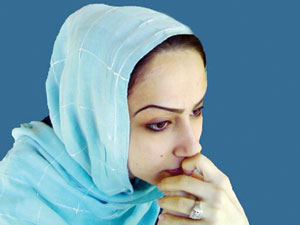
Delara Darabi, executed in Rasht on 1 May 2009
(1 May 2009) Delara Darabi, who was charged at the age of 17 with murder, was executed today in Rasht. Darabi was 22 years old. Authorities did not inform her lawyer, Abdolsamad Khorramshahi, that her execution was being carried out. According to Iranian law, lawyers must be given 48 hours notice of impending executions.
“The execution of Delara Darabi is an affront to human rights values and is in bold violation of Iran’s obligations with respect to international rights standards and covenants,” said Aaron Rhodes, a spokesperson for the Campaign. “What is more, her rights were trampled in an unfair trial.”
Darabi confessed to the murder of her father’s cousin to protect her friend, who assured her she would not be executed because she was a minor. Her trial and appeals have been riddled with complications and her case was sent back to Rasht by the Iranian Judiciary for review. Her father, in a taped interview, said that when he handed Delara over to police, he placed his trust in the judicial system. “I truly thought there would be some sort of justice,” he said.
Darabi’s execution was scheduled to be carried out on 20 April, but her lawyer was able to postpone it because relatives of the victim were not going to be present. It is not known whether family members were present today at her execution.
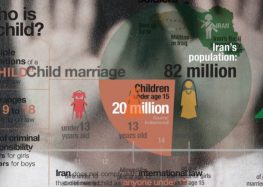
“The continuing barbarity of juvenile executions is a debasement of the rights of juveniles and all the people of Iran, and is an obstacle to Iran’s international relations,” added Rhodes. “The practice needs to be outlawed, in accordance with the International Covenant on Civil and Political Rights and the Convention on the Rights of the Child, of which Iran is a party.”
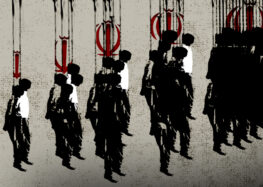
Juvenile executions have gained increased attention within Iran in recent weeks. The Defenders of Human Rights Center issued a national call to action to end juvenile executions on 20 April 2009, with the support of a wide range of religious scholars, human rights and political activists and members of civil society. Mehdi Karoubi, a candidate in the upcoming presidential elections, publicly called for an end to juvenile executions based on his education in Islamic law and the calls by human rights activists, in an article in Etemad Meli daily on 28 April. Kayhan, a newspaper controlled by the Islamic Republic, denounced Karoubi’s comments and accused him of propaganda against the system.
“The execution of Delara Darabi shows the hardliners’ oblivious reaction to calls raised throughout Iran by religious leaders, human rights activists, political activists and ordinary citizens,” said Rhodes.
The International Campaign for Human Rights in Iran strongly condemns the execution of Delara Darabi and the continued execution of juvenile offenders in Iran.