Iranian Rights Defender Receives Martin Ennals Award
Emad Baghi Is an Advocate for Prisoners’ Rights and Ending Juvenile Executions
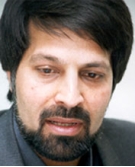 (20 May 2009) – The decision to present the prestigious Martin Ennals Award this year to Emad Baghi for his work on prisoners’ rights and efforts to end the death penalty will help focus international attention on the perilous human rights situation in Iran, Human Rights Watch and the International Campaign for Human Rights in Iran said today.
“The award to Emad Baghi for his courageous efforts helps to keep the eyes of the world on the difficult human rights situation in Iran,” said Joe Stork, deputy Middle East director at Human Rights Watch. “Baghi has also been a leading advocate against capital punishment in the face of rising numbers of executions in Iran.”
The Martin Ennals Award, named for the pioneering human rights activist and first secretary-general of Amnesty International, is “granted annually to someone who has demonstrated an exceptional record of combating human rights violations by courageous and innovative means.” The recipients are chosen by a jury consisting of representatives of major international human rights organizations, including Amnesty International, Human Rights Watch, International Federation for Human Rights (FIDH), World Organization Against Torture (OMCT), Frontline, International Commission of Jurists, International Service for Human Rights, Human Rights First, Human Rights Information and Documentation Center (HURIDOCS), and Diakonia.
Baghi is the founder of the Society for the Defense of Prisoners’ Rights. Over the past decade, he has published numerous articles and books against the widespread application of the death penalty in Iran. After China, Iran executes more people than any other country in the world.
Baghi’s book Right to Life, a comprehensive exposition of his legal research, argues for the suspension and abolition of the death penalty in Iran and other Muslim-majority countries, and demonstrates that neither Quranic texts nor Islamic jurisprudence pose obstacles toward this goal. Iranian authorities banned Right to Life and have imprisoned Baghi several times and interrogated him after he wrote article about the same subjects. Right to Life has been translated into Arabic and widely circulated in other Middle Eastern countries.
Baghi’s research and documentation of cases of juvenile offenders on death row has been an important contribution to focusing attention on the plight of juvenile offenders facing execution in Iran. Since 2005, only five countries – Iran, Saudi Arabia, Sudan, Pakistan, and Yemen – are known to have executed juvenile offenders. Iran is the only country known to have executed juvenile offenders since 2008. At least 140 juveniles are on death row, according to Baghi’s research and Amnesty International. In a second volume of his book, Right to Life II, also banned from publication in Iran, Baghi invokes Islamic laws and traditions to advocate abolishing the death penalty for juvenile offenders.
There is currently a robust campaign inside Iran for abolition of the juvenile death penalty. The Defenders of Human Rights Center, co-founded by Shirin Ebadi and her colleagues, in April 2009 issued a national call to action, “Stop Child Executions,” demanding an end to executions of juvenile offenders. Prominent religious scholars and national personalities, including the presidential candidate Mehdi Karrubi, have endorsed the campaign.
“This award is a tribute to Baghi and all human rights defenders in Iran who have tirelessly and against all odds continued their work,” said Hadi Ghaemi, spokesperson for the International Campaign for Human Rights in Iran. “The Iranian government should end its persecution and prosecution of Emad Baghi and take immediate steps to improve the country’s human rights record, in particular by abolishing the juvenile death penalty.”