Acquit and Release Roxana Saberi
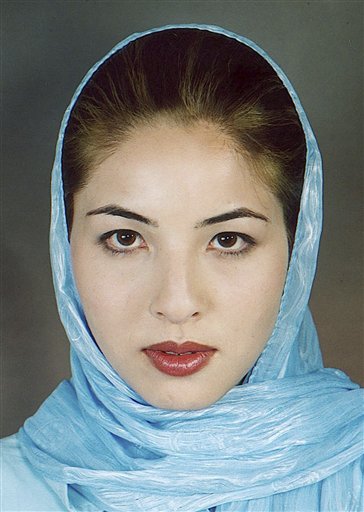
Letter by Roxana Saberi’s Fiance, Bahman Ghobadi
UPDATE: (19 April 2009) Roxana Saberi was sentenced to 8 years in prison in Tehran on charges of espionage.
(18 April 2009) The Iranian government should immediately rescind charges against Iranian-American journalist Roxana Saberi and release her from prison or prosecute her in a public trail if it can produce convincing evidence against her, the International Campaign for Human Rights in Iran said today. Saberi has been in prison since 31 January 2009.
“If the authorities are so sure of the evidence against Saberi why can’t they even disclose which laws she has allegedly violated? This entire case reveals how standards of justice and due process are being debased,” said Hadi Ghaemi, the Campaign’s spokesperson.
Not only has the Iranian Judiciary failed to produce any evidence regarding the charges against Saberi, it has not even publicly announced under what article of the law she is indicted.
“To arrest Saberi for buying wine and suddenly uncover evidence a week before her trial that she was spying for the United States government lacks credibility,” Ghaemi said.
Roxana Saberi is a freelance Iranian-American journalist who has been living in Iran since 2003. Her case characterizes the arbitrary nature of arrests and indictments by the Intelligence Ministry. When first arrested in January, Saberi was charged with the crime of buying wine. The government then accused her of engaging in illegal activities by continuing to report after having her press credentials revoked in 2006. In her one-day trial, held behind closed doors on 13 April 2009, the charges were changed a third time to espionage and spying for the United States government.
Alireza Jamshidi, spokesperson for the Judiciary, has been defensive about concerns expressed by the international community regarding Saberi’s case. He was quoted as saying, “Giving an opinion on a case, by an individual or a government, without being informed about the facts in it, is utterly ridiculous.”
“Judiciary representatives have claimed Roxana Saberi is a spy, citing evidence that only they are aware of,” said Ghaemi. “That evidence should be made public and the Judiciary should be completely transparent. If such an accusation were based on credible evidence, there would be no reason to hold her trial behind closed doors.”
Saberi’s father, Reza Saberi, is now in Iran and has spoken to his daughter since her arrest. The Judiciary spokesperson has claimed that Roxana Saberi “has accepted all charges.”
Saberi is being held in Evin Prison, the location of Iranian-Canadian journalist Zahra Kazemi’s 2003 torture and alleged murder by the Intelligence Ministry. Under protections within Iranian laws and the International Covenant on Civil and Political Rights, to which Iran is a party, every person has the right to not be forced to testify against themselves or confess guilt.
In addition to the case of Zahra Kazemi, the Iranian government has a history of targeting bloggers and journalists and producing false confessions that have been retracted upon release.
On 18 March, a young Iranian blogger, Omidreza Mirsayafi died while in custody after having been mistreated by prison officials. He was accused of insulting authorities. Another blogger, Hussein Derakhshan, has been in detention since November 2008, and no charges have been confirmed in his case. In September and October 2004, authorities arrested Omid Memarian, Roozbeh Mirebrahimi, Shahram Rafizadeh, and Javad Gholamtamimi, detained them without charge, and forced them to make false confessions, which they have retracted as being made under duress. They were allegedly tortured and denied legal and family counsel. Four years after their arrest they were sentenced to prison terms and lashes.
In addition to Saberi, there are currently at least seven journalists imprisoned in Iran: Mohammad Sadiq Kaboudvand, Mohammad Hassin Falahieh Zadeh, Masoud Kurdpour, Mojtaba Lotfi, Kaveh Javanmard, Bahman Tutunchi, and Hussein Derakhshan.
The International Campaign for Human Rights in Iran urges the Iranian government to end its campaign of detaining and mistreating journalists. Iranian authorities should release Roxana Saberi and terminate unfair and politically-motivated judicial processes in all cases.