Death Sentences for Juvenile Offenders Continue

Delara Darabi
Delara Darabi’s Execution Sentence to be Carried Out
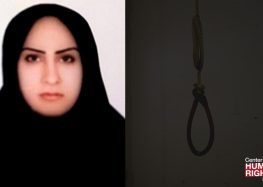
(17 April 2009) Twenty-two year old Delara Darabi is at imminent risk of execution for a crime she allegedly committed at age seventeen, the International Campaign for Human Rights in Iran said today.
Her lawyer, Abdolsamad Khorramshahi, had previously not been informed of the date Darabi’s execution would be carried out. Yesterday he was told the sentence will be carried out soon. The Campaign urges the Iranian authorities to stay her execution and review her case.
“Executing juveniles is internationally outlawed, yet Iran continues to be the only country to carry out death sentences for juvenile offenders,” said Hadi Ghaemi, spokesperson for the Campaign.
At the age of seventeen, Darabi and her boyfriend Amir Hossein Sotoudeh went to her father’s cousin Mahin’s home. While attempting to rob her, Sotoudeh allegedly stabbed and killed Mahin. In a statement, Darabi said she confessed to the murder to protect her boyfriend. He had also told her she would not be executed because she was under 18. She later learned that was not true and retracted her confession, but was sentenced to death by Branch 10 of the General Court in Rasht on 27 February 2005. Sotoudeh was sentenced to 10 years imprisonment for his part in the murder. Both Darabi and Sotoudeh received sentences of three years and 50 lashes for the robbery and 20 lashes for their relationship. The Supreme Court upheld Darabi’s death sentence on 16 January 2007.
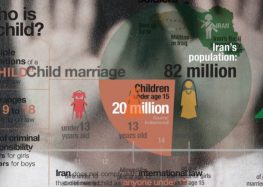
Since the election of President Ahmadinejad in 2005, executions in Iran have increased 362 percent. According to Amnesty International, Iran has executed at least 42 juvenile offenders since 1990, eight of whom were executed in 2008. Iran is the only country to have executed juveniles in 2008 and 2009. Most recently, a juvenile was executed on 21 January 2009.
In March 2007, Khorramshahi filed an appeal against Darabi’s death sentence. Branch 7 of the Supreme Court confirmed her death sentence in April 2007. Due to procedural flaws, the head of the Judiciary returned her case to Rasht for further review. Within Iranian law, only the victim’s family can pardon the killer by requesting financial compensation (diyeh). In Darabi’s case, one relative of the victim is said to still be undecided.
“The shameful act of executing juvenile offenders is a blight on Iran’s international reputation, which indicates a profound disregard for international law and isolates Iran from the world community,” Ghaemi said. “Basing a conviction on a retracted confession given after false assurances is unjust, and doing so in the case of a juvenile offender is unconscionable.”
The International Campaign for Human Rights in Iran urgently calls on the Iranian Judiciary to reconsider the case of Delara Darabi and put a hold on her execution. The Campaign reminds Iranian authorities of the illegality of executing juvenile offenders according to the International Covenant on Civil and Political Rights and the Convention on the Rights of the Child, of which Iran is a party.
SEND AN APPEAL to Supreme Leader Ayatollah Khamenei, Head of the Judiciary Ayatollah Mahmoud Shahroudi, Director of Iran’s Human Rights Headquarters Mohammad Javad Larijani and President of the Islamic Republic Mahmoud Ahmadinejad to END JUVENILE EXECUTIONS.