Spare Four Youths From Execution
Enforce International Prohibition on Death Penalty for Juvenile Offenders
(Geneva, 08 July 2008) Today 24 international and regional human rights organizations called on Iranian authorities to spare four youths facing execution and to stop imposing the death penalty for crimes committed by juvenile offenders – persons who commit crimes while under the age of 18, and to uphold their international obligation to enforce the absolute prohibition on the death penalty in such cases
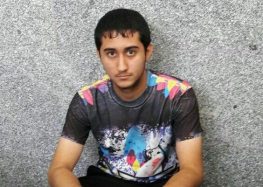
Iran executed 16-year-old Mohammad Hassanzadeh, an Iranian Kurd on 10 June 2008 for a crime committed when he was 14. Four other juvenile offenders are at risk of execution between 11 and 25 July. The organizations called on the head of Iran’s judiciary to suspend these four executions immediately.Behnoud Shojaee and Mohammad Feda’i face execution on 11 July. Both were to be executed on 11 June 2008 but received last minute month-long reprieves to give them more time to seek pardons from the families of their victims.
At least two other juvenile offenders, Salah Taseb, and Sa’eed Jazee, are also at risk of execution in the coming days. According to the group Human Rights Activists in Iran, Salah Taseb, from Sanandaj, who was convicted of a murder committed when he was 15, has been transferred from the children’s prison to the main prison in Sanandaj after recently turning 18. He may be executed before the end of the Iranian month of Tir, which ends on 23 July 2008, although spokesperson for the Judiciary Alireza Jamshidi stated on 1 July 2008 that the case remained subject to appeal. The other youth, Sa’eed Jazee, who was due to be executed on 25 June, reportedly had his execution postponed for a month. He was convicted of the murder of a 22-year-old man, which took place in 2003 when he was 17 years old.
Almost 140 juvenile offenders are known to be on death row in Iran, but the true figure could be even higher – for example, Mohammad Hassanzadeh’s case was not known to campaigners prior to his execution.
In a press conference on 17 June 2008, carried by various Iranian media, Judiciary spokesperson Alireza Jamshidi denied that Mohammad Hassanzadeh had been under the age of 18 at the time of his execution. In response, Mohammad Mostafa’i, a lawyer who has defended many juvenile offenders sentenced to death, wrote on 25 June 2008 (http://mostafaei.blogfa.com/post-11.aspx) that he went to Sanandaj following Alireza Jamshidi’s statement, where he saw Mohammad Hassanzadeh’s identity papers. Mohammad Mostafa’i wrote that the documents proved that Mohammad Hassanzadeh was in fact only 16 years, 11 months and 20 days old at the time of his execution.
The use of the death penalty against those who committed their offences while under the age of 18 is a gross violation of customary international law, no matter what age the person has reached at the time of their execution. The organizations said they were concerned that the authorities’ insistence that Mohammad Hassanzadeh was over 18 at the time of his execution could be a prelude to reprisals being taken against Iranian human rights defenders (HRDs) who have publicly criticised this and other executions of juvenile offenders, as they could potentially be accused of vaguely-worded charges such as “acting against state security” or “propaganda against the system”.
Iranian HRDs who have previously publicised human rights violations have suffered such reprisals. For example, in 2007 a court convicted Emadeddin Baghi, a leading Iranian campaigner against the death penalty, of “activities against national security” and “propaganda in favour of the regime’s opponents” for statements criticizing death sentences imposed after unfair trials in cases involving adults. That ruling was overturned on appeal, but Emadeddin Baghi continues to serve another sentence connected to his human rights work. Mohammad Sadiq Kabudvand, an Iranian Kurdish HRD is serving an 11-year prison sentence He was convicted of “acting against state security by establishing the Human Rights Organization of Kurdistan (HROK)” and “propaganda against the system”.
The Iranian authorities should respect the right to freedom of expression, including in the defence of human rights, as articulated in the International Covenant on Civil and Political Rights (ICCPR) and the UN Declaration on the Right and Responsibility of Individuals, Groups and Organs of Society to Promote and Protect Universally Recognized Human Rights and Fundamental Freedoms.
Some Iranian officials have attempted to justify killing juvenile offenders by terming these killings “retribution” and not “execution.” According to Judiciary spokesperson Alireza Jamshidi, “In [Iranian] law we don’t have execution (‘edam) for persons under 18 years of age; what we have in the laws for persons between 15 to 18 is the issue of retribution (qisas).” In Islamic law, “retribution” for murder is the death penalty. Family members of a murder victim may pardon or accept compensation in lieu of execution, but they are not required to do so. Iranian law currently allows the death penalty – for “retribution” for murder and for other crimes – to be imposed on girls as young as nine, and boys from the age of 15, lunar years. A child younger than this could also be sentenced to death if the judge in the case considers that he or she has reached puberty.
This distinction between “execution” and “retribution” is a meaningless one. A person is executed when his or her death is brought about by the state pursuant to a final judgement issued by a competent court, which is the case in sentences of “retribution” issued by Iranian courts. By making such misleading statements, the Iranian authorities are attempting to obscure the fact that Iran is violating international law every time it executes a juvenile offender – whether or not the individual has reached 18 at the time of their execution. It is imperative that the authorities immediately stop such executions and amend legislation to ensure that no one is put to death by the state for any crime, including murder, committed when under the age of 18.
Iran is a state party to both the International Convention on Civil and Political Rights (without reservation) and the Convention on the Rights of the Child (CRC), both of which prohibit the execution of persons under the age of 18 at the time of their offence. In ratifying the CRC, Iran declared an extremely broad reservation “not to apply any provisions or articles of the Convention that are incompatible with Islamic Laws.” The Committee on the Rights of the Child, which monitors implementation of the CRC, expressed its concern in 2000 that the “broad and imprecise nature of the State party’s [Iran’s] general reservation potentially negates many of the Convention’s provision and raises concern as to its compatibility with the object and purpose of the Convention.” The 24 human rights groups called on Iran to withdraw its reservation to the CRC, which, the groups said, cannot in any case be invoked as legal authority to allow for the execution of juvenile offenders.
In 2007, only two other countries – Saudi Arabia and Yemen – also executed juvenile offenders, but the numbers are dwarfed by those carried out in Iran, where at least seven were executed that year. So far in 2008, two juvenile offenders, including Mohammad Hassanzadeh who was only 16 at the time of his execution, have been hanged in Iran.
Iran should immediately commute all death sentences against juvenile offenders and cease all such executions, the 24 groups said.
The 24 international and regional human rights organizations calling on Iran include:
Association Adala; Amnesty International; The Arabic Network for Human Rights Information; Arab Penal Reform Organization (APRO); Bahrein Center for Human Rights (BCHR); Cairo Institute for Human Rights Studies (CIHRS); Defence for Children International; Defenders of Human Rights Center, Iran; Egyptian Alliance to Challenge Death Penalty; International Federation for Human Rights (FIDH); Human Rights Association for the Assistance of Prisoners; Human Rights Association of Turkey (IHD); Human Rights Watch; Institut International des Droits de l’Enfant; International Campaign for Human Rights in Iran; Organisation Marocaine des droits de l’Homme (OMDH); Iran Human Rights; Iranian League for the Defense of Human Rights (LDDHI); Moroccan Centre for Human Rights (Centre Marocain des Droits Humains); Moroccan Coalition against the Death Penalty (Association Marocaine des Droits Humains, Amnesty International Section Marocaine, Organisation Marocaine des Droits Humains, Centre des Droits des Gens, Obsevatoire Marocains des Prisons, Association des Barreaux du Maroc, Forum Marocain de Verite et Justice); Penal Reform International; Stop Child Executions; VIVERE; and World Organisation Against Torture (OMCT).